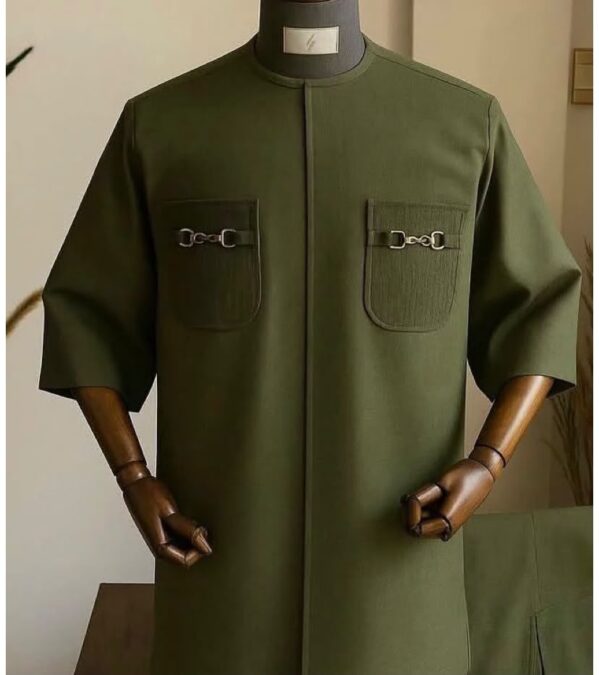
Fast fashion has transformed the global apparel industry, making stylish clothing cheaper and more accessible than ever. Yet in Nigeria, many men continue to invest in bespoke tailoring, favouring precision, craftsmanship and personal expression over off the rack convenience.
The question is why are so many men still choosing bespoke tailoring and what does that mean for the future of the fashion industry?
For many men, clothing is no longer just about covering the body. It has become a form of expression that signals identity, confidence and social positioning.Mass produced outfits often follow standard sizing that does not account for the diversity of body shapes. Bespoke tailoring, on the other hand, offers precision. For many customers, the difference is not subtle,it is the difference between wearing something that simply fits and something that feels built for them.
Men want to also buy into identity. What they wear is tied to how they want to be seen as,professional, refined, creative, traditional, or modern. Bespoke clothing allows room for that interpretation. Fabric choice, cut, embroidery, and detailing all become decisions that reflect personal taste rather than mass market design.
They allow control enabling personal expression, the customer is part of the process, from selecting materials to approving final adjustments. experimenting with style in ways that were once more common among women’s fashion, mixing fabrics, adjusting silhouette and pushing beyond traditional norms.
This involvement creates a sense of ownership, personal style than trend that ready to wear rarely provides.For example, Standard suits are designed for average body types, which means they rarely provide a perfect fit for all body types but a bespoke suit, on the other hand, is tailored precisely to your body measurements.
It complements your shape, enhances your posture and creates a clean, structured silhouette.
The economics of menswear is increasingly shaping the choice between bespoke tailoring and ready to wear clothing. A major factor is the rising cost of imported fashion, driven by import duties, shipping costs, currency fluctuations, and retail markups.
As a result, premium imported ready to wear brands are often more expensive than locally tailored outfits while the cheaper imported and second-hand clothing okirika remain more affordable.This shift is changing how consumers evaluate value. Many men are no longer paying for brand names or standardized sizing alone, but are instead focusing on what they get for their money, especially fit, durability, and personal relevance.
In many cases, bespoke tailoring offers better value because it provides a garment designed specifically for the individual at a comparable, slightly higher or a lower cost. Because of this, local tailoring is increasingly seen as a practical alternative rather than just a cultural or luxury option. It offers more predictable pricing, direct communication with tailors, and greater control over design and fit.
Leonel Udebuani creative director of Leo Bespoke says that bespoke garments are generally more expensive to produce than RTW because they require skilled craftsmanship, individual pattern making, and more production time. While quality fabrics increase costs for both, bespoke offers better fit, durability, and personalization, making it a better long term value.
In this recent times Technology has amplified bespoke tailoring making it more central to the future of men’s fashion by removing its traditional limits and modernising how it operates giving these bespoke designers a modern and sophisticated brand Social media platforms like Instagram and TikTok now allow tailors to reach wider audiences, showcase their work, and attract clients beyond physical locations, while tools like WhatsApp and video calls make consultations, measurements, and approvals faster and more flexible.
Clients also bring global fashion inspiration directly from online platforms, linking tailoring more closely to real time style trends obtained from ready to wear brands or designers. In some cases, digital tools improve accuracy and efficiency in production.
What this means for the fashion industry is a structural shift rather than a trend, shifting the demand away from purely mass produced clothing toward more personalized, value driven consumption. Pushing brands to adopt hybrid models that include made-to-measure services and customization, while also changing competition from price and trends to fit, service, and customer experience.
Brands like Mia Atafo, Yomi casual and the rest. At the same time, it is strengthening sustainability and longevity in fashion by encouraging fewer but higher quality purchases. Signaling a fragmented but evolving industry where fast fashion, luxury ready to wear, and bespoke tailoring coexist with personalization increasingly becoming a key driver of value and uniqueness.
As global fashion embraces speed and convenience, Nigeria’s bespoke menswear industry is proving that craftsmanship and personalization remain valuable. From corporate professionals and entrepreneurs to grooms and young creatives, many consumers are still choosing custom-made clothing despite the growing availability of ready to wear alternatives.
Their preference is shaping not only how men dress, but also how fashion businesses compete, innovate and grow.So wearing bespoke clothing makes a quiet statement. It pushes against the notion that fashion must always be new and mass-produced. It says that quality matters, that style is personal, and that not everything needs to follow the same pattern.

Join BusinessDay whatsapp Channel, to stay up to date
Open In Whatsapp