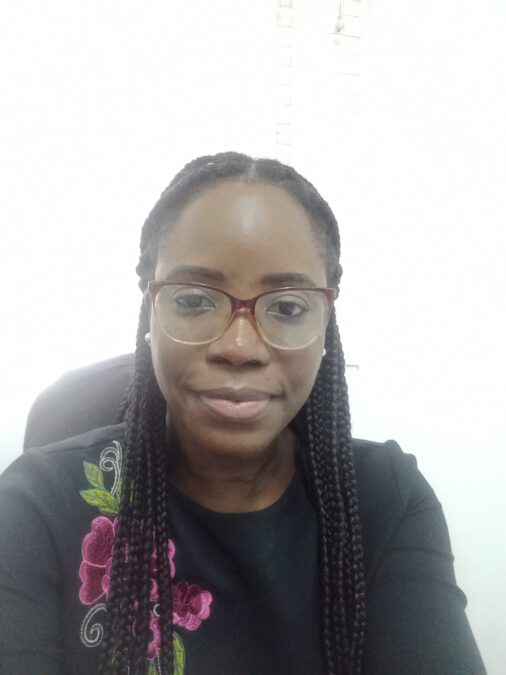
A Nigerian lawyer who passed one of the world’s hardest bar exams, won a competitive scholarship from a top American law school, and published three peer-reviewed articles in international journals is now building a career at the forefront of data privacy law and artificial intelligence governance. This is how she got here.
By
There is a particular kind of quiet confidence that comes from knowing exactly what you are building toward and why. Kelechi Tracy Uzoho, a Nigerian lawyer now based in the United States, has it. Sitting down to discuss her career, she does not talk about her achievements the way someone reciting a resume does. She talks about problems. Specifically, the problem that has defined her entire professional life: businesses that face serious legal consequences not because they broke the law, but because no one warned them the rules were changing.
“Most of the compliance failures I have seen,” she says, “were preventable. Companies are not usually malicious. They are just unprepared. And being unprepared is something a good lawyer can fix before the regulator shows up.”
That insight, first formed during her earliest years in legal practice, has become the organizing principle of a career that has taken her from Lagos courtrooms to a scholarship at one of America’s top law schools, from corporate compliance work in Abuja to peer-reviewed research published in internationally indexed academic journals. It has also earned her a description that has stuck: the compliance architect.
“Being unprepared is something a good lawyer can fix before the regulator shows up.”
The Hardest Bar in the World
Kelechi grew up understanding that law was a demanding profession. She did not fully understand how demanding until she arrived at the Nigerian Law School.
After completing her Bachelor of Laws degree at the University of Lagos in 2013 – graduating with Second Class Honours from one of Nigeria’s leading faculties of law – she entered the Nigerian Law School, the only institution in the country through which a lawyer can be admitted to the bar. What followed was ten months of some of the most gruelling legal training in the world.
The Nigerian Law School is unusual by global standards in one specific respect: a score of 45 percent constitutes a passing grade. That is not a sign of low standards. It is a reflection of how difficult the examinations are. The exams are deliberately designed to test legal reasoning at such a high level that even the most capable law graduates routinely struggle to score above 50 percent. Students below 45 percent fail entirely and cannot be called to the bar. There are no second chances within the same sitting.
“It is the kind of programme where you cannot coast,” she says simply. “You either learn to think like a lawyer under pressure, or you do not pass. There is no middle ground.”
She passed. On November 25, 2014, she was called to the Nigerian Bar by the Body of Benchers – the elite judicial and professional body, composed of Supreme Court justices and Senior Advocates of Nigeria, that formally admits lawyers to practice in the Federal Republic. She has remained in good standing with the Nigerian Bar Association, with no disciplinary proceedings, ever since.
Building the Compliance Architect
Her first position, at Sanusi, Akinrimisi & Co. in Lagos, gave her the foundation: courtroom work, case research, client advisories, contract drafting.
But more than the specific skills, it gave her the insight that would shape everything that followed. “I noticed very quickly that the clients who came to us with the most serious problems were the ones who had not planned,” she recalls. “They had waited until a regulation was already in force, or until they were already facing penalties, before they asked for legal help. I kept thinking – what if someone had talked to them twelve months earlier?”
That question led her to Chris Uche SAN & Co. in Abuja, where she would spend the next five years turning that insight into a practice. Chief Chris Uche is a Senior Advocate of Nigeria – the most elite designation in Nigerian legal practice, equivalent to the Queen’s Counsel rank in English law, awarded by a committee chaired by the Chief Justice of Nigeria. Working at his firm meant working on matters that were sophisticated, high-stakes, and demanded precision.
For five years, Kelechi did something that most lawyers do not consistently do: she studied proposed laws and regulations before they became law, analyzed their operational implications for specific clients across finance, real estate, energy, manufacturing, and telecommunications, and built compliance frameworks that made those clients ready before the enforcement clock started. While other companies in the same industries were scrambling to respond to new regulatory requirements – some facing fines and operational disruptions –é her clients were already compliant.
“The goal was never to be reactive,” she says. “Reactive compliance is expensive and it is always slightly too late. The goal was to build internal structures so that compliance was just how the business operated, not something they had to bolt on after the fact.”
It was during this period that she also worked as a member of the legal team in the 2019 Katsina and Bauchi State Governorship Election Petitions, representing her firm alongside co-counsels in proceedings before the Governorship Election Tribunal. Election petition work is among the most demanding litigation in Nigeria – conducted daily under strict timelines, with absolute filing deadlines and enormous political stakes. It was evidence, if any were needed, that her legal skills extended well beyond the boardroom.
“The goal was never to be reactive. Reactive compliance is expensive and always slightly too late.”
The American Chapter: A Scholarship Nobody Just Gives Away
By 2021, Kelechi had begun to see the shape of where the legal world was going. Data. Technology. Privacy. Artificial intelligence. The regulatory questions that were going to define the next decade of business law were not questions that her Nigerian legal training, excellent as it was, had specifically prepared her for. She decided to go to the source.
She applied to the Master of Laws programme in Privacy Law and Cybersecurity at the USC Gould School of Law in Los Angeles – ranked among the top 30 law schools in the United States by U.S. News & World Report, and home to what is independently recognized as the number one LL.M. programme in cybersecurity law in the country.
She was admitted. And then something happened that she describes with characteristic understatement: “They gave me the Dean’s Award.”
The Dean’s Academic Excellence Award is not extended to all admitted students. It is a competitive, merit-based scholarship, awarded by the Graduate & International Scholarship Committee of the USC Gould School of Law to candidates who stand out from a field of qualified applicants from across the United States and internationally. The award came with a scholarship of $25,000 and a housing stipend of $5,000. In plain terms, a top-ranked American law school looked at a field of strong candidates and decided that Kelechi Uzoho was the one whose record was exceptional.
“I did not go there to get an award,” she says. “I went there to learn things I did not know. But the award told me something useful: that the skills I had built, in a Nigerian law firm, working on Nigerian compliance problems, were recognized as genuinely exceptional in an American context. That was important to understand.”
Her year at USC immersed her in the specific legal infrastructure of the digital age: Information Privacy Law, Cyberlaw, Intellectual Property, Counter-Terrorism Law, and Business Law, all taught through the lens of how they interact with technology systems, data flows, and international regulatory frameworks. She emerged with an LL.M. degree and a Business Law Specialization Certificate, and with a precise understanding of how privacy law works on both sides of the Atlantic – and both sides of the Atlantic Ocean.
The Research Question No One Was Asking
Most lawyers with an LL.M. from a top American programme return to practice and do not publish academic research. Kelechi did not stop there.
In February 2026, she co-authored “Legal and Public Health Governance for Sustainable Integration of Mobile Health (mHealth) Technologies in East Africa,” published in “Buletin Ilmiah Sarjana Teknik Elektro,” a journal indexed in Scopus – the largest peer-reviewed abstract and citation database in the world. The article examines how the legal and regulatory frameworks of East African countries either enable or obstruct the integration of mobile health technologies: AI-powered diagnostic tools, telemedicine platforms, patient monitoring applications.
The core finding was not simply that the laws were inadequate. It was that the laws were structurally incapable of achieving the outcomes they were designed to achieve, and that specific governance reforms were needed to change that.
In 2025, she co-authored a 32-page comparative constitutional law study on legal barriers to women’s participation in academic research across Nigeria, Uganda, and Indonesia, published in the Journal of Indonesian Constitutional Law – a peer-reviewed journal whose editorial board includes scholars from the University of Texas at Austin School of Law and the University of Sydney Law School.
And in March 2026, she co-authored a comparative constitutional analysis of witness protection frameworks in Nigeria, India, and the United States, published in the International Journal of Constitutional and Administrative Law. That article analyzed American law directly – including the U.S. Witness Security Program under federal statute – as a primary study jurisdiction. A foreign-trained lawyer engaging with U.S. constitutional and statutory law at that level of analytical depth, in a peer-reviewed international journal, is not a routine occurrence.
“I publish because I genuinely want to understand these questions,” she says. “The governance questions around technology and law are the most interesting legal problems of our time. I want to contribute to how they get answered, not just apply the answers that other people work out.”
“The governance questions around technology and law are the most interesting legal problems of our time. I want to contribute to how they get answered.”
Where She Is Going
Kelechi is currently completing a Master of Business Administration at the University of the Cumberlands, deepening her understanding of how businesses actually work from the inside – because she believes that the most effective compliance lawyers are the ones who understand what commercial pressure feels like and how it interacts with legal risk. And she has expressed a longer-term aspiration that surprised this correspondent when she mentioned it quietly near the end of our conversation: she wants to commission as an officer in the United States Army Judge Advocate General’s Corps.
The JAG Corps is the legal branch of the U.S. military. Its officers serve as lawyers advising military commands on operational law, international law, cybersecurity, and the legal dimensions of national security. The specific skills required – multi-jurisdictional legal analysis, cybersecurity law, cross-border regulatory compliance – read like a description of Kelechi’s resume.
“I want to serve this country,” she says simply. “Not as a metaphor. I mean literally. The work the JAG Corps does, advising on the legal dimensions of operations in foreign countries, managing the intersection of American law with international law and the legal systems of allied nations – that is exactly the kind of work I am equipped to do.”
She says it with the same quiet certainty she brings to everything else. Not as a wish. As a plan.

Join BusinessDay whatsapp Channel, to stay up to date
Open In Whatsapp