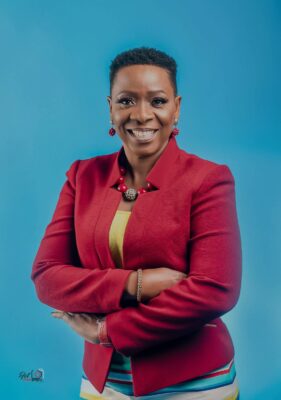
Globally, women hold less than 30 percent of managerial roles, but in Nigeria, the drop-off at mid-senior levels is even more pronounced. It’s a talent leak that Hannah Oyebanjo—CEO of The Republicom Group and Lead Faculty at Redwood Academy, refuses to ignore. For Oyebanjo, gender development isn’t a ‘social issue’; it’s an economic imperative. In this candid interview with IFEOMA OKEKE-KORIEOCHA, she breaks down the mechanics of her SilverLiners program and explains why the corporate world must shift from private mentoring to public sponsorship if it truly wants to see women lead.
You’ve built a strong reputation as an industry leader and were recently honoured with a Lifetime Achievement Award in the gender space. What sparked your interest in gender development?
My interest in gender development evolved alongside my career. Across industries, I observed a consistent pattern of highly capable women entering the workforce with strong potential, but becoming less visible at senior levels.
That raised an important question: why were qualified women not advancing at the same rate? Over time, I became more intentional about supporting female advancement through training, mentorship, and structured programmes.
What began as an observation developed into a clear conviction. Gender development is not just a social issue; it is a leadership and economic priority. Organisations perform better when leadership reflects the full talent pool.
You’re widely known for your corporate leadership. How did you move into gender-focused work?
It was a gradual shift rather than a defined transition. Alongside my corporate roles, I became increasingly involved in initiatives supporting women’s growth, both formally and informally. I started with mentoring and later contributed to structured programmes focused on leadership development. Over time, it became clear that isolated efforts were not enough; there was a need for more deliberate and scalable interventions.
That led to the creation of SilverLiners, designed to address a specific gap at the mid-management level, where many women’s career progression slows. It was a move from individual contribution to building structured solutions.
What has your experience been in the gender space, and what have you contributed to advancing gender equity in Nigeria?
My experience has shown that the challenge is rarely about capability. It is more often about access, visibility, confidence, and organisational structures that influence advancement.
Small interventions, such as increasing visibility or encouraging women to take on critical roles, can significantly impact career progression. However, systemic barriers still require deliberate action.
My focus has been on practical impact. Through initiatives like SilverLiners, I’ve supported leadership development at a critical career stage. I also actively support female talent development and advocate for more inclusive leadership structures.
The recognition through the Marketing Icon Award and the WIMCA Lifetime Achievement Award in 2025 is significant, but it underscores the need for sustained effort. Progress in gender equity requires consistent, intentional action.
Tell us about SilverLiners and what informed its creation ?
SilverLiners was developed in response to a clear gap in the talent pipeline. Many mid-level professionals had the qualifications and experience but were not progressing into leadership roles.
At the same time, organisations were feeling the impact, missed potential, reduced productivity, and retention challenges linked to stalled progression.
SilverLiners addresses both sides. It is a structured leadership programme designed to equip mid-level professionals with the skills, confidence, and strategic awareness required to step into leadership roles.
The programme focuses on practical areas often overlooked in formal education, including leadership dynamics, financial confidence, and career strategy. It also introduces a holistic framework for managing career growth alongside personal development.
At its core, it is about preparing women for leadership in a way that is both intentional and practical.
The programme goes beyond conventional learning to address practical issues often overlooked in schools and corporate environments. These include what no MBA teaches the female gender, which explores the unwritten rules of leadership and influence; how to love figures and gain financial independence, focused on building financial confidence; and 25 Hacks of Career and Business Success, offering actionable strategies for growth.
It also introduces the 360 career and business lady, a holistic framework for navigating career, business and personal development, alongside targeted preparation for executive leadership.
As it continues to grow, SilverLiners is positioning itself as a leading leadership development platform for young professional women in Nigeria who are intentional about reaching their full potential and creating lasting impact.
What achievements have you recorded since SilverLiners started?
The community, we’ve engaged and trained women across several industries such as banking, consulting, FMCG, telecoms, aviation, entrepreneurship, finance , insurance and the public sector. Many now belong to a vibrant alumni network that continues to collaborate, share opportunities, and support one another.
The real achievement is what happens afterwards, women stepping into bigger roles, negotiating better, or simply deciding they will no longer minimise their worth.
You’ve said brilliant women still second-guess their worth. Is that a confidence gap or a rational response to corporate culture?
It’s both. There are internal barriers, years of preparation that teach women to be agreeable and cautious about visibility. But the external environment matters too. In many organisations, women are still judged more harshly for behaviours that earn men praise.
So curbing this issue is in two angles: helping women build confidence while also challenging cultures that quietly penalise female ambition. The first is what SilverLiners is trying to do
What ‘permission slip’ do women most often wait for before asking for more?
Perfection. Many women feel they must be 100 percent ready before taking the next step. Opportunities often arrive before we feel prepared. One thing we emphasise at SilverLiners is that growth usually happens after you say yes, not before.
You’ve said successful women must be ‘bridges.’ What is the difference between mentorship and sponsorship?
Mentoring is guidance. Sponsorship is advocacy. A mentor advises you privately. A sponsor speaks your name in rooms where decisions are made, which means recommending a woman for leadership roles, nominating her for critical projects, or opening doors to influential networks.
Women globally still hold under 30 percent of managerial roles. What policy change would you like Nigerian HR leaders to adopt by 2030?
Women still hold under 30 percent of managerial roles globally, and in Nigeria the gap is wider, with a sharp drop-off at mid- and senior levels despite strong entry numbers.
The most critical shift HR leaders must make by 2030 is intentional sponsorship backed by transparent promotion systems. Women are often mentored but not sponsored, yet sponsorship is what drives visibility, opportunity, and advancement.
Organisations need to track leadership progression, define clear promotion criteria, and hold leaders accountable for diversity outcomes. With these measures, progress can move from intention to real, measurable change.
You said, “Your circle is your currency.” For women stuck in performance mode with no time to network, where should they start?
Start small and be intentional. Networking isn’t about endless events. Sometimes it’s about nurturing a handful of meaningful professional relationships. Reach out to people whose thinking inspires you, engage thoughtfully, and share value. Over time, those relationships become a circle that supports and elevates you.
SilverLiners creates space for vulnerability. How do you measure the ROI when these mid-level professional young ladies return to work?
The ROI is behavioural. They return with clearer boundaries, stronger voices, and greater willingness to pursue leadership opportunities. Many become more intentional about the impact they want to create in their organisations, and that ripple effect is powerful.
You’ve said we “can’t afford to get tired” of empowering women. How do you stay energized when progress feels slow?
Perspective. Social change rarely happens overnight. I focus on the individual transformations we see. When one woman finds her voice, she often opens the door for many others. That reminds me progress may be gradual, but it is real.
How do we shift from women “protecting seats” to building ladders for others?
We have to move away from scarcity thinking. When leadership is seen as limited, people protect their positions. But when organisations expand leadership pathways and recognise women who sponsor others, collaboration becomes the norm. Building ladders should be seen as a leadership strength.
What conversations typically happen at the SilverLiners?
The conversations held at SilverLiners are not rehearsed success stories; they are layered conversations about ambition, setbacks, reinvention and the quiet resilience behind every achievement.
Our speakers unpack the moments people rarely talk about: the missed opportunities, the difficult decisions, the pivots that changed everything. It’s a reminder that leadership is not a straight path, but a series of intentional choices shaped by experience.
This year, voices like Joyce Ojemudia, MD/CEO of Sopray Properties Limited; Josephine Awatefe Sarouk, MD of Bayobab Nigeria; and Adedoyin Amosun, Lead Advisor at Rhodes Peters Ltd, will bring that depth of perspective, sharing insights that are as practical as theyss are personal.
What happens on the programme is simple but powerful and honest stories that leave the mid–level young professional better equipped to lead on her own terms.

Join BusinessDay whatsapp Channel, to stay up to date
Open In Whatsapp