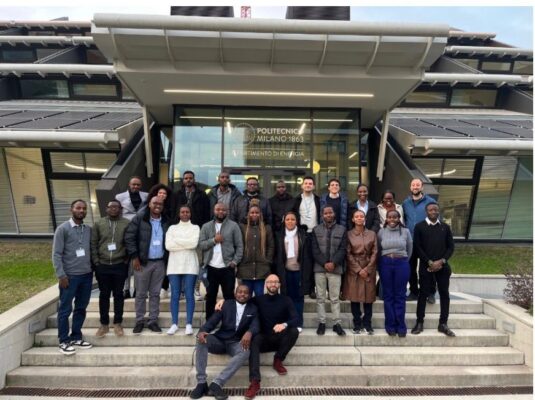
A new Italy-backed academic initiative is reshaping how research collaboration with Africa is designed, shifting the focus from donor-led exchanges to co-developed knowledge systems anchored on the continent’s priorities.
The programme, known as Science Hubs for Advanced Research and Education with Africa (SHARE_Africa), is positioning early-career researchers as the drivers of a long-term transformation in science education, while attempting to correct structural imbalances that have historically limited Africa’s contribution to global research output.
Rather than framing the initiative as development assistance, organisers present it as a strategic investment in knowledge systems—one that aligns academic collaboration with economic competitiveness, innovation, and policy relevance.
Backed by the Italian Higher Education with Africa Foundation and funded under the European Union’s Next Generation EU framework, the programme brings together leading European universities and African institutions in a structured effort to build research capacity across critical sectors.
At the core of this shift is a departure from traditional models where African institutions often played secondary roles in research design and output. SHARE_Africa instead promotes joint ownership—encouraging African scholars to define research questions, shape methodologies, and apply findings within local contexts.
This rebalancing comes at a time when Africa, despite a rapidly expanding academic base, still accounts for a disproportionately small share of global scientific production. Analysts attribute this gap to persistent challenges, including weak research infrastructure, limited funding, and fragmented collaboration networks.
By targeting early-career academics, the programme is designed to address these constraints at their root. Participants are not only trained in technical disciplines but are also exposed to interdisciplinary approaches that link science with policy, business, and societal outcomes.
The initiative is structured around six thematic training tracks, covering sectors considered pivotal to Africa’s development trajectory. These include energy transition, water resource management, health systems, sustainable agriculture, cultural heritage, and business innovation.
In the energy track, led by the Politecnico di Milano, participants examine Africa’s complex position in the global shift towards cleaner energy. The training explores how resource-rich countries can navigate the dual challenge of energy poverty and rising global demand for transition minerals.
Water management, another critical focus area, is addressed through a programme delivered by the University of Naples Federico II, which emphasises practical, technology-driven solutions to scarcity and climate-related risks.
In the health sector, the University of Padua introduces a “One Health” framework that integrates human, animal, and environmental health—an approach gaining traction globally as pandemics and ecological disruptions become more interconnected.
Other academic partners, including the University of Bologna and the University of Florence, focus on food systems and sustainable business practices, equipping researchers with tools to address food insecurity and economic resilience.
More than 120 researchers from countries such as Nigeria, Kenya, Ethiopia, Tanzania, and Côte d’Ivoire have already participated, forming a cross-border network that organisers say will outlive the programme itself.
Beyond training, the broader ambition is to embed these collaborations within institutional frameworks across Africa. This includes developing joint curricula, strengthening research ecosystems, and fostering long-term academic mobility between continents.
The initiative also aligns with continental and global policy frameworks, including the African Union’s Agenda 2063, which prioritises innovation and human capital development as pillars of economic transformation.
However, observers caution that the success of such programmes will depend on sustained political and financial commitment. Without adequate domestic investment and policy alignment, there is a risk that newly acquired skills may not be fully integrated into local systems.
Even so, SHARE_Africa is being viewed as part of a broader recalibration in Africa–Europe relations—one that places knowledge production, rather than resource extraction, at the centre of engagement.
If sustained, such efforts could help reposition African universities from peripheral participants to active contributors in the global research ecosystem, with implications for sectors ranging from renewable energy to digital innovation.

Join BusinessDay whatsapp Channel, to stay up to date
Open In Whatsapp