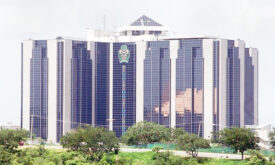
The alarming rate of rising non-performing loans (NPLs) in the banking sector has attracted the attention of stakeholders in risk management, as they gathered last week in Lagos at a breakfast roundtable organised by Risk Managers Association of Nigeria (RIMAN) and Olisa Agbakoba Legal (OAL), to seek ways of reducing non-performing laons(NPLs) in order to avoid another banking crisis.
The NPLs of banks rose by approximately 70 per cent to N628.54 billion at end-June 2015, from N363.31 billion at end-December 2014. At 4.65 per cent from 2.88 per cent, the NPL ratio remained within the prudential limit of 5.0 per cent, though trended closer to the regulatory threshold, reflecting greater levels of stress in the banking industry, the CBN stated in June 2015 financial system stability.
Stakeholders present at the meeting, including those in the financial industry, Central Bank of Nigeria (CBN), the Nigeria Deposit Insurance Corporation (NDIC), chief risk officers from the industry, a number of people from the industry, honourable members of the bench, Lagos high court, and Federal high court, senior advocates and legal people, all agreed to set up a working group as part of measures towards addressing the rising NPL.
The stakeholders also looked at the issue of banks coming together to set up a “private AMCON” as one of the measures to guide against another crisis.
Tokunbo Martins, director banking supervisions department, and Folakemi Fatogbe, director of risk management, CBN and chairman of RIMAN board of trustees stated clearly at the forum that AMCON does not have the capacity to buy more NPL.
Martins acknowledged that the rising NPL in banks is an issue as she recalled that in 2010 during the crisis, the NPL ratio rose to 35 percent, which led to establishment of AMCON. Between 2010 and 2014, NPL dropped significantly to 2.8 percent. It started rising again in 2014 and as at the end of 2015, it rose to 5 percent, which is the regulatory threshold. “It has moved higher than that”, Martins said.
“So we all have a stake in it. It is something we all need to manage. We have set up a working group which will comprise all these stakeholders to map a way forward. NPL is a part of banking- as you lend money there will always be NPL. The CBN obviously always looks at the issue of the NPLs, our colleagues in NDIC have things that they are doing. Obviously all the bank chief officers, CEO’s- have their own teams that consider their portfolios and constantly review and manage NPLs. So what we are doing today, is just something in addition to all the works that is currently going on”, Fatogbe said at the forum.
Adeleke A. A, director, bank examinations, NDIC said as long as there are banks which lend money, there is going to be non-performing loans, but controlling the volume is paramount.
He noted that as part of effort to mitigate high NPL, NDIC has increased capacity of knowledge on how to recover debt, adding that the corporation at different times has sensitised the judges.
Adeleke identifies week legal system as contributory factor to rising NPL, and encouraged lawyers to be proactive. “Until we understand that the money that banks give out belong to depositors and not government’s or banks’, we are not going to see the end of the rise in NPL,” he said.
Olisa Agbakoba, SAN, senior partner, Olisa Agbakoba Legal, called for collaboration of stakeholders to take radical steps to checkmate the rising NPL in order to avoid contending crisis.
“The crisis is huge. So to avoid contending crises, we need to take strong measures to overturn the situations,” he said.
Jude Monye, president of RIMAN noted that the CBN warned the banks two or three years ago to reduce their lending to a particular sector – oil and gas and improve on their risk management system. While putting part of the blame for the rising non-performing loans on the banks Monye said, “we defer what is undefiable”.

Join BusinessDay whatsapp Channel, to stay up to date
Open In Whatsapp