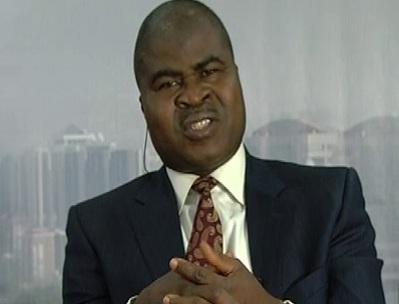
Last week, 9 out or 10 members of the Monetary Policy Committee (MPC) voted for the retention of monetary policy rate at 14 percent, Cash Reserve Ratio (CRR) at 22.5 percent, liquidity ratio at 30 percent and asymmetric corridor of +200/-500. Moses Tule, director of monetary policy department, Central Bank of Nigeria (CBN) explained the committee’s decision in an interview with AIT. Hope Moses-Ashike monitored the interview. Excerpts:
The MPC decision to maintain key rates
The growth across some countries and globally is falling and we notice that there was still this divergence in monetary policy between the United States and the rest of the world. And once the principality that began inflation in the Euro area has reached 2 percent, which is their target for inflation within the medium term to long term, the European Central Bank is likely to toe the same line of monetary policy with the United States, that is, by trying to tighten their monetary policy.
Already Europe inflation has hit 2.7 percent and that is well above the inflation target of 2 percent. The imperative for tightening the policy in the US is there. So we examined the implications of rates tightening like that of the United States, which are, one, there is a possibility of capital reversal back to the United States because the conditions are more favourable and the rates could be higher. Now, with higher rates it means you will have a stronger dollar with higher interest rates. Dollar will be stronger, and if the dollar is going to be stronger then the impact on Nigeria would be that we are going to have a situation where we have imported inflation into the country and that is fundamental, to that extent the committee looked at it.
We also looked at the loopholes in the Europe area, in terms of Japan and the United Kingdom inflation. In Japan, the country is still in recession; they have over $400 trillion year injection as part of the monetary easing program approved by the treasury in Japan. In the UK they are almost there, with their inflation threshold which is 2 percent and they are about 1.8 percent. We have seen that there is a possibility that as inflation is rising in the advanced economy,it is also rising in the developing and emerging market economy as we saw the data that inflation is also rising. We looked at the development in the stock market and how this is likely to impact the stock market. We saw that for quite a number of countries the stock market was not fully bullish but not bearish either. The key activities that we have seen over the years show bearish sign. On the side of the exchange rate the committee took note of the interventions the Central Bank did over the last five weeks to strengthen or to bring clarity in the exchange rate. Nigeria has gone out in the European stock market to raise bond and we saw an over-subscription of those bond, and that is understandable because the rates were extremely very attractive. The political risk, having been priced into the instruments, the economic risk having been priced makes it extremely attractive. When you come back here and saw that you have an interest rate of 14 percent and you still see that investors are not coming because capital inflow is not coming as we have expected, it is an indication that there are pricing risk in the exchange rate, and that is the reason why we are not seeing the kind of capital we expect. So, putting the possibilities of all the issues together, there was no option than for the MPC to hold its position.
What is the meaning of asymmetric corridor of +200/- 500?
First of all the corridor around a country’s monetary corridor rate is supposed to be a rate that anchors all other interest rate in the market, around that rate you create a corridor, now we say ok, the flat rate of 200 basis which is 2% is simply the rate at which the central bank would lend to the commercial bank when it is acting as lender of last resort to the banking system. So it will lend to them at flat rate of 200 basis point above the interest rate that is, it will lend to them at 16 percent when the banks are short of funds. But, when the banks have so much money they can come to the central bank and say, look we have noticed that we have so much money and we want to keep it with the central bank and we do not want to lend to other banks, we want to keep it save with the central bank then we say ok – we are going to give you at MPR -5% which means we will give it to you at 9% and that is the asymmetric corridor, and that is just what it means. If it were to be symmetric we say ok, we will give it to you at 12 percent interest to keep the money, that is what the asymmetric corridor is, so we just maintain it.
One of the biggest questions surrounding the MPC meeting was the new forex rule. The CBN governor said he is determined to maintain a convergence of rates, how does he intends to sustain this policy?
Let me put it this way, it is not a new forex policy, the policy itself was released in 2016. We are just on a continuous basis looking at defining the implementation mechanism. We are implementing it to make sure it is very effective and to bring clarity around the issues.
The clarity we are trying to bring is that we want to know what actually is the size for the demand for forex in the country. So we look at the small demands: BTAs, School fees, medicals and created a window in the banking system to meet these demands that is genuine and we are paying directly to the schools. By the time we implemented this we discovered that those people that needed those little amount of money and were patronizing people out there have need to visit the people by the roadside again, and as their needs were met with the restructured fundamental system, we completely isolated the noise from what the main issues are and now we are facing the actual demands that is coming from manufacturers.
What was causing the noise in the market is the little demands that people are making here and there, and when you put them together, it is not much, it’s just about 200m dollars, so if we say CBN is unable to meet a demand for 200m dollars then there is a problem. But for now the reserves are rising. We are trying to know what the actual demands of the manufacturers is and we are trying to zero in on that to work with that and I think it’s quite sustainable because it is the noise that create that clouding out effect in the first place that makes it look like the demands are far too large for CBN to meet but now that we have isolated the noise from the main issues it is quite clear that the bank is facing it squarely.
Still in line with the forex policy, what are the measures the CBN is putting in place to boost investors’ confidence in Nigeria, because investors are no longer coming in, putting aside insecurity and crime rates?
I think I need to get you very clear and also want you to understand that the task for providing the leadership for macroeconomic policy in the country is not a Central Bank policy. The Central Bank of any country does not provide any leadership for macroeconomic policy. That is strictly the role of fiscal policy. The Central Bank of any country is a junior partner when it comes to defining the pathway for macroeconomic policy. so, when you begin to talk about what the central bank is doing to attract investors, that is not the role of the central bank, that is the role of fiscal policy because fiscal policy is supposed to define the parameters around which investors will look at the investment climates and find it attractive to come into the country. It is within these parameters that the central bank of the country works with the mandate that was given to it by parliaments, in this case that they may maintain price stability. Can I give you an example, in a country where the price stability growth is completely lost – look at a country like Zimbabwe if the central bank lose the price stability it out-rightly going to lose its relevance; you do not have a currency, currency of the country becomes completely nothing. Look at Germany in World War II, when the Reichsmark lost it value, you have thousands, billions of Reichsmark but it could only buy perhaps a bottle of water, and that is what inflation can do to a currency. When you destroy the credibility of the central bank, you load it with responsibilities that it does not have the instruments to execute. Central banks have very little instruments: it is not like a government. The instruments available to a policeman for instance, the policeman has a gun, it has a full retinue of the laws of the country behind him, a policeman can charge you for drinking water in a wrong place for instance but the instruments available to the central bank are so limited and they can do very little with those instruments, only with managing and directing the direction of the monetary policy of the country can the central bank function; perhaps this question could be better put to the fiscal policy and I think we have seen the new economic blueprint the government has released because some of these questions are addressed in that document.

Join BusinessDay whatsapp Channel, to stay up to date
Open In Whatsapp