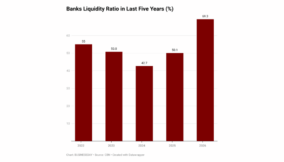
Despite facing a challenging operating environment in 2023, Nigerian banks exhibited remarkable resilience. However, as analysts suggest, the sector is poised to encounter both challenges and opportunities in 2024.
Ayokunle Olubunmi, head of financial institutions ratings at Agusto and Co, outlined a spectrum of factors poised to shape the landscape of banking this year, shedding light on the need for adaptability and strategic foresight amidst a dynamic economic environment.
In a recent gathering hosted by the Finance Correspondents Association of Nigeria (FICAN) in Lagos, Olubunmi highlighted the intricate interplay of policy reforms, economic dynamics, and technological advancements as pivotal forces set to influence banking sector performance. Emphasizing the complexity of predicting outcomes, he stressed the importance for banks to proactively address challenges while leveraging opportunities for sustainable growth.
Among the key themes projected to impact the Nigerian banking sector in 2024, Olubunmi identified several critical areas of focus. A potentially more accommodative stance from the Central Bank, coupled with a cautious monetary policy, could signal a shift in the regulatory landscape. Additionally, reforms in the foreign exchange market, coupled with projections of lower FX gains and subdued international trade, pose challenges for banks navigating the global economic arena.
Expanding into international markets presents an avenue for risk diversification, albeit with its own set of challenges, Olubunmi noted. Strengthening banks’ capital reserves emerges as a crucial strategy for enhancing stability and lending capacity, while potential consolidation within the sector could foster efficiency yet dampen competition.
Moreover, regulatory measures such as the enforcement of loan-to-deposit ratios and compliance with Basel III standards loom large on the horizon, influencing credit expansion and financial stability. The prospect of a macroeconomic downturn raises concerns of increased loan defaults, potentially intensifying competition from non-bank entities in the digital payments sphere.
As Nigerian banks gear up to navigate the uncertainties of 2024, the call for flexibility, innovation, and a nuanced understanding of market dynamics rings ever more urgent. With strategic foresight and proactive adaptation, industry players stand poised to weather the storm and emerge stronger in an increasingly volatile economic landscape.
Olubunmi highlighted how interest rate, Inflation, exchange rate will shape economic growth in 2024. According to him, interest rates serve as a crucial tool for monetary policy authorities to manage and combat inflation, as well as influence exchange rates.
In the current Nigerian context, there is a growing sentiment towards the necessity of higher interest rates. This sentiment arises from the observation that the pressure on the naira partly stems from a low-interest-rate environment, with higher rates expected to moderate economic activities.
Anticipation is rife that the Monetary Policy Committee (MPC) of the Central Bank of Nigeria (CBN) will implement a substantial increase in interest rates, potentially by around 500 basis points, during the forthcoming MPC meeting this month. However, the government’s substantial borrowing raises concerns about the potential adverse impact of high interest rates on the cost of government services. Consequently, there may be hesitation to raise rates excessively.
Analysts project that the average interest rate for the year could hover between 16 and 18 percent, with expectations that it will not dip below 15 percent. Recent increases in treasury bill stop rates further underscore the potential for rising interest rates, as the CBN intensifies efforts to address exchange rate depreciation.
Addressing inflation, insecurity emerges as a significant driver, particularly in regions like the middle belt, where essential goods are produced amidst rampant insurgency and kidnapping. Nigeria has experienced an 11-month consecutive rise in inflation, reaching a peak in December 2023 at 28.92 percent, driven not only by insecurity but also by exchange rate fluctuations and rising import costs due to Nigeria’s heavy dependence on imports.
Looking ahead, uncertainties persist regarding inflation projections. Factors such as foreign exchange earnings, heavily reliant on oil revenue, will play a pivotal role. While crude oil prices averaged $80 per barrel in 2023, projections for 2024 suggest a potential decrease to $70-75 per barrel. Additionally, constraints on crude oil production, not exceeding 1.5 million barrels per day in 2024, further complicate the economic outlook.

Join BusinessDay whatsapp Channel, to stay up to date
Open In Whatsapp