For decades, Africa’s diaspora has sent money home out of duty, love and obligation. The scale has steadily grown quietly, persistently into one of the continent’s most reliable financial lifelines.
Today, African diaspora remittances exceed $100 billion annually. In several countries, those inflows surpass foreign direct investment and official development assistance combined. They now account for roughly 6 percent of Africa’s gross domestic product, an extraordinary share for capital that arrives household by household.
Nigeria alone remains the continent’s largest recipient. Inflows reached $21 billion in 2024 and are projected to climb to $23 billion. Egypt, Kenya, Ghana, Tunisia and Algeria also depend heavily on transfers from citizens abroad. For policymakers, remittances represent dependable foreign exchange. For families, they mean school fees paid, medical bills settled, food security sustained.
But for Africa’s financial institutions, the real question is no longer how much money is coming in. The question is: what happens after it arrives?
The Consumption Trap
Historically, diaspora engagement has revolved around transfers, cash sent home for consumption, family upkeep or, at best, incremental property purchases. Very little of that $100 billion has been systematically converted into structured, professionally managed investments capable of compounding wealth and deepening domestic capital markets.
This is the gap that United Bank for Africa believes it can fill.
At its global headquarters in Lagos, the bank unveiled a comprehensive diaspora banking and investment ecosystem designed to transform remittances from short-term inflows into long-term financial architecture. The initiative, launched under the theme “Beyond Banking: Powering the Global African Lifestyle”, represents a strategic recalibration of how the continent engages its global citizens.
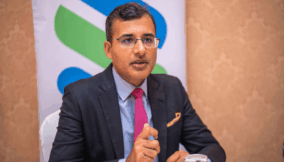
“For decades, Africa’s engagement with its diaspora has focused largely on remittances,” said Anant Rao, UBA’s head of Diaspora Banking. “Today, we are moving beyond that. This platform represents a transition from simple money transfers to a financial ecosystem where Africans globally can bank, make payments, invest, protect their families and build long-term wealth seamlessly.” The ambition is systemic, not transactional.
Read also: UBA, Zenith, Access seen leading Tier-1 bank returns in 2026
Building an Integrated Financial Ecosystem
Rather than introduce a single product line, UBA assembled a multi-institution architecture. The ecosystem includes United Capital Plc for asset management and securities services; Africa Prudential Plc for digital investment management; UBA Pensions for long-term retirement planning; Afriland Properties for structured property pathways; Heirs Insurance Group for protection solutions; and Avon Healthcare Limited for cross-border healthcare access.
The combined objective is to centralise the multiple financial needs of what executives describe as the “Global African” into a single trusted structure.
Banking. Investments. Pensions. Insurance. Property. Healthcare
Rather than forcing diaspora clients to navigate fragmented providers, often across jurisdictions, UBA’s platform seeks to integrate these offerings under one umbrella, supported by cross-selling partnerships and unified onboarding.
“The modern African is a global citizen, mobile, ambitious and deeply connected to home,” said Alero Ladipo, UBA’s Group head of Marketing and Corporate Communications. “Whether living in Africa, Europe, the Americas, or the Middle East, there must be a structured and secure financial connection back home.”
Trust: The Missing Infrastructure
Beneath the product rollout lies a more fundamental issue, trust. During the panel session, speakers acknowledged that many Africans who invested in equities decades ago have lost track of their holdings. Some stockbrokers are no longer reachable. Others have passed on. Investors often conclude their assets have vanished. But in many cases, the underlying companies are still active. The shares still exist. What failed was continuity of record-keeping and institutional anchoring.
Through regulated stockbroking firms such as United Capital Plc and digital custodial services aligned with Securities and Exchange Commission frameworks, diaspora investors can now trace forgotten holdings, reconcile accounts and consolidate portfolios. Tens of billions of naira in unclaimed dividends are believed to stem from such dormant investments.
Encouraging investors to re-engage, verify registrations and regularise documentation is viewed as both a financial recovery process and a confidence-building measure.
The message from UBA’s partners was direct: investments do not disappear simply because a broker does.
Beyond Remittances: Unlocking Productive Capital
Diaspora flows are often described as stable. But stability alone does not generate structural transformation.
“Diaspora capital is not just a flow of funds, it is a strategic growth partner for Africa,” Rao said. “Our role is to provide a trusted platform that converts capital into structured investment and shared prosperity.”
That conversion is critical. Remittances currently serve as consumption support and foreign exchange buffers. But if systematically redirected into capital markets, pension funds, infrastructure-linked securities or managed funds, they could deepen liquidity, strengthen local currencies and reduce reliance on volatile portfolio inflows.
Nigeria’s Central Bank has introduced reforms designed to boost formal remittance channels and improve FX transparency. Public confidence in foreign exchange stability and inflation management is considered essential if diaspora investors are to shift from transactional transfers to long-term commitments.
The opportunity is profound: even a modest allocation shift from consumption into structured investment could alter Africa’s funding model.
Distribution: Digital Meets Physical
Executives acknowledged that technology alone cannot solve diaspora engagement. While the platform emphasises seamless onboarding, digital identity verification and transparent reporting, many diaspora investors still demand physical advisory relationships, particularly for high-value investments.
UBA’s footprint across 20 African countries, alongside relationships in the United States and the United Kingdom, provides a dual distribution model: digital execution supported by certified advisers operating within local regulatory frameworks.
“Distribution is central,” speakers noted. “Trust requires presence.”
Each partner institution is expected to actively bring customers into the ecosystem rather than wait for central referrals. Pension administrators, insurance providers and asset managers must contribute to client acquisition, creating an expanding and interlinked customer base. The model depends on collaboration, not competition.
Risk, Protection and Sustainability
Healthcare coverage presented one of the more nuanced discussions during the forum. Pre-existing conditions such as cancer, renal disease and hypertension pose actuarial challenges.
The speakers were candid: unlimited coverage for high-cost treatments is not sustainable. However, structured financial protection covering diagnosis and early-stage management within defined caps can provide meaningful safety nets without jeopardising insurer stability. The philosophy is pragmatic: access must coexist with sustainability.
The same logic applies across pensions and asset management, long-term savings require governance, transparency and professional oversight.
Africapitalism and the Private Sector Mandate
Underlying the strategy is a broader ideological framework, Africapitalism, championed by UBA’s Chairman, Tony O. Elumelu.
The doctrine asserts that Africa’s private sector must drive long-term investments that generate both returns and social impact. In this framework, diaspora capital is not charity. It is growth equity.
“Africa will increasingly be financed by Africans themselves, including Africans abroad,” Rao said. “Our responsibility is to build the trusted financial infrastructure that makes this possible.”
As global funding conditions tighten and development finance grows more conditional, mobilising domestic and diaspora capital becomes not just strategic, but necessary.
A Structural Reconnection
The diaspora story is not new. Generations of Africans have left for the United Kingdom, Saudi Arabia, North America and Europe. Many return later in life seeking reconnection through property ownership, family healthcare coverage or retirement planning.
The emotional bond to home has always existed. What has often been missing is financial architecture robust enough to channel that bond into sustainable development.
UBA’s strategy signals a recognition that Africa’s next growth chapter may depend less on external capital and more on structured mobilisation of its own global citizens.
If even a fraction of the continent’s $100 billion in annual remittances is systematically redirected into transparent, professionally managed vehicles, the multiplier effects could reshape liquidity, investment depth and capital formation across African markets.
Remittances built resilience.
Structured diaspora investment could build institutions. “When Africa’s global citizens invest back into Africa,” Rao said, “growth becomes inevitable.” And for UBA, the race has shifted from moving money to compounding it.

Join BusinessDay whatsapp Channel, to stay up to date
Open In Whatsapp