Although the Central Bank of Nigeria (CBN) kept its Monetary Policy Rate (MPR) on hold at 11.5 percent on Monday, there was a hawkish tilt among the members of the Monetary Policy Committee (MPC) as four out of six voted in favour of interest rate hike.
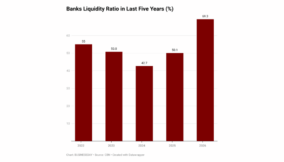
After the MPC meeting in Abuja, Godwin Emefiele, governor of the CBN, announced that the MPC also voted to retain the asymmetric corridor of +100/-700 basis points around the MPR; the CRR at 27.5 per cent; and the liquidity ratio at 30 per cent.
The CBN has kept the MPR at 11.5 percent since September 2020 on fragile growth and rising inflation concerns.
Nigeria’s headline inflation accelerated to 15.70 percent in February from 15.60 percent in January, according to the National Bureau of Statistics.
Bismarck Rewane, CEO of Financial Derivatives Company Limited, said, “When you have four members say they should increase the interest rate, three by 25 basis points and one by 50 basis points, it shows that the hawks are beginning to come out. What that means is that in May, if things don’t change, you are likely to see a 50 basis increase in interest rate.”
“With real rates negative for some time, as Nigeria has tried to manage the cost of domestic financing and pressure on its fiscal deficit, a forceful monetary policy response to the threat of higher inflation will remain difficult,” said Razia Khan, managing director/ chief economist, Africa and Middle East Global Research, Standard Chartered Bank.
Notwithstanding some expectations of a pronounced base effect, Khan thinks Nigeria is at risk of higher inflation.
“Food makes up 52 percent of the Consumer Price Index basket, and Nigeria will be impacted by the uncertainty around food imports. Moreover, diesel is not subject to the fuel subsidy, and associated price rises could put pressure on electricity generation too,” she said.
According to her, there are no easy policy options for the CBN.
She said, “On the one hand, there is the pledge to manage liquidity through CRR debits. On the other hand, the CBN will continue with its ‘intervention funds’ in order to boost the output response of the economy, especially the supply of food.
Read also: CBN holds interest rate at 11.5% over imported inflation concerns
“Should shortages continue to pressure parallel market FX rates, this raises the risk of faster feedthrough into price pressures in the wider economy. There are no easy policy responses, easy and relatively painless to implement, that can help rein in price pressures.”
On his part, Nnamadi Nwizu, co-managing partner, Comercio Partners, said, “The pressure is there and it continues to build up, unless we have a change in policy. It is very usual to see CBN raise rates in a pre-election year. So that means the current rate might remain up till the next elections in 2023.”
According to analysts at CardinalStone Research, the disposition of the CBN suggests a possible rate hike – H2 2022 by its projections – as three members voted for a 25bps rate hike and one voted for a 50bps increase.
“In our view, the committee’s decision seems reasonable, as a hike may not necessarily curb the current inflationary pressure due to its supply-sided nature and could also constrain credit creation to the real economy,” the analysts said.

Join BusinessDay whatsapp Channel, to stay up to date
Open In Whatsapp