The Road Ahead of 2026 for the Nigerian Economy.
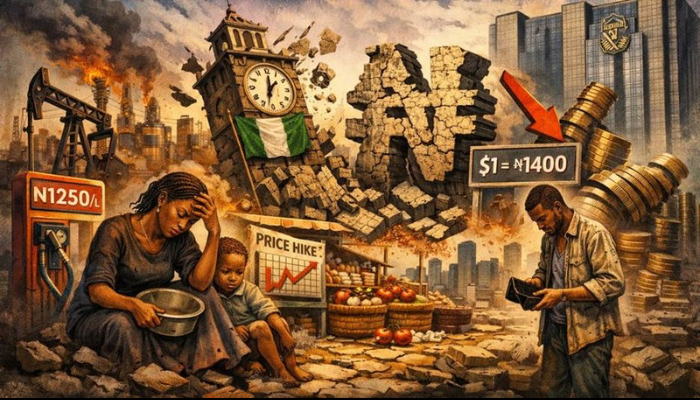
Nigeria enters 2026 standing at a crossroads. Over the past two years, the country has embarked on some of the most significant and audacious economic reforms seen in decades. Fuel subsidies were removed, the foreign exchange market was liberalised, and difficult decisions were made to address long-standing structural distortions. These reforms were never going to be painless. For millions of Nigerians, the cost of living has risen sharply. Food prices remain high, businesses continue to struggle with operating costs, and households are feeling the pressure of rising inflation. Yet many economists argue that these reforms, while painful, were necessary to prevent deeper economic challenges in the future.
Today, Nigeria finds itself in a period of transition. The old economic model is being dismantled, but the benefits of the new one have not yet fully materialised. The question is no longer whether reforms were needed. The question is whether Nigeria can sustain them long enough to achieve meaningful transformation.
A Snapshot of the Economy in 2026.
On paper, Nigeria remains Africa’s largest economy, but for many citizens, economic size has not translated into economic prosperity. GDP growth is projected to range between 3.2% and 3.8% in 2026, an improvement from previous years. Much of this growth is being driven by services, telecommunications, technology, financial services, and non-oil exports. However, with population growth estimated at approximately 2.6% annually, economic growth per person remains relatively modest.
Inflation, while gradually easing, continues to be one of the biggest challenges facing households. After peaking above 33% in late 2024 following subsidy removal and exchange-rate reforms, inflation is expected to moderate to between 22% and 25% in 2026. Food inflation remains particularly severe, with many families spending a growing share of their income simply to feed themselves. The naira has also undergone a dramatic transition. After years of operating under multiple exchange rates, Nigeria moved toward a market-reflective system. While this reduced distortions and improved transparency, it also increased the cost of imports and created significant adjustment pressures for businesses dependent on foreign inputs. Oil remains central to government finances, accounting for roughly 70% of government revenue and approximately 85% of export earnings. Yet paradoxically, oil contributes less than 8% of GDP.
Production continues to face challenges, including theft, pipeline vandalism, underinvestment, and ageing infrastructure. At the same time, public debt has surpassed ₦120 trillion, with debt servicing consuming a substantial portion of government revenue. This leaves limited fiscal space for infrastructure, healthcare, education, and other critical investments.
Perhaps most concerning is the social reality. Youth unemployment remains high, poverty levels remain significant, and many Nigerians continue to face a severe cost-of-living crisis.
The economy is becoming more market-oriented and transparent, but the transition has come with real sacrifices.
The Structural Challenges Nigeria Must Confront
Nigeria’s economic challenges did not emerge overnight, and they cannot be solved overnight. Many of the issues are deeply interconnected.
- Overdependence on Oil
For decades, oil has been both Nigeria’s greatest blessing and its greatest vulnerability. When oil prices rise, government revenues increase. When prices fall or production declines, fiscal pressures emerge almost immediately. This dependence has often distracted attention from developing other productive sectors of the economy. It has also contributed to exchange-rate volatility and discouraged long-term diversification.
- Infrastructure Deficits
Few issues affect economic productivity more than infrastructure. Power shortages continue to constrain industrial growth. Despite being home to more than 220 million people, Nigeria’s grid generation still averages only about 4,500 to 5,500 megawatts. Road networks remain inadequate, port congestion increases logistics costs, and rail infrastructure remains underdeveloped. For businesses, these challenges translate directly into higher operating costs and reduced competitiveness.
- Insecurity
Economic development cannot thrive where security is weak. Insecurity across various parts of the country has disrupted farming activities, reduced investment, displaced communities, and contributed to rising food prices. Agriculture should be one of Nigeria’s strongest economic sectors. Instead, many farmers struggle to safely access their land.
- Revenue Challenges
Nigeria’s tax-to-GDP ratio remains among the lowest in the world at roughly 10-11%. This means government revenue remains limited despite the country’s large population and economic potential. At the same time, debt obligations continue to increase, creating pressure on public finances.
- Population Growth
Nigeria’s greatest asset may also become its greatest challenge if not properly managed. The country adds roughly five million people every year. More than 60% of Nigerians are under the age of 25. This young population represents enormous potential, but only if quality education, skills development, and employment opportunities keep pace. Without these, demographic growth can become a source of economic strain rather than economic strength.
Reasons for Optimism
Despite the challenges, several sectors continue to demonstrate remarkable resilience and growth.
- The Digital Economy
Nigeria’s technology ecosystem remains one of Africa’s most dynamic. Fintech companies have transformed payments and financial inclusion. Technology startups continue to attract investment, while the country’s creative industries, from film to music, are expanding their global influence. The digital economy is increasingly becoming one of Nigeria’s most important growth engines.
- Agriculture and Food Processing
Nigeria spends billions of dollars importing food products that could potentially be produced locally. This creates enormous opportunities across agriculture, storage, logistics, processing, and food manufacturing. The future of agriculture is not simply growing crops; it is building value chains that connect farms to factories and markets.
- Gas and Energy
Nigeria possesses over 200 trillion cubic feet of proven natural gas reserves. While oil has dominated economic conversations for decades, gas may ultimately prove more transformative. Gas can power industries, expand electricity generation, support fertilizer production, and drive industrialization across multiple sectors.
- Manufacturing and Regional Trade
The African Continental Free Trade Area presents a significant opportunity. For the first time, Nigerian manufacturers have access to a continental market of over one billion people. If logistics, energy, and regulatory bottlenecks are addressed, Nigeria could become one of Africa’s manufacturing hubs.
- Diaspora Contributions
Nigerians abroad continue to play a critical role in supporting the economy. Remittance inflows now rival and sometimes exceed several major sources of foreign exchange. Beyond capital, the diaspora also provides skills, networks, expertise, and global market access.
What Must Happen Next
The path forward is not mysterious. Most experts agree on the broad direction of reform. The challenge lies in execution. Nigeria must maintain exchange-rate stability, reduce inflation, improve fiscal discipline, and continue strengthening investor confidence.
- Power sector reform must accelerate, allowing states and private investors to play larger roles in electricity generation and distribution.
- Agriculture must move beyond subsistence production toward large-scale commercial value chains.
- Education systems need to align more closely with the demands of a modern economy, focusing on technical skills, digital literacy, entrepreneurship, and innovation.
- Government services should become increasingly digitized to improve transparency and reduce leakages.
Most importantly, security must improve. Economic growth cannot flourish in environments where citizens and businesses do not feel safe.
The Politics of Reform
Perhaps the biggest obstacle to economic transformation is not policy design but political execution.
Nigeria has produced countless reports, committees, and reform agendas over the years. The challenge has rarely been knowing what to do. The challenge has been doing it consistently over long periods. Economic transformation takes time. It requires policies that survive election cycles, institutions that outlast administrations, and leaders willing to prioritize long-term national interests over short-term political gains. Without continuity, even the best reforms can fail.
Looking Towards 2030
If current reforms are sustained and execution improves, Nigeria could look very different by the end of the decade.
- Economic growth could accelerate beyond population growth.
- Inflation could return to manageable levels.
- Power generation could expand significantly.
- Agriculture, manufacturing, and services could reduce the country’s dependence on oil.
- Millions of new jobs could be created, particularly for young people.
- Most importantly, economic growth could become more inclusive and improve living standards for ordinary citizens.
- These outcomes are ambitious, but they are achievable.
- Countries such as Vietnam, Indonesia, and Bangladesh have demonstrated what can happen when consistent policies, investment in human capital, and long-term planning come together.
- There is no reason Nigeria cannot do the same.
What to Look Forward to in 2030 to Improve the Economy
By 2030, several long-term economic frameworks and industrial projects are expected to mature, altering the country’s economic trajectory:
- Full Industrial Integration of Refineries: Total self-sufficiency in refined petroleum products (via Dangote and state-owned refineries) will plug the massive FX drain historically spent on importing fuel.
- The AfCFTA Boom: The African Continental Free Trade Area (AfCFTA) is projected to reach peak operational efficiency. Nigeria, as a manufacturing and entertainment hub, stands to gain massively from tariff-free access across Africa.
- The Gas Revolution (Decade of Gas): Major pipeline projects (like the AKK pipeline) are anticipated to be fully operational, fuelling heavy industries and gas-to-power plants, bringing cheap energy to industrial clusters.
Brief Sectorial Analysis of Nigeria’s Economy (2026)
Nigeria’s economy in 2026 is navigating a critical transition period. Growth projections hover around 4.4% GDP growth, fuelled heavily by the non-oil sector as recent fiscal and monetary adjustments begin to stabilize. The outline below shows the growth projections for the core sectors driving this momentum.
Key Sector Highlights:
- Financial Services: Leading the charge with a projected 20.3% growth rate, driven by aggressive recapitalization banks underwent to strengthen financial systemic stability.
Information & Communications Technology (ICT): Steady at 6.6%, remaining a core pillars of non-oil expansion due to digital banking, fintech, and expanded broadband penetration. - Oil & Gas: Contributing roughly 6.6% to growth, while it remains the dominant source of foreign exchange, its growth rate reflects the ongoing struggle with oil theft and infrastructure limitations, forcing a pivot toward gas monetisation.
- Manufacturing & Agriculture: Manufacturing is seeing a modest recovery at 2.6% as businesses slowly adapt to foreign exchange realities. Agriculture struggles against supply chain bottlenecks and security issues, projecting a modest 3.0% increase.
Structural Reforms Required to Improve the Economy
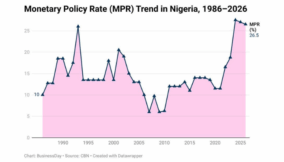
To unlock sustained economic growth beyond 2026, structural changes are non-negotiable. While past reforms focused heavily on banking sector consolidation and market liberalisation (as mapped historically below), modern requirements stretch into fiscal discipline and infrastructure. The modern blueprint for structural reform rests on three main pillars:
1. Revenue Diversification: Moving past crude oil dependence by digitizing tax collection, expanding the tax base, and formalizing small-to-medium enterprises (SMEs).
2. Power Sector & Infrastructure Overhaul: Eliminating grid inefficiencies. High energy costs act as a heavy tax on local manufacturing.
3. Exchange Rate Transparency: Ensuring a fully functional, predictable, and transparent official FX market to restore foreign direct investment (FDI) confidence.
“Ultimately, Nigeria’s greatest resource is not its oil, gas, or minerals. It is its people – Prof Prisca Ndu”.
Top 10 Countries in Africa by 2025 GDP
The economic pecking order in Africa has seen intense shifts over the last year. Due to currency devaluations in major economies like Nigeria and Egypt, countries with more stable currency pegs or massive industrial booms have moved up the global leader boards. The visual below illustrates the broader landscape of the continent’s fastest-growing economic powerhouses moving through this period.
Conclusion.
Nigeria’s economy in 2026 feels much like a nation rebuilding after a difficult but necessary transition. The reforms of recent years have exposed weaknesses that were previously hidden beneath subsidies, controls, and distortions. The immediate effects have been painful, but they have also created an opportunity to build a more resilient and competitive economy. The road ahead will not be easy. Yet Nigeria possesses advantages that many countries would envy: abundant natural resources, a large domestic market, a vibrant entrepreneurial culture, and one of the youngest populations in the world. If the country can unlock their productivity, creativity, and potential, the next decade could become one of the most important periods of economic transformation in its history. The future is not guaranteed. But the opportunity is there. What happens next depends on whether the country can turn good ideas into consistent action.
For more information, clarifications and support, Contact Prof. Prisca Ndu on +234 8033086190 or [email protected]
Join BusinessDay whatsapp Channel, to stay up to date
Open In Whatsapp