


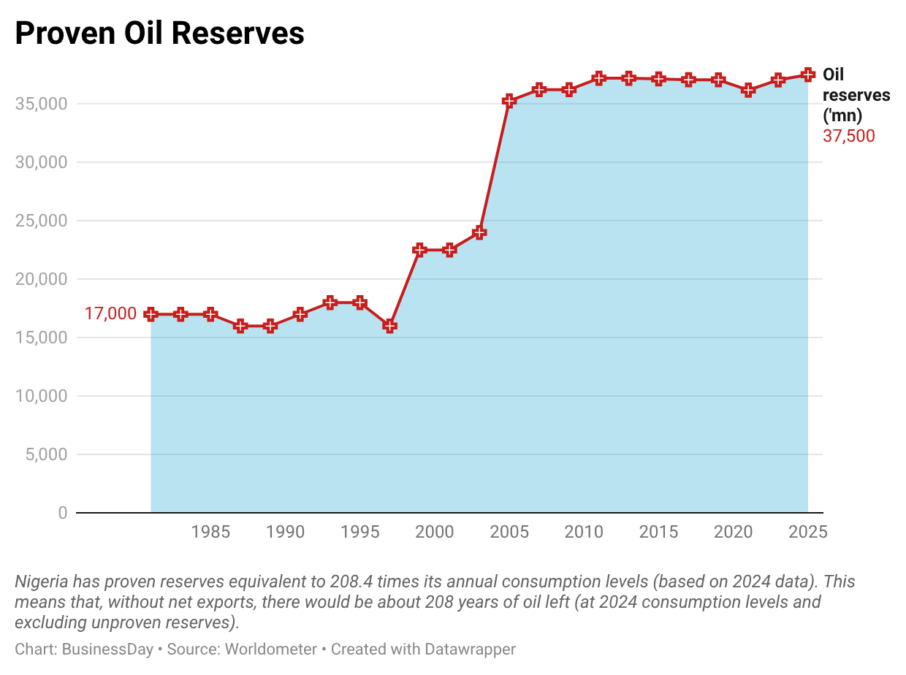
This edition of Nigeria Policy Watch asks a simple question that has shaped Nigeria’s energy history: how a country with 37 billion barrels of crude reserves spend decades importing the petrol its own citizens burn every day?
Nigeria’s four state-owned refineries were built to answer that question. The first Port Harcourt refinery opened in 1965, followed by Warri in 1978, Kaduna in 1980 and a second Port Harcourt facility in 1989. Together, they had a combined capacity of 445,000 barrels per day. By the early 2000s, years of neglect had left most barely functioning. Over 80 percent of petrol was imported.
The past three years appeared to mark a turning point. Fuel subsidies were scrapped. The Dangote Petroleum Refinery began supplying petrol to the domestic market in September 2024. Gasoline imports fell from an average of 200,000 barrels per day in 2024 to just 62,000 by January 2025, according to S&P Global Commodity Insights. By March 2026, Nigeria had become a net exporter of petrol, shipping about 44,000 barrels per day abroad. But domestic refining did not remove exposure to global oil markets.
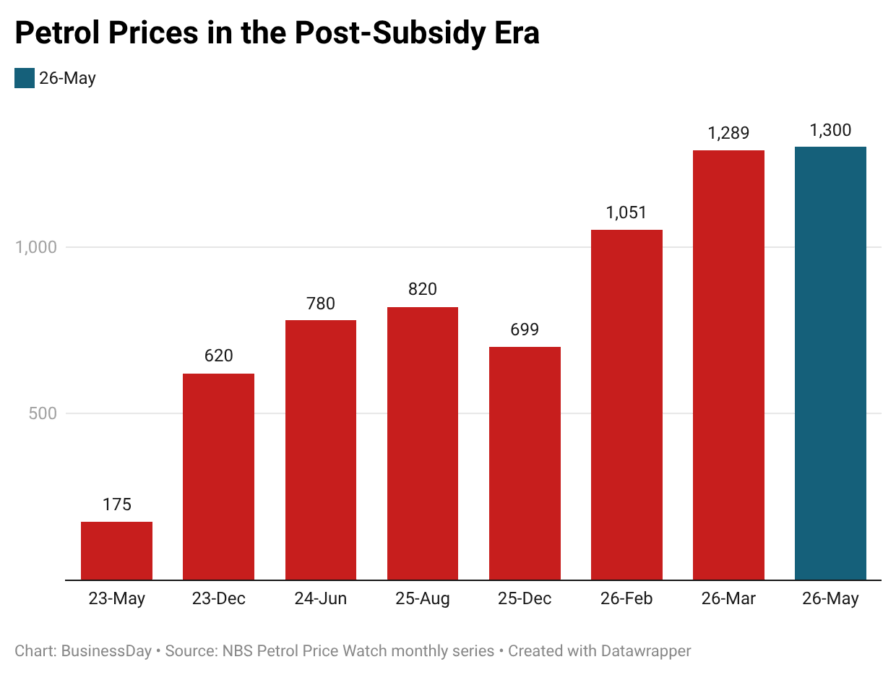
When tensions around the Strait of Hormuz escalated in early 2026, crude prices surged. Brent rose from about 82 dollars per barrel in February to as high as 114 dollars by late March. Petrol prices followed. Data from the National Bureau of Statistics showed the average pump price jumped 22.55 percent in a single month, rising from N1,051.47 per litre in February to N1,288.54 in March. By May, motorists across the country were paying an average of N1,300 per litre.
A senior official at the NMDPRA. “The deregulated downstream petroleum market is designed to reflect market realities, but it also exposes consumers to global crude price volatility.”
Over the years, Nigeria has tried three different answers to the same problem. The subsidy era sought to protect consumers from global price shocks. Deregulation relied on markets to allocate resources more efficiently. Domestic refining aimed to reduce dependence on imported fuel. Each represented a different policy choice. None eliminated exposure to movements in the global oil market.
Muda Yusuf, the ceo of Centre for the Promotion of Private Enterprise cautions that the transition carries structural risks.
“Nigeria must not recreate the profound economic distortions caused by decades of fuel import dependence at a time when domestic refining capacity is finally expanding.”
The crude paradox
No account of Nigeria’s energy history is honest without confronting the paradox at its centre. Nigeria is Africa’s largest crude oil producer. It has never achieved energy security. For most of five decades, the country produced crude, shipped it abroad and imported the refined products its population needed. Every litre of imported petrol was purchased in dollars at global prices, regardless of what Nigerian crude was earning in the same transaction. Oil wealth generated federal revenue. It did not generate affordable fuel.
Affordability without security: the subsidy era
Nigeria’s first energy policy framework ran from the early 1970s through May 2023. The philosophy was direct: petroleum revenues belonged to the Nigerian people, and subsidised fuel was the most tangible expression of that entitlement. Government absorbed the difference between global market prices and what consumers paid at the pump. For decades, the policy achieved what it set out to achieve. Petrol remained cheap.
But the same controls that protected consumers destroyed every commercial incentive to invest in domestic refining. Utilisation across Port Harcourt, Warri and Kaduna averaged below 20 percent for most of the 2010s, according to NNPC’s own published performance data. Successive governments expanded the import regime rather than fix the infrastructure. NNPC Group audited financial statements showed subsidy payments rising from N1.35 trillion in 2021 to N4.39 trillion in 2022. The Federal Ministry of Finance recorded a further N2.7 trillion in the first four months of 2023 alone. The subsidy era kept fuel affordable. It did not build the infrastructure to make affordability last.
Market pricing without insulation: the deregulation era
The removal of the fuel subsidy on 29 May 2023 was the most consequential economic decision of President Tinubu’s first day in office. Price controls had weakened investment incentives and strained public finances. In fiscal terms, the reform delivered. By 2024, the subsidy had largely been removed, creating a pricing environment that made large-scale domestic refining commercially viable.
But deregulation exposed consumers to global price volatility before any domestic supply base existed to absorb it. Petrol moved from N175 per litre in May 2023 to N620 by year-end, driven by a naira that lost more than 70 percent of its value against the dollar between June 2023 and early 2024, per Central Bank of Nigeria exchange rate data.
For a country still importing more than 80 percent of its petrol at deregulation, the global price of crude had become, without any buffer, the domestic price of fuel. Deregulation corrected a problem that had become unsurvivable. It did not create the conditions for price stability.
Better supply, persistent exposure: the refining era
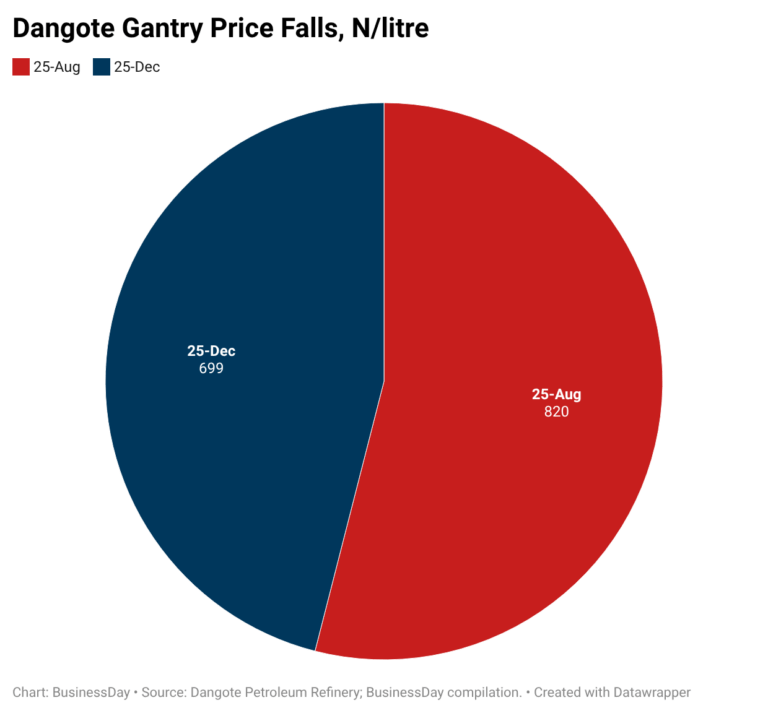
The Dangote Petroleum Refinery changed the structure of the market more than any reform since 2023. With nameplate capacity of 650,000 barrels per day and a naira-for-crude arrangement with NNPC, it offered something neither previous era had managed: a domestic source large enough to discipline the market. The gantry prices fell from N820 in August 2025 to N699 in December, driven by supply competition. Imports collapsed from 200,000 barrels per day in 2024 to 62,000 by January 2025, per S&P Global. An export position followed.
But the arrangement carried a weakness the Hormuz shock exposed precisely. Between October 2024 and October 2025, NMDPRA data showed the refinery averaged only 18.03 million litres per day against a 35 million litre daily target, 51.5 percent of projection. NNPC, partially directing upstream crude toward servicing foreign debt, delivered roughly half of what the agreement required. Dangote imported 3.74 billion dollars of foreign crude in 2025 to cover the deficit, per company disclosures reported by BusinessDay. When Hormuz drove Brent above 100 dollars, the refinery’s cost base moved with it. The refining era reduced import dependence substantially. It did not eliminate the exposures beneath it.
The constraints that never changed
Across five decades and three policy frameworks, three structural constraints proved remarkably persistent.
First, global crude price exposure. Every barrel refined in Nigeria is priced against Brent. The IEA’s 2025 analysis put approximately 15 million barrels per day of crude, representing 34 percent of global trade, moving through the Strait of Hormuz. Nigeria sits outside that corridor. Its refinery feedstock costs do not.
Second, exchange-rate vulnerability. The naira’s structural weakness amplifies every external energy shock. When global crude rises in dollars and the naira depreciates simultaneously, the effect on domestic fuel costs is multiplicative, not additive. The naira lost more than 70 percent of its value between June 2023 and early 2024, per CBN data. Every crude price movement since has landed on a weaker base.
Third, institutional execution. The naira-for-crude deal was the correct instrument. NNPC’s chronic underdelivery at 51.5 percent of contracted volumes, per NMDPRA data, negated it in practice. No energy strategy has resolved this gap between instrument design and institutional performance.
The comparison that matters
The refinery demonstrated between August and December 2025 what becomes possible when supply is reliable and feedstock costs are controlled. Prices fell. Competition worked. Had NNPC delivered its contracted volumes, the refinery’s dollar import exposure would have been substantially lower and the Brent spike would have reached Nigerian pumps with less force. Countries that have maintained durable energy price stability through external shocks have built institutional architecture to separate domestic supply from global price cycles, through strategic reserves, mandatory supply obligations and feedstock delivery frameworks with enforceable consequences. Nigeria has the refining capacity. It does not yet have that architecture.
What the record says
Each of Nigeria’s energy policy eras addressed a real constraint. The subsidy era kept fuel affordable for five decades. Deregulation eliminated a fiscal drain that had consumed N4.39 trillion in a single year. Domestic refining sharply reduced Nigeria’s dependence on imported petrol and allowed exports of refined petroleum products to emerge within two years. These were real achievements.
What the Hormuz shock revealed is what each era left intact. The subsidy era preserved affordability but left the refining infrastructure in ruins. Deregulation removed a fiscal distortion but exposed households to global price signals before supply depth existed to absorb them. The refining era addressed import dependence but not the crude price and currency exposure beneath it. Each reform peeled back one layer of vulnerability and found another underneath.
Nigeria does not need a new energy policy. It needs the institutional capacity to execute the one it has, without the logic of protection dissolving when a shock arrives or a supply agreement underperforms. That means enforceable NNPC crude delivery obligations with NMDPRA monitoring published monthly. It means a daily ex-depot price dashboard creating the conditions for genuine competition to reach consumers. It means treating the upstream shortfall as a fiscal priority: every 100,000 barrel per day below the 1.84-million-barrel 2026 budget target costs approximately 4.1 billion dollars in annual revenue, per PwC Nigeria analysis.
The Dangote refinery exists. The institutional infrastructure to protect what it can deliver does not yet. That is the honest summary of five decades of Nigerian energy policy. The country has

Join BusinessDay whatsapp Channel, to stay up to date
Open In Whatsapp


