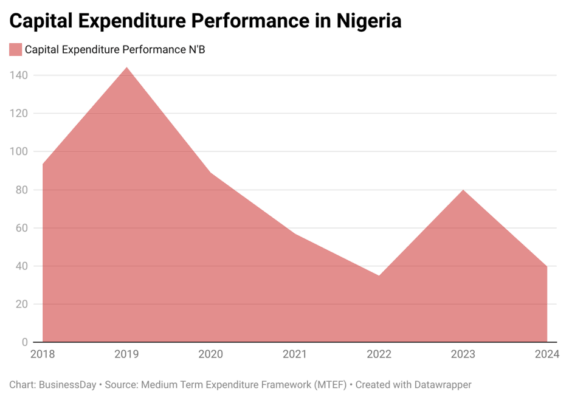
When a country builds roads, factories, power plants, or buys machinery, it is investing in its future. Economists call this Gross Fixed Capital Formation (GFCF), but essentially, it comes down to one question: is the country building its future or not?
In Nigeria’s case, that answer has been lea
```
Members Only
Login or create an account to continue
This article is available to registered BusinessDay readers. Please login if you already have an account, or create a new account to continue reading.
New to BusinessDay? Register now and start reading.
```
Oluwatobi Ojabello
Oluwatobi Ojabello, PhD, is a dynamic and multi-dimensional Assistant Editor for Economy and Markets with over two years of professional journalism experience. He delivers authoritative, data-driven coverage of fiscal policy, financial institutions and capital markets, using clear analysis to explain Nigeria’s most complex economic developments. His work focuses on macroeconomic policy, financial stability and corporate performance, turning technical issues into accessible narratives that inform both experts and everyday readers.