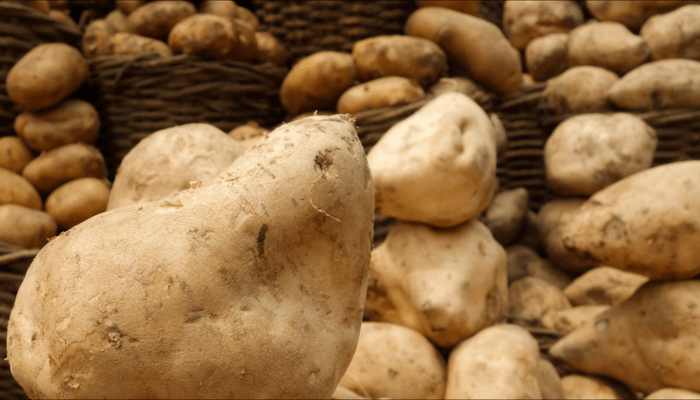
Sweet potato prices in Nigeria have doubled in recent weeks, driven by a surge in input costs and escalating insecurity in key farming areas.
The staple crop, widely consumed across the country, now sells for an average of N70,000 per 100kg bag, up from N35,000 in early June, according to BusinessDay’s market survey across Lagos.
Farmers have attributed the price hike to structural challenges in the sector, including high logistics costs and increased costs of farm inputs, such as fertilisers and seeds. As a result, farmers say they are adjusting prices to recover their additional expenses.
The situation is further complicated by insecurity in farming areas, which disrupts planting and harvesting cycles, leading to unstable supply and fluctuating prices.
Idris Muhammed, a potato trader at Mile 12 Market, said the cost of transporting the staple from key growing states in the northern parts of the country to Lagos has almost doubled due to the surge in fuel prices.
“Input prices are still surging at every planting cycle, and fertiliser prices are still surging. When you factor all this in, the cost of production will surge.”
Nigeria is a top grower of sweet potato with 4.09 million metric tons in 2024, according to data from the Food and Agriculture Organisation (FAO).
Danjuma Mafulul, a sweet potato farmer and processor based in Plateau State, warned that farmers are increasingly abandoning their fields due to life-threatening risks in agrarian communities.
Beyond the threat of physical violence, the unresolved herder-farmer conflict has decimated active farmlands. Mafulul highlighted a devastating trend where herdsmen drive cattle directly onto cultivated sweet potato fields.
He explained that each sweet potato price cycle follows a predictable pattern yearly. During the November–December harvest, supply is abundant and prices are at their lowest. As supplies begin to decline in January, prices gradually increase through February and March.
By April and May, the off-season peaks, supply becomes scarce, and prices hit their highest levels until the next harvest begins; however, he noted that the surge this year has been drastic compared to other years owing to high input costs and rising insecurity.
According to Christie Sunkur, national president for the Potato Growers, Processors and Marketers Association of Nigeria, the sweet potatoes currently hitting the market were cultivated during the dry season, which forced farmers to rely heavily on artificial irrigation.
“Because of irrigation, you have to fuel your pumping machine, and you know the cost of petrol is high, since the sweet potato being harvested is not rain-fed,” she said.
“The market always fluctuates like this, but once the rain-fed potatoes are introduced into the market, the price will finally crash,” she added.

Join BusinessDay whatsapp Channel, to stay up to date
Open In Whatsapp