Stakeholders in Nigeria’s agriculture sector have called for massive investments in export infrastructure, decentralised supply chains, farmer productivity ecosystems and scalable distribution systems to avert the country’s worsening food insecurity crisis.
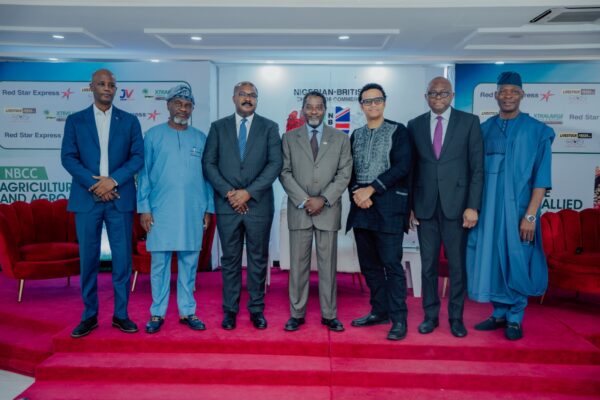
The stakeholders spoke on Thursday at the 2026 Agriculture and Agro-allied Summit of the Nigerian-British Chamber of Commerce held in Lagos.
They warned that poor logistics, weak financing systems, post-harvest losses and fragmented agricultural supply chains were limiting productivity and undermining Nigeria’s non-oil export potential.
Speaking at the summit, Olashore Abimbola, president of the Nigerian-British Chamber of Commerce, said Nigeria must urgently improve its agricultural export systems and attract investments into logistics infrastructure.
Read also: Dangote Refinery drops ex-depot petrol price to N1,200/litre
“The issue of food security is highly topical. Clearly, it needs investment. From the conversations we’ve had earlier on, we’ve spoken about the issue of insecurity itself, leading to food insecurity,” Abimbola said.
He explained that agriculture could provide large-scale job creation opportunities. “Nigeria needs to take a lot of people out of poverty and to make sure that our youths are carefully employed,” he said.
Abimbola asserted that innovation, investment and improved export competitiveness are critical to transforming the sector, noting that Nigeria itself must improve its non-oil exports.
He identified post-harvest losses and poor logistics systems as major obstacles to agricultural exports, stressing that private investors must take the lead in developing infrastructure such as transportation networks and cold storage facilities.
“There’s no point exporting if you say something has a value of, let’s say, 90 days to 120 days from the farm gate. It probably takes seven days to get to Lagos. It takes one month before you can export. So, by the time you even get to the destination, only one month to go,” he said.
According to him, logistics investments will come up in transportation and cold storage; however, strong private-public partnerships must be involved.
“The government can come up with an enabling environment, but who’s going to build cold storage? Is it the government again? That’s why we’re also appealing to the private sector to step up to the plate and make the necessary investments that can make sure we improve on our exports,” Abimbola said.
Across the room, the speakers emphasised that there are opportunities to mobilise investments across the entire agricultural market chain, from production and storage to processing, logistics and export.
Kola Masha, managing director of Babban Gona, said that Nigeria must build entirely new agricultural systems capable of supporting millions of smallholder farmers and addressing youth unemployment.
“Nigeria does stand at a little bit of a crossroads. We’re a nation of approximately 230 million souls, the most populous on this continent and among some of the most agriculturally endowed,” Masha, who is also the founder of Babban Gona, said.
He said that despite agriculture’s contribution to the economy, productivity remained stagnant while population growth continued to widen the food supply gap.
“Our agricultural productivity is stagnating while our population surges ahead at a pace that, quite frankly, our agricultural sector struggles to match. Each year, the gap between what our land produces and what our people need grows ever wider,” he said.
Masha warned that the country’s fragmented agricultural system had left millions of smallholder farmers disconnected from markets and financing.
Read also: Why I requested for redeployment to S/Africa — Fani-Kayode
“Thirty-eight million smallholder farmers, the backbone of our food system, remain disconnected from one another, from markets, from capital, battling low productivity and mounting vulnerability,” he said.
He linked rising insecurity in the country to youth unemployment and the collapse of rural economic opportunities.
“When farming counts the same as famine, when rural economies of opportunity have collapsed, when 20 million young people enter a saturated workforce in just two decades, despair fills a space that really hope should occupy,” Masha said.
According to him, Nigeria must emulate global agribusiness giants by building new agricultural systems instead of relying on broken structures.
“They became titans not by finding systems that worked. They became titans by building systems where none existed. Decentralised supply chains, farmer productivity ecosystems, scalable distribution systems. That is what this crisis demands,” Masha said.
Masha explained that the company’s model focused on financing farmers, providing technical support and guaranteeing market access.
“The answer is what we call agri-finance as a service ecosystem, or AFAS. Think of it as a business in a box, a proven model that empowers a single agro-processor to catalyse an entire ecosystem of independent, locally led agricultural financing enterprises at the grassroots level,” he said.
On his part, Kamarudeen Danjuma, chairman of the NBCC Agro-Allied Group, said stakeholders must work together to address climate change, financing gaps, post-harvest losses and supply chain inefficiencies.
“This summit has been thoughtfully combined as targets not only to bring together key stakeholders across the agricultural chain, policymakers, agribusiness leaders, investors, development partners and financial institutions to engage in meaningful dialogue,” Danjuma said.
He added, “The critical question before us should be how. How do we strengthen agricultural productivity through innovation and technology? How do we unlock sustainable finance and attract long-term investment into the sector? How do we build policy frameworks that are not only enabling but also forward-looking?”

Join BusinessDay whatsapp Channel, to stay up to date
Open In Whatsapp