…petrol prices record biggest increase this century as transport costs surge
South Africa’s inflation climbed to a 20-month high in April as the Iran conflict pushed fuel and transport costs higher across Africa’s most industrialised economy, with petrol prices recording their biggest increase this century.
According to data released Wednesday by Statistics South Africa, consumer prices rose to four percent year-on-year from 3.1 percent in March. It marked the highest inflation reading since August 2024, when headline inflation stood at 4.4 percent.
On a monthly basis, the consumer price index rose 1.1 percent.
“Consumers were dealt a painful fuel price blow in April. The index for fuel rose by 18.2 percent from March, the steepest monthly increase since the current CPI series began in 2008,” the statistics agency said in its inflation report.
The sharp rise follows more than two months of escalating tensions involving Iran, Israel and the United States, which have pushed global crude oil prices above $100 per barrel and disrupted energy markets worldwide.
South Africa now joins peers including Nigeria, Ethiopia, Kenya and Ghana, where inflationary pressures have also intensified since March.
Fuel prices record historic jump
Statistics South Africa said petrol prices rose 15.2 percent in April, while diesel surged 35.4 percent.
The price of inland 93-octane petrol climbed from R20.19 ($1.09) per litre in March to R23.25 ($1.26) in April.
“This is the fifth-largest increase for this grade in 50 years, and the biggest this century,” the report said.
Diesel users faced an even sharper shock, with average diesel prices jumping from R21.28 ($1.15) per litre in March to R28.80 ($1.56) in April.
Transport inflation also accelerated sharply. The passenger transport services index rose 3.1 percent month-on-month, the largest increase since July 2022.
Airfares continued to surge after a 14.3 percent increase in March, with ticket prices rising another 24.5 percent in April — the biggest monthly increase since March 2008.
Food inflation offers some relief
Despite the energy shock, food inflation continued to ease.
Annual inflation for food and non-alcoholic beverages slowed for a third straight month to 2.9 percent in April from 3.6 percent in March.
Six of the eleven food categories recorded slower price increases, led by meat products.
Inflation for beef mince eased sharply to 15.3 percent from 22.2 percent, while stewing beef slowed to 8.7 percent from 22.6 percent. Pork inflation also moderated.
The cereals category recorded its third consecutive month of deflation, with products such as maize meal, rice and bread flour becoming cheaper than a year earlier.
Milk, dairy products and eggs, however, returned to positive territory for the first time since May 2025.
Rate outlook shifts as inflation risks build
The inflation spike is likely to complicate the outlook for the South African Reserve Bank ahead of its monetary policy meeting next week.
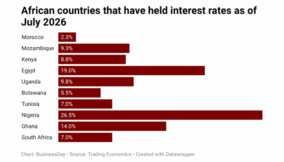
The central bank kept its benchmark interest rate unchanged for the third consecutive time at 6.75 percent in March as policymakers assessed the impact of rising geopolitical tensions and global commodity shocks.
But expectations are beginning to shift.
Last week, top global investment firm Goldman Sachs revised its South Africa outlook and said it now expects the central bank to raise interest rates rather than cut them, forecasting two 25-basis-point hikes this year as oil-driven inflation risks intensify.
In response to rising fuel costs, the South African government extended temporary fuel tax cuts for May and June, sacrificing about R17.2 billion ($930 million) in revenue to cushion consumers and businesses from higher energy prices.

Join BusinessDay whatsapp Channel, to stay up to date
Open In Whatsapp