…Dangote, Cardoso among seven named
…Cameroon and Ethiopia tie for second with three each; Tunisia follows with two
Nigeria has emerged as the most represented country in the business and finance category of the 2025 edition of the 100 most influential Africans list, underlining the country’s continued dominance in shaping Africa’s economic and corporate landscape.
The annual ranking, published on Friday by New African magazine, recognises Africans across a broad range of fields whose work has had a measurable impact on the continent and globally over the past year.
Overall, this year’s list spans 32 African countries and features 64 men and 36 women. Business and finance leads the category breakdown with 21 entries, overtaking the creative sector for the first time in several years.
Creatives follow with 19 entries, while public office and thinkers & opinion shapers record 15 each. Sports accounts for 13 entries, change makers nine, and technology eight.
Nigeria remains the most represented country overall with 21 names on the list, followed by South Africa with 10, Kenya and Ghana with seven each, and Tunisia with five.
“For the first time in several years, the business and finance category has overtaken the creative sector, underscoring the growing role of Africa’s business leaders in shaping the continent’s trajectory,” New African magazine said.
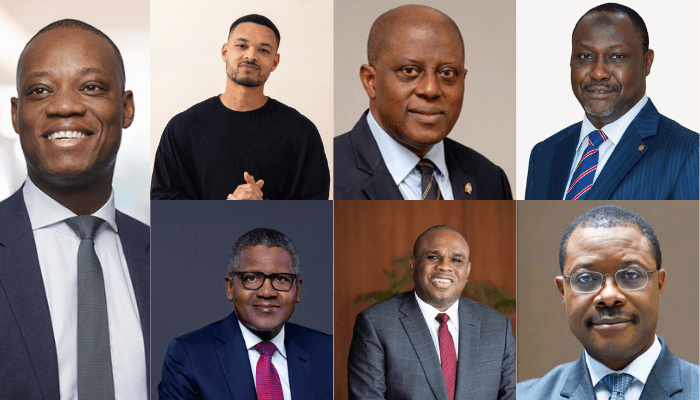
In the business and finance category alone, Africa’s most populous nation recorded seven entries, up from five in the previous edition. Notable Nigerians on the list include Aliko Dangote, Africa’s richest man and founder and president/chief executive of the Dangote Group; Olayemi Cardoso, governor of the Central Bank of Nigeria; and Benedict Oramah, former president and chairman of the African Export-Import Bank (Afreximbank).
“The prominence of the business and finance category this year reflects a maturing economic landscape across the continent,” the international Pan-African noted.
However, the category also revealed a stark gap: no women were represented in business & finance this year compared to three in the previous index
Read also: Morocco sees first disinflation in nearly 5 years, joins Algeria, Burkina Faso
Further analysis shows that Ethiopia, which had no representation in the previous edition, entered the list this year with three names. Cameroon also recorded three entries, placing both countries jointly second behind Nigeria. Africa’s biggest economy by GDP (South Africa) saw only one entry, down from two in the previous ranking.
“The section features both resilient veterans and influential new entrants,” New African said. “Among those recognised are George Elombi, the newly appointed president of Afreximbank, and Hazem Ben-Gacem, the Tunisian investor known for scaling global ventures.”
More details on the business leaders from the magazine
Nigeria
Tunde Olanrewaju
Olanrewaju is a senior partner at McKinsey & Company, based in London, and serves as the firm’s managing partner for Europe, overseeing operations across 23 countries. His appointment comes at a pivotal moment for the continent.
A recent McKinsey report shows that Europe currently competes with the US and China in only four of the 14 technologies critical to the future global economy. Under Olanrewaju’s leadership, McKinsey aims to help both public- and private-sector clients accelerate transformation efforts to close that gap.
Since joining the firm in 2002, he has played a central role in building McKinsey Digital, the firm’s digital transformation arm. Prior to his current role, he served as managing partner for McKinsey’s United Kingdom, Ireland and Israel offices.
“I took this post at a key time for Europe and our clients,” he said. “Powerful forces are redefining industries and shifting the foundations of national competitiveness—from energy markets caught between decarbonisation pressures and near-term price shocks, to geopolitics, tariffs, trade flows, and the transformative impact of technology.”
Steven Bartlett
Bartlett, widely known as the “Podcast King”, has become a defining force in the global creator economy, powered by the success of The Diary of a CEO. Since its launch in 2017, the interview-driven podcast—exploring the personal and professional journeys of leaders across business, politics, culture, science and sport—has produced more than 500 episodes and become one of the most listened-to shows globally.
In 2024, it ranked fifth on Spotify worldwide. This year, Bartlett has pushed aggressively into the US market, establishing a base in Los Angeles. By August, the podcast was ranked second in the US, behind only Joe Rogan.
His parent company, Steven.com—incorporated in the US to house his expanding portfolio of ventures—announced in October that following a new eight-figure investment, the business had been valued at $425 million.
Bartlett is candid about the role of failure in long-term success. “I look back on my early episodes and I can’t believe how terrible I was as an interviewer,” he says. “Progress isn’t obvious at the moment—but it’s happening.” That philosophy has underpinned his rise from startup founder to global media entrepreneur.
Olayemi Cardoso
Cardoso can be credited with restoring Nigeria’s investibility. Since assuming office in September 2023, amid dire economic forecasts and heightened uncertainty, he has re-anchored monetary policy around autonomy, independence and orthodox discipline.
Named Central Bank Governor of the Year 2025 by African Banker magazine, Cardoso has steadied the apex bank through a comprehensive reform agenda. Over the past 18 months, pragmatism has complemented orthodoxy, with closer alignment between the central bank and the finance ministry on policy direction.
Results are evident. Nigeria’s foreign reserves have risen from $33 billion in September 2023 to over $45 billion by early December 2025. The ongoing banking recapitalisation exercise—set to conclude in March 2026—has already seen 14 banks meet new capital thresholds, underscoring the sector’s resilience.
Greater transparency and tighter governance in the foreign exchange market have helped stabilise the naira following a difficult but necessary exchange-rate unification. Inflation, remittances and investment indicators are all flashing green. As he enters his third year in office in 2026 , expectations are high that he will consolidate these gains and entrench long-term macroeconomic stability.
Samaila Zubairu
Zubairu has emerged as one of Africa’s most consequential infrastructure investors—so closely associated with delivery that governments increasingly turn to him to help shape national development agendas.
As president and CEO of the Africa Finance Corporation, Zubairu is both a convener and an executor. He believes Africa’s infrastructure gap is not a failure of ideas, but of execution at scale, and he operates with an impatience for inertia that defines his leadership style.
Driven by strong personal faith and a deep commitment to principle, Zubairu prioritises integrity, discipline and institutional courage. In a continent that needs builders as much as thinkers, he stands out as both—advancing Africa’s infrastructure agenda through results rather than rhetoric.
Read also: US envoy leads Gaza ceasefire talks as Israel presses on with attacks
Aliko Dangote
Dangote has featured regularly on this list for over a decade, but his stature has only grown. The Dangote Petroleum Refinery—conceived in 2013 and inaugurated in 2023—offers a rare window into the resolve of Africa’s richest man.
Built at a cost of $19 billion, the 650,000-barrel-per-day refinery is the largest on the continent and is designed to meet 100 percent of Nigeria’s refined fuel needs, ending decades of import dependence. According to New African magazine, Dangote has acknowledged the immense challenges involved, including resistance from entrenched interests benefiting from fuel imports.
“If we had fully understood the scale of the challenges, we may not have attempted it,” he admits. Yet he pressed on. In October, Dangote announced plans to more than double capacity to 1.4 million barrels per day—potentially making it the largest refinery in the world.
The refinery crowns an industrial empire spanning cement, fertiliser, sugar, salt and energy. Dangote’s net worth has risen from $3.3 billion in 2008 to an estimated $26.2 billion by November.
Benedict Oramah
When Oramah, a professor, stepped down last October, he left Afreximbank fundamentally transformed. Over two five-year terms, he broadened the bank’s mandate beyond trade finance, repositioning it as a central pillar of Africa’s industrialisation and trade architecture.
Assets grew by six-fold—from about $5 billion in 2015 to over $40 billion by end-2024—but Oramah’s legacy extends beyond numbers. He championed intra-African trade and industrialisation through initiatives such as Pan-African Payment and Settlement System, the Intra-African Trade Fair, and the Fund for Export Development in Africa.
His decisive leadership during crises, including Covid-19, further burnished his record. Oramah’s influence continues to shape the continent’s development trajectory long after his departure.
Arnold Ekpe
Ekpe, former CEO of Ecobank, has spent the past decade advising, investing and shaping strategy behind the scenes. His return to prominence as chair of Dangote Sugar Refinery—succeeding Aliko Dangote—marks a significant moment for Africa’s consumer-goods industry.
A long-time adviser to Dangote, Ekpe brings deep capital-markets experience and strategic clarity. Beyond boardrooms, he remains an influential investor across fintech, logistics and energy, and as chair of the Business Council for Africa, he launched the Business Book of the Year prize to spotlight African business narratives.
Measured, thoughtful and steadfast, Ekpe remains one of Africa’s most respected business voices.
Cameroon
George Elombi
Elombi assumed leadership of Afreximbank in October, succeeding Oramah at a time of heightened global financial and geopolitical headwinds. A lawyer, diplomat and committed pan-Africanist, he takes charge of an institution now central to Africa’s structural transformation.
Known for his disarming charm and formidable resolve, Elombi has been recognised by the Cameroonian government with the Chevalier de l’Ordre de la Valeur. Colleagues say he thrives when challenges are greatest—a quality that will be tested as he navigates turbulent global financial waters.
NJ Ayuk
NJ Ayuk has become Africa’s most vocal defender of the continent’s right to determine its own energy pathway. At a time when global energy debates have become politicised, Ayuk has argued relentlessly that poverty—not emissions—is Africa’s most urgent challenge.
By calling out what he views as Western hypocrisy—continued fossil-fuel investment at home alongside pressure on Africa to abandon hydrocarbons—Ayuk has reframed the debate around sovereignty and developmental realism. His message is not anti-transition, but anti-exclusion.
Outspoken and unapologetic, Ayuk has helped unify Africa’s oil and gas industry and amplify its voice globally, asserting greater ownership over the continent’s energy future.
Read also: Nigerian-American attorney says Nigerians with special talents may still qualify to enter the U.S
Alain Nkontchou
Nkontchou made one of the boldest bets in African banking this year, leading the acquisition of Nedbank’s 20 percent stake in Ecobank through Bosquet Investment, becoming the bank’s largest shareholder.
A former chair of Ecobank and founder of Enko Capital Management, Nkontchou has spent two decades investing across African debt and equity markets. Quietly spoken but increasingly influential, he stood out in a year of uncertainty for betting decisively—and confidently—on Africa’s long-term prospects.
Ethiopia
Admassu Tadesse
Tadesse, who is the group president & MD at Tarde and Development Bank (TDB) Group, has emerged as one of the most compelling voices in global development finance. At the helm of TDB Group, he sits at the centre of debates on debt restructuring and reform of the global financial architecture.
A strategist with rare command of both policy and markets, he argues for harnessing Africa’s own capital—pensions, savings and remittances—rather than relying solely on external flows. His call is for structural change, not incremental reform, and for financing systems that reward development impact alongside discipline.
Ethiopis Tafara
Under Tafara, vice president at the International Finance Corporation (IFC), the institution is shedding its reputation for excessive caution in Africa. Drawing on his experience at the US Securities and Exchange Commission and MIGA, Tafara has pushed the IFC to take smarter risks to crowd in private capital, particularly for SMEs and job-creating projects.
At a time of constrained public finances, his leadership is said to be keeping Africa firmly on the global investment agenda.
Brook Taye
The director general of Ethiopian Investment Holdings (EIH) has turned Ethiopian Investment Holdings into one of Africa’s most closely watched sovereign investment vehicles. At the heart of the country’s economic liberalisation, he has championed smart state capitalism—combining competition, governance and value creation.
Under his leadership, EIH has announced landmark partnerships across logistics, telecoms, agriculture and real estate, unlocking billions in dormant state assets. Taye’s model is increasingly viewed as a template for how African states can mobilise and manage wealth more effectively.

Join BusinessDay whatsapp Channel, to stay up to date
Open In Whatsapp