African markets are showing fresh signs of resilience despite persistent global uncertainty, with banks accelerating expansion plans, currencies rebounding and policymakers making headway in taming inflation. From Egypt’s surging pound to renewed confidence in Kenya’s banking sector and South Africa’s infrastructure push, the continent’s largest economies are increasingly positioning themselves for long-term growth even as geopolitical tensions and external shocks continue to test investor sentiment.
Here are the stories that shaped the week
Absa Kenya shares jump 9% after parent unveils $240m stake increase
Shares of Absa Bank Kenya rose by 9.2 percent on Friday morning after parent company Absa Group announced plans to increase its stake in the lender to 85 percent from 68.5 percent in a deal valued at Ksh30.9 billion ($240 million). The stock climbed to Ksh32.1 in early trading on the Nairobi Securities Exchange as investors welcomed the move, which includes a tender offer at Ksh34.50 per share—an 18.1 percent premium to the bank’s 30-day volume-weighted average price as of June 17, according to Nairobi-based financial services firm Mwango Capital.
Why it matters: The transaction signals renewed investor confidence in Kenya’s banking sector and highlights the country’s growing importance as a regional financial hub. It also reflects a broader trend of African banking groups consolidating operations and increasing ownership in key growth markets.
Egypt’s pound becomes world’s top performer as falling oil prices lift economy
Egypt has emerged as one of the biggest beneficiaries of the recent slump in global oil prices, with its currency recording the strongest gains in the world as lower energy costs improve the country’s economic outlook and attract renewed investor interest. The Egyptian pound has climbed more than seven percent against the US dollar since early May, becoming the world’s best performing currency over the period, according to Bloomberg data. On Wednesday, the currency traded above 50 pounds to the dollar for the first time since March.
Why it matters: A stronger pound could help curb inflation, lower import costs and attract foreign portfolio inflows, strengthening Egypt’s economic recovery. The rally also highlights how oil-importing African economies stand to benefit from lower energy prices.
Six markets Africa’s biggest bank is targeting in its hunt for $15.4bn revenue
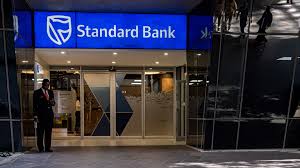
Standard Bank Group is ramping up its push into Africa’s fast growing business banking market, targeting a revenue opportunity worth about R250 billion, equivalent to nearly $15 billion, as regional trade increases and small businesses become a stronger force in the continent’s economy. The bank’s Business and Commercial Banking division is focusing its expansion strategy on some of Africa’s largest and fastest growing markets, including South Africa, Nigeria, Ghana, Kenya, Uganda and Tanzania, where most of the opportunity is concentrated.
Why it matters: The strategy underscores the growing importance of small and medium-sized businesses to Africa’s economic transformation and reflects how lenders are positioning themselves to benefit from regional integration under the African Continental Free Trade Area (AfCFTA).
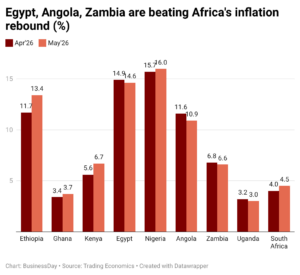
Three African economies are winning the inflation fight despite global shocks
While rising energy prices and supply chain disruptions linked to conflict in the Middle East are reigniting inflationary pressures across much of Africa, Egypt, Angola, and Zambia are emerging as rare bright spots, extending declines in consumer prices even as many of their peers battle higher food, fuel, and transport costs. The divergence highlights how exchange-rate stability, economic reforms, stronger commodity earnings, and improved food supplies are helping shield some African economies from a renewed surge in inflation triggered by external shocks.
Why it matters: The experience of the three countries highlights the importance of exchange-rate stability, policy reforms and stronger commodity earnings in taming inflation. Their success could provide valuable lessons for other African economies struggling with persistent price pressures.
Africa’s largest nation gets $1bn BRICS funding boost to tackle infrastructure crisis
South Africa has secured a $1 billion loan from the New Development Bank (NDB), the multilateral lender established by BRICS nations, to upgrade critical infrastructure in the country’s eight largest metropolitan municipalities. The financing will support investments in essential urban services, including water supply, sanitation, electricity, and solid waste management, as Africa’s largest economy seeks to address years of infrastructure deterioration that have undermined service delivery and economic activity. The original BRICS members are Brazil, Russia, India, China and South Africa.
Why it matters: The experience of the three countries highlights the importance of exchange-rate stability, policy reforms and stronger commodity earnings in taming inflation. Their success could provide valuable lessons for other African economies struggling with persistent price pressures.
Chart of the Week

Join BusinessDay whatsapp Channel, to stay up to date
Open In Whatsapp