Continued delay in the passage of the Bio-safety Bill by federal lawmakers is preventing the country from benefitting from the genetic materials market valued at over $500 billion.
Genetic materials or products are plants and animals that have been subjected to scientific processes of gene improvement in order to enhance their yields and outputs or resistance to diseases, soil and climatic stress.
Nigeria currently has no law on biotechnology and as such no regulation on misguided use of genetic technologies that are already available. The effect is that those who deploy such technologies without human regard and scientific ethics escape punishment due to the absence of requisite laws and regulation.
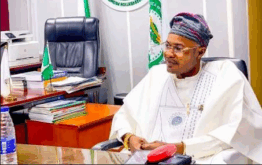
Maurice Iwu, former chairman, Independent National Electoral Commission (INEC), said the market for genetic materials alone, which is just one of the many aspects of biotechnology, was worth over $500 billion globally.
Iwu, who currently heads the Bio Resources Institute of Nigeria, also said the setting up of a facility to counter biological problems, such as the notorious Ebola Virus Diseases (EVD), within a country would only be possible with a bio-safety bill in place.
“The bill is not only for agricultural purposes but also to preserve our lives,” he said.
The National Bio-safety Bill was previously passed by the National Assembly, but President Goodluck Jonathan declined assent in November 2013 and returned it to the Senate.
One of the contentious issues was a provision for the creation of another bio-regulatory agency at a time the government did not want to incur additional administrative costs.
But the National Biotechnology Development Agency (NABDA) has re-introduced the bill, with a condition that a department be created in the Federal Ministry of Environment to regulate the provisions of the law when passed.
The bio-safety law was passed in South Africa in 1989 and in Egypt in 1995; while Kenya had its bio-safety law passed in 2009 and has now become a hub of commercialisation and investments in Genetically Modified (GM) crops and Genetically Modified Organisms (GMOs) in sub-Saharan Africa.
At the moment, Egypt has 25 permits for GMO field trials and three commercial licences, while Burkina Faso has become a regional centre of GM cotton for the global market as a fallout of the enactment of their biotechnology law. India currently earns about $6 billion annually from cotton production alone.
In Nigeria, the absence of a bio-safety law has made it difficult for NABDA to perform its statutory functions and this is greatly hampering Nigeria’s efforts at reducing unemployment, poverty and food insecurity.
During a recent presentation before a joint session of the Senate Committees on Agriculture and Science and Technology, Lucy Ogbadu, director-general, NABDA, observed that a biotechnology law was more in the safety interest of the country.
“This bill is not about creating an environment for multinationals to trade in Nigeria with genetically modified products, as is being wrongly speculated in some quarters. It is actually in the interest and for the safety of the Nigerian masses,” Ogbadu said.
“We have confirmed through tests using our state-of-the-art facilities at NABDA that the GMOs such as sweet corn are already here in every part of the country and are being blended into foods of various forms, including baby foods, which are being consumed daily by millions of Nigerians,” she added.
But the issue of biotechnological applications in agricultural development has been received with mixed feelings among Nigerians, with one section supporting its use and the other claiming it could result in the production of plant and animal breeds that may be harmful to human health when consumed.
Emmanuel Bwacha, chairman, Senate Committee on Agriculture and Rural Development, is of the view that adequate modalities must be put in place to protect Nigerians against any adverse effects of GMOs’ technological misuse.
He said the World Health Organisation (WHO) recently certified GMOs, including plants and animals, as safe, and therefore there was no concern whatsoever regarding their safety.
“Genetically Modified (GM) foods have passed the risk assessment of the WHO, Food and Agriculture Organisation (FAO), the African Union (AU) and New Partnership for African Development (NEPAD), and in order to allay the fears of biotechnology sceptics, a body known as the African Bio-safety Network of Expertise (ABNE) has been established under the AU-NEPAD collaborative framework,” Bwacha said.
YANGE IKYAA

Join BusinessDay whatsapp Channel, to stay up to date
Open In Whatsapp