


The genesis
At the beginning of this year, the trade and exchange department of the Central Bank of Nigeria (CBN), the nation’s apex financial regulatory body issued a fiscal policy for the automotive industry.
The new fiscal policy guidelines coming on the heels of Federal Government’s earlier decision towards the end of last year to ban importation of new vehicles as well as discourage grey imports and used vehicles coming into the country through legal or illegal entry point has since then thrown up quite a number of controversies.
Under the new dispensation, local assembly plants shall import their Completely Knocked Down (CKD) at 0percent duty, Semi Knocked Down (SKD) at 5percent duty. Local assembly plants shall import Fully Built Unit (FBU) cars at 35percent duty and 20percent duty for commercial vehicles without levy, respectively in numbers equal to twice their imported CKD/SKD kits.
Recall that in a memorandum with reference no NCS/T$T/ I&E/ 067S.4 /VOL. X, addressed to all zonal coordinators, area comptrollers, and all valuation officers, the government directed that all commands are to comply with the newly introduced ex-factory price for customs duty collection.
The memo is to ensure the enthronement of a uniform duty regime on vehicles in all ports, Customs commands, and this is because there has been a variance in the calculation of duty on vehicles. It also contained a progressive reduction of import duty on vehicles of various age – ranging from three months to four years and above.
While proponents of the new policy describe it as a new watershed in the country’s match towards establishing new assembly plants and also reviving her numerous moribund automotive industry for many years and generating huge employment, those who are opposed to the move said it was ill-timed at present for many reasons.
Putting the cart before the horse: Analysts’ views
Compared to many countries that produce new vehicles, the ideal situation is that for these vehicles to be assembled and sold to the buying public at an affordable price tag, there should be a number of infrastructure in the form of a viable and functional iron and steel industry and interrupted electricity supply that will make it work effectively.
These include the establishment of a number of automotive-allied feeder industries that can produce such vehicle spare parts like brake-lining and pads, clutch cables, sand protectors, light pointers and even bulb-lightening. All these support industry are however lacking.
Analysts say that the policy, if properly handled and implemented, will eventually encourage local production of vehicles and their ancillaries, adding that it is wrong of the country to depend heavily on imported cars and concentrate mainly on car assembly.
But they add that a sustainable automobile industry must put in place ancillary industries which will guarantee the smoothness and efficiency of the policy.
Remi Bello, president, Lagos Chamber of Commerce and Industry (LCCI), said an automobile industry must have high local value addition and capacity for backward integration.
“There must be ancillary industries for the production of batteries, glass, radiators and tyres. There must also be affordable finance for the investors, because development of the sector would not thrive in an environment where the cost of fund is between 25 and 35 percent,’’ he said.
Bello added that the emerging automobile industry would not thrive in a situation where the infrastructure is still in a deplorable state, adding that issues surrounding power supply and transportation must be properly addressed for this policy to yield the desired result.
“There can be no enduring industrialisation without a strong power sector,’’ he said.
Research has shown that as of 2004, South Africa’s auto industry engaged between 111,063. According to the report submitted by MPL Consulting in conjunction with Bentley West Strategic Consulting, there were 465 auto component manufacturers, employing 76,911 then.
“This study found that the automotive industry as a whole has been successful in creating employment over the last decade, albeit marginal. Employment in the automotive industry increased from 102, 164 people in 1995 to 111, 063 in 2004,’’ said the research report.
Within this period under review, 15 Original Equipment Manufacturers (OEM) were able to engage 34,152 South Africans.
Analysts say Nigeria should take some lessons from the operational situations of these firms in the current second largest economy. During the period, raw material prices, e.g. aluminium, polymers and stainless steel were consistently raised, which constitute major negative factor.
The report earlier cited that availability of skills was consistently raised as an impeding factor to employment creation. More specifically, there was a shortage of artisans and basic engineering skills in the industry. It was also indicated that skilled workers for the tool making industry are virtually non-existent.
Again, the rail transport system in South Africa came under consistent criticism from all stakeholders, notably port operations.
Analysts believe Nigeria can learn from this experience, stressing that without the necessary economic infrastructure, the policy might eventually become unsustainable.
Despite complaints, policy on stream
But while all arguments of ill-timeliness of the policy linger and deluge of complaints that most of the auto dealers were not consulted before the new deadline of revised duty and levy regime was announced, a number of players in the vehicle assembly enterprise are taking the bull by the horn.
As at the last count, quite a sizeable number of existing new car dealers have initiated moves to set up one assembly plant or the other; a move that would see them graduate from churning out vehicles from SKD, SKD 2 to full scale CKD stages of automotive manufacturing.
Recall that only last April, Stallion Motors announced the roll-out of its first set of Nissan Patrol SUV from the company’s VoN Assembly plant. Penultimate week, the 4-year old PAN Nigeria resumed car assembly operations with intentions to start operations with roll out of the Peugeot 301 sedan after long years in the doldrums.
Coscharis Motors and Kia Motors is also making fresh moves to join the automotive assembly league, while the likes of Transit Support Services Limited, Peace Mass Transit and Globe Motors are gearing up to set up their own assembly lines to either produce heavy duty trucks , Pick-Up truck or commercial vehicles with various completions timeline. Others are also thinking of Jumping on the bandwagon.
Making the new cars affordable to Nigerians
In furtherance to this objective, the Federal Government further announced the intention to roll-out new ‘Vehicle Credit Finance Scheme’, which is aimed to make new cars affordable to Nigerians. With the new financing scheme, Nigerians will have the opportunity to buy a new car assembled in Nigeria at an interest rate of not more than 10 percent, which is repayable over a period of four years.
Need to develop alternative means of transportation
Nigeria is a nation that depends solely on road transport system to move both passengers and cargoes from one destination to another with minimal attention paid to developing other alternative means of transportation such as water and rail transport systems. Nigeria, which has over 8,000 kilometers worth of waterways across majority of many Nigerian states, is yet to look to at water as alternative means of transportation. On the other hand, the railway system is still at the preliminary stage of its development as less than 5 percent of the entire cargoes that come into the seaport are being evacuated using rail.
“Nigeria needs to develop a viable rail transport system to help in alleviating the plight of Nigerian passengers including the importers, who depend solely on trucks to move their cargoes away from the seaport to hinterland, especially at a time the new auto policy would inflict pains on Nigerians,” said Tony Anakebe, a maritime analyst.
This is because, according to Anakebe, “the implementation of the policy would result in high cost of both used and new vehicles, and will take cars beyond the reach of an average Nigerian buyer”.
The prediction is that the cost of tyre and other automobile parts would skyrocket, thereby resulting in high cost of transport for commuters. “This will affect both farmers and businessmen, who transport their produce and goods to the market. It will also affect the haulage cost of imported commodities.”
Ken Iyoha, immediate past vice chairman, National Association of Government Approved Freight Forwarder, Tin-Can Island Port chapter, said that there was no need for government to impose an additional 35 percent levy after it suddenly commenced implementation of the 35 duty. He said that Nigeria should be ready enough to produce cars before imposing high tariff.
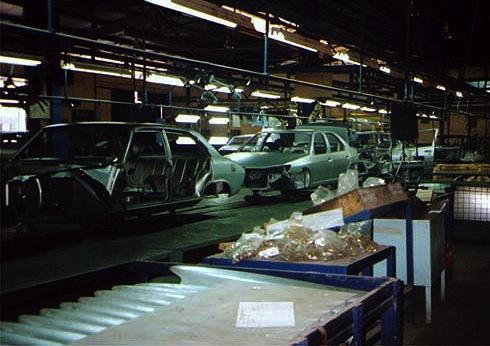
“Car manufacturing entails a lot of things. The infrastructures such as electricity to run both factories and assembling plants are not in place. The steel companies that ought to supply steel to the auto industries are also not working. The tyre manufacturing companies in Nigeria have relocated to Ghana, so are we now going to be assembling cars in Nigeria and be importing tyres from Dunlop and Michelin from Ghana?” he questioned.
He further noted: “Nigeria does not have good road network, yet the government intention is to hike the duty and levy payable on imported vehicles including busses that are used by the masses.”
At a recent colloquium held in Lagos by the Pat Utomi-led Centre for Values in Leadership (CVL) discussants stated that the Nigerian economy was not yet favourable for car manufacturing because of infrastructural and institutional deficiencies. It was their belief that the country should focus on the production of some car components to gain comparative advantage.
“Had we become 80 percent of producer of one rubber component used in motor cars worldwide, it would create hundreds of thousands of quality jobs and earn us more foreign exchange than crude oil. To know this and see the same old game being played with same Nissan that was a no-show a generation before is to feel deep sadness,” Utomi said.
Biodun Adedipe, chief consultant, B. Adedipe Associates Ltd. explained that the policy was a fantastic initiative with obvious benefits if well implemented.
“The policy has potential to drive inclusive growth if properly managed and diligently executed. The right mix of incentives that reward right behaviour and choices should place Nigeria among nations that produce significant percentage of the vehicles that move their people and goods,” Adedipe said.
Michael Ade-Ojo, founder, Elizade Nigeria Limited, said: “You see, we need to build confidence, and to build confidence, we must be sure of what we are really doing. This is because I don’t know what we are manufacturing here as far as parts of vehicles are concerned. Most of the manufacturers who came expecting to make good business, all of them faded away. There must be some reasons. Those reasons must be dug into and addressed, with that we can now plan how to go about the auto policy. We are not saying there should not be such thing here, but there must be proper planning to avoid making a huge mistake which we will regret later. There are some factors that drive such things; those factors are the factors we want government to take into consideration. What we are saying to them is that they should give us time, let us study the terrain and let us convince our partners that it is a journey worth embarking upon before you do it. So, before I put my money into something I must think deep and make sure that there’s a likelihood of success”.
The prospect
At full capacity, the Nigerian automotive industry has the potential to create 70,000 skilled and semi-skilled jobs along with 210,000 indirect jobs in the small and medium-scale enterprises sector that will supply the assembly plants. About 490,000 other jobs would also be created in the raw materials supply industries. This was announced by the Olusegun Aganga, minister of Industry, Trade and Investment as government’s target.
For the minister, the development of the automobile industry will provide platforms for investments that would encourage backward integration, technology development and transfer to the youth, who would learn from professional engineers that will pioneer local manufacturing of cars.
MIKE OCHONMA, ZEBULON AGOMUO, ODINAKA ANUDU and AMAKA ANAGOR

Join BusinessDay whatsapp Channel, to stay up to date
Open In Whatsapp


