The Federal Government on Thursday approved and signed an Executive Order that will guide the efforts on improving the ease of doing business in the country and also compel government agencies to buy “Made in Nigeria.”
The order, which was signed by Acting President Yemi Osinbajo harps mostly on the preference for indigenous good and services as well as the removal of bureaucracies that stalls business in the country.
The stipulated executive order, as enumerated in a document presented by the Trade minister stated that all ministries, departments or agencies of the Federal Government shall grant preference to local manufacturers of goods and service providers in their procurement of goods and services.
Any document issued by any MDA of government for the solicitation of offers, bids, proposals or quotations for the supply or provision of goods and services shall expressly indicate preference to be granted to domestic manufacturers, contractors and service providers and the information required to establish the eligibility of a bid for such preference.
All solicitation documents shall require bidders or potential manufacturers, suppliers, contractors and consultants to provide a verifiable statement on the local content of the goods and services to be provided.
Made in Nigeria products shall be given overwhelming preference or at least 40% of the procurement spend on locally manufactured goods and service providers. Some priority items include: uniforms and footwear, food and beverages, motor vehicles, pharmaceuticals, construction materials, information and communication technology, furniture and fittings and stationery.
“Within 90 days of this order, the heads of MDAs shall assess the monitoring, enforcement, implementation and compliance with this executive order and local content stipulations in the Public Procurement Act or any relevant Act within their agencies. They shall also propose policies to ensure that the FG’s procurement of goods and services maximises the use of goods manufactured in Nigeria and services provide by Nigerian citizens doing business as sole proprietors, firms or companies held wholly by them or in the majority and submit such findings to the minister of trade and investment.
“Within 180 days of the date of this order, the minister for trade and investment in consultation with the Director General of the Bureau for Public Procurement shall submit to the President, a report on the Made-in-Nigeria initiative that includes findings from section 4 above. The report shall include specific recommendations to strengthen the implementation of local content laws and local content procurement preference policies and programs.
“For the purpose of this order “local content” means the amount of Nigerian or locally produced human material resources utilised in the manufacture of goods and services” Enelamah said in his presentation.
Ministry of Trade and Investment alongside the Presidential Ease of Doing Business Council (PEBEC) are expected to monitor the compliance of the stipulated orders.
At an interactive session held at the State House Conferene Centre in Abuja, Osinbajo said the government will work out incentives for performance even as it builds reward system that punishes malfeasance.
He urged for cooperation amongst agencies of government stating that it was key in achieving an improved business climate that will be at par with global standards.
According to him in the first 60 days target set up by the government 70 percent effectiveness was achieved and the 30 percent can be achieved through continuous transparency and cooperation of government agencies. He also harped on the need to give preference to indigenous providers of goods and services to strengthen the system.
“I agree that a system of rewarding performance, and punishing malfeasance is key. We must work out incentive schemes even as we tighten up sanctions regimes.
“We hit 70 percent quickly on the 60 days of doing business target because of the cooperation of all the agencies like ministry of interior, immigrations, customs and that is why the remaining 30 percent we will also achieve and deliver. I will hold myself accountable to it and I will also hold you accountable.
“Usually we blame the system . But the system is men and women not machines. So we can and must reform it. These proposed executive orders present a unique opportunity to perform. Ladies and gentlemen let us perform. The President has laid out a cornerstone policy of this Administration, we must grow what we eat and make what we use. The President again enunciated this principle in the Economic Recovery and Growth Plan, Buy Nigerian, Use Nigerian.
“So we must now insist that at State banquets we eat and drink Nigerian.” he said.
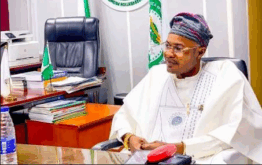
Speaking at the interactive forum with heads of agencies and permanent secretaries who are strategic in the implementation of business processes in Nigeria, the minister of trade and investment, Okechukwu Enelamah said reports will be submitted to the President after 80 days and 60 days respectively. He also said the government was working at moving up 20 places up the ranking on ease of doing business this year and it has to start from growing made in Nigeria.

Join BusinessDay whatsapp Channel, to stay up to date
Open In Whatsapp