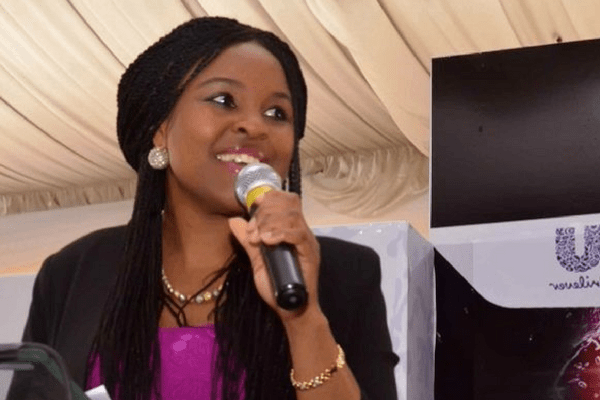
The International Women’s Day was recently commemorated across countries around the globe. ENIOLA ONIMOLE, director, human resources, Unilever Nigeria Plc, tells OBINNA EMELIKE the essentials of the day and how her organisation is fairing in advancing the course of women inclusion and empowerment.
Excerpts:
What would you say is the significance of the International Women’s Day to Unilever as an organisation?
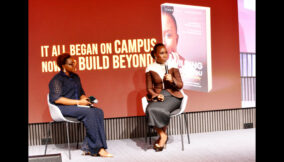
Unilever as an organisation sees International Women’s Day as an opportunity to raise awareness and engage employees around Diversity & Inclusion. Doing so helps us tackle both our Diversity & Inclusion strategic priorities of improving gender representation and building an inclusive, performance-based culture. This year, we focused on #Unstereotyped Mindset: Calling out unconscious bias and we had a panel discussion where employees participated and listened to external people as part of our panelists to help challenge our stereotypes.
Looking at the socio-cultural perspectives, how would you assess the cause of women and its related advancement?
Looking at the world at large and more closely, our own immediate environment which is Nigeria, I would say the pace is quite slow but I believe that we are making progress. Some organisations such as ours have taken the responsibility to lead the way because we believe it is the right thing to do. Thus, the panel event was held at our head office in Nigeria and at so many other Unilever offices across the world, to celebrate the IWD. This is a proof to the fact that we are not leaving this responsibility to the government alone.
This year’s theme is Be Bold for Change; do you think Nigerian women have what it takes to achieve the kind of boldness required for change?
It is not just a question of Nigerian women having what it takes. It is a question of how we unleash that boldness within more women. Just like other women in other parts of the world, we have more Nigerian women taking up leadership roles, more women becoming entrepreneurs and who are doing phenomenally well. That said, there is still a lot that needs to be done.
As a company, how has Unilever been able to deal with gender stereotype particularly against women?
Stereotype against women has persisted due to unconscious bias which we all hold and have failed to acknowledge exists. And if we don’t believe that it exists, there is little or nothing we will do about it. This is why we at Unilever used the International Women’s Day to challenge our employees to think about how they can address their unconscious bias and understand the need to “#Unstereotype” – and change their mindsets.
Unilever is one of the world’s most culturally diverse companies, how has Unilever Nigeria succeeded in building a gender-balanced workforce?
Gender Diversity for us is a continuous journey. However, we have been able to make significant progress in this area due to strong leadership commitment coupled with having the right strategies in place such as starting from the foundation – resourcing, development and mentoring opportunities for female employees which has also impacted retention of this same group. We promote safety for our women and have also expanded opportunities in areas where women would typically not be found like the factories and marketplace as salesmen. And the result shows through as we have over 40 percent of our top executives being women.
What is your opinion on diversity in the workplace or among employees?
I will rather we focus not only on Diversity but on Diversity and Inclusion because they are more powerful together. In simple terms, Diversity refers to the mix; Inclusion is getting the mix to work well together. Or like it is often said “Diversity is being invited to the party, Inclusion is being asked to dance”. So, D&I at Unilever is about harnessing the value of different personalities, viewpoints, cultures, races, genders, work styles, mindsets and all the other differences between us as individuals to achieve our business objectives. Recent studies have shown that a more diverse and inclusive workforce can boost financial performance, reputation, innovation, staff motivation and help companies anticipate and meet the needs of their diverse customer base.
Would you say inclusivity has helped build Unilever’s employer brand among potential employees?
Yes. It has. Which is one of the reasons we have won the Top Employer, Nigeria award for three consecutive years and we were also awarded Top Employer, Africa.
To what extent does Unilever’s people rights policy impact the organisation’s reputation?
At Unilever, we provide the right environment for our employees to thrive and be the best they can be which is what really makes us a great place to work. Our employees are free to be who they are and are finding their purpose through what they do.
What would be your advice to policy makers with regards to the advancement of women rights and improvement in Nigeria?
As leaders, we have to walk the talk. We have to lead by example and continuously champion the conversation because other people are watching. Leading by example starts from simple but powerful things such as how we treat the women around us.

Join BusinessDay whatsapp Channel, to stay up to date
Open In Whatsapp