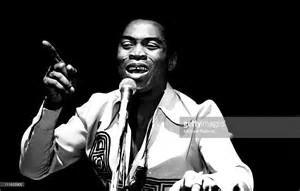
Unlike in younger days, an increasing number of young Nigerians are pursuing their passion in music and arts, despite good degrees and wealthy background – and they are getting more family support
When Israel Oludotun Ransome-Kuti, an Anglican minister and school principal, heard that his son Fela had gone to Trinity College of Music in London to study Music instead of Medicine, he was highly disappointment with his son’s choice of career.
This was at a time many parents apparently believed that “professional” courses such as Medicine, Law, Engineering, etc were the best career paths. At the same time, they ridiculed Liberal Arts and Social Sciences courses such as Music, Theatre Arts, etc, regarding them as careers for the “dull-brains” and “unserious minds”.
In the case of Chukwuemeka Odumegwu Ojukwu, the late Biafran warlord, who went to London to study Modern History instead of Law, his father’s preference, his billionaire business magnate father, Sir Louis Ojukwu, was roundly miffed by his son’s obstinacy.
But it was the younger Ojukwu’s decision to join the Nigerian Army as officer cadet instead of a clearly-paved career in the colonial civil service that led to the father’s rejection and abandonment of his son. Father and son reconciled only when the younger Ojukwu attained the rank of a Major, considered by his father to be the top rank in the Army.
Similarly, while he was alive, Chukwudifu Oputa, a renowned former Chief Justice of the Supreme Court of Nigeria, was known to have once parted ways with Charles Oputa, his son who stages as Charlie-Boy, because of his choice of career path and seeming weird lifestyle. The legal luminary was not happy that his son went for a degree in Communication instead of Law as he hoped to hand over his legal estate to him.
At the peak of the face-off between father and son, the late justice and chairman of the famed ‘Oputa Panel’ expressed his concern in an interview thus, “Every father wants a son to succeed him. I practiced as a lawyer; I had and still have a very big library at home. You will want somebody to take over from you. When we couldn’t get him to do Law, we let him do what he wanted to do if that was going to make him happy. Today, he is happy, and we are all happy with him.”
In his later days, the fulfilled justice saw things from his son’s angle and reconciled with him saying, “At first, we were only concerned about what we wanted him to become, but not really concerned about what he wanted to become. I think every parent should look at both angles.”
Toeing the line of Charlie-Boy, his cousin, Dr Alban, a trained dentist, also took to music in Sweden and still performs till date. Of course, parents’ insistence on choosing career paths for their children was a common thing from the late 40s. Then, parents were influenced by the high regard the colonial masters accorded those who went to school. The plum jobs that were readily available for the so-called professionals as well further made parents to narrow career choices for their children to the ‘serious’ and highly regarded ones.
Edward Umenwanne, a retired railway supervisor and grandpa who missed a scholarship to Oxford University in 1968 because his parents did not want him to study English, said parents of those days were strict because they wanted the good life and every good opportunity they lost for their children.
“Though my parents weren’t the sponsor of the scholarship, they wanted good life for me and never saw English as a lucrative course. They wanted me to read Medicine, but I was not good in science, especially Mathematics,” he said.
The reckless lifestyle of a few successful musicians then, and the inability of many others in the arts to sustain a living with their performances, also disgusted and discouraged most parents from allowing their children to follow such career paths, having seen their end already with the demeaning lifestyle of those practicing then.
Magnus Akpudo, a music critic, noted that parents’ influence on their children’s choice of career in the 60s was due to the reckless lifestyle of the then top musicians and the sad state of their finances.
“It is sad to note that most top highlife musicians, ace movie actors and actresses and even theatre practitioners of those good old days barely fed because they were more concerned with the entertainment than the commercial aspect of their craft. They hardly engaged a manager and had no sense of investment. That was why most of them were only popular outside their homes,” Akpudo said.
However, the situation seems to have changed in the last two decades, especially with the coming of the internet and the rise of talent management companies and financial and investment consultants who now trail celebrities with juicy investment opportunities for a fee. Most parents also seem more liberal, supporting their children in following their passion. Football academies, film schools, music schools and other places where talents are discovered and honed are always full these days with youths from both rich and poor backgrounds.
Ameh Ochenu, a Sociology lecturer, noted that parents are becoming more understanding nowadays and letting their children decide what they want to do because of the lessons they learnt from older parents and society at large.
“My parents wanted me to be a soldier at a time being a soldier was a sure way to prosperity, influence and power. I went to Nigerian Defence Academy in Kaduna to impress them, but left for Ahmadu Bello University Zaria to study Sociology because I had always wanted to teach. I am happy imparting knowledge and not wearing same uniform and carrying big guns around,” Ochenu said.
“I am an Idoma man. There is no Idoma person that is as popular as 2Face Idibia or Daniel Amokachi. Even while David Mark was the Senate president, he was not all that popular. So, parents have learnt that reading Law, Medicine or Engineering does not guarantee success again as before, but talent and passion,” he said.
Corroborating Ochenu, Akpudo thinks parents have seen improvements on the lifestyle, finance, rating of those who live on their passion, especially with a number of talent management companies, coaches and consultants that redirect today’s celebrities’ lifestyle to something somewhat appreciated by family and society at large.
“If it were in the 60s or 70s, the billionaire Femi Otedola would not allow his daughter to go into music due to the belief that music is for the never-do-wells in society. Today, Otedola is impressed with his daughter’s growing fame,” Akpudo said.
Indeed, Florence Ifeoluwa Otedola, also known as DJ Cuppy, has gone ahead with her passion – music. Despite a degree in Business and Economics, the oil billionaire’s daughter who stages as DJ Cuppy is famous as a record producer, remixer, reality show star, among others.
On discovering that his daughter was bent on following her passion, the Nigerian billionaire supported her with a Master’s Degree in Music Business.
Dike Chukwumerije, son of the late Senator Uche Chukwumerije, is flourishing today because of the support from his family. The lawyer-turned–performance poet and writer is the creative director of Night of the Spoken Word, a performance poetry show. He is also the host of Abuja Literary Society, Book Jam and Poetry Slam. He gets fulfillment doing all these instead of arguing cases in the law court for his clients.
Another intriguing story is that of Ozonna Soludo, son of Chukwuma Soludo, professor of Economics and former governor of the Central Bank of Nigeria.
On discovering his son’s passion at an early age, Soludo sent him to Institute of Contemporary Music in London to read Music Theatre. Today, the younger Soludo is proving to be the true son of his father and standing out from the crowd with quality music informed by his personal experiences instead of the short-lived commercial clutters we have around.
“I believe in giving whatever I do my all and I don’t spare anything to get it done,” the New York-based Nigerian singer and songwriter said.
Beyond these, there are many other well-educated Nigerians from well-to-do families who have followed their passion. They include Naeto C who settled for music despite a Master’s degree and rich family background; Falz the Bahd Guy, son of renowned human rights lawyer Femi Falana; Davido, son of David Adeleke, a pro-chancellor of a university and popular billionaire, among others.
Ochenu notes that the number of children from wealthy homes who follow their passion even after graduating with good grades from top-ranking universities across the world will increase in the coming years because things are really looking up for talents, especially now that unemployment rate is on the increase.
Besides the fame, most people who follow their passion are making good fortunes, great investments and also correcting the stigma attached to earlier celebrities for living wasteful lifestyle.
From Kanu Nwankwo, Jay Jay Okacha, 2Face, D’banj, DJ Jimmy Jatt, Kunle Afolayon, OC Ukeje, Mercy Johnson and many others, coming generations have good examples to further lure them to follow their passion, coupled with a growing family support.

Join BusinessDay whatsapp Channel, to stay up to date
Open In Whatsapp