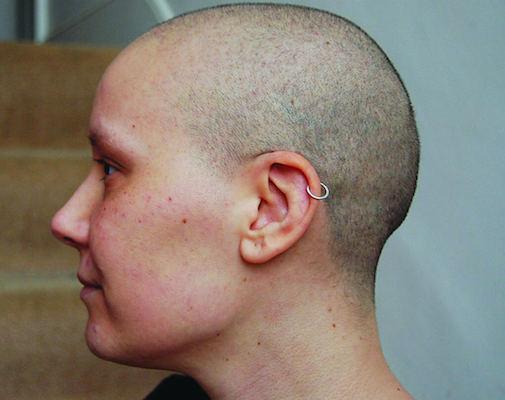
Soon after I was diagnosed with leukemia, I started a blog. Everything was happening so fast, my emotions were all over the place. I wanted to get it all down in writing so I could remember events, details, feelings, and so on. After a few months, my treatment became pretty routine, so my updates became less frequent. In the middle of 2012, things became not-so-routine, but I couldn’t bring myself to post an update. I no longer wanted to remember. I just wanted to pull the blankets over my head and stay in bed.
Psychologists and counselors generally agree that there are five stages of grief that people will experience after a major life change. Even good changes can cause grief because something has been lost or left behind. The stages are denial, anger, bargaining, depression, and acceptance.
On the same day I was diagnosed with CML, I was also told that CML is the most manageable type of leukemia, With treatment and a period of recuperation, I would be able to live a normal life. I could expect a normal or nearly normal life span. I will probably die of something other than CML. What was there to grieve about? I was giddy with relief.
Two days later, I was in the hospital wondering if this is the normal life my oncologist spoke of. No, it was simply part of the recuperation process. After a blood transfusion, my fevers stopped and I felt like a new person.
After a few weeks of taking it easy and napping frequently, I began regaining my physical strength. I had hours and then days and finally weeks without mental fog and I began to remember what normal felt like. November 2011 was a particularly good month and I thought my recuperation was nearly complete. In the last few days of November, I felt the fog coming over my brain again, but I thought it would lift in a few days, a few weeks at most. It didn’t. It didn’t lift for an entire year.
Thankfully, the firm I work for didn’t hold me to the minimum tax season hours for the 2012 tax season. I worked as much as I could, but I didn’t meet the minimum. After tax season, I didn’t bounce back and regain my energy. Instead, I continued becoming more and more exhausted. By June, I was so tired I didn’t want to get out of bed. Then I got mad. This life is not normal, and I may not be dying, but I still lost something to leukemia.
As my physical exhaustion increased, my mental reserves were shot. I couldn’t cope with the simple ordinary stresses of life. I finally started seeing a therapist and our sessions helped me regain perspective, but my physical condition was continuing to deteriorate. I was so exhausted that I would hit the snooze button on my alarm clock repeatedly without ever hearing the alarm. Roger would try to wake me up but some mornings he couldn’t. When I did wake up, I felt like I was underwater and had to fight my way to the surface. I had dreams of being submerged in water.
I realized I was back in the black hole I’d been in before my diagnosis. I was spending 10 hours at the office to work five. At the worst point, I worked at home because I knew that if I used any of my limited energy to shower and drive to the office, I wouldn’t have any left to work; so I would work for two hours at home and then fall back into bed, physically, mentally, and emotionally spent. I kept thinking that I needed to read my disability policy, but I didn’t have the energy to look for it. I started on a merry go round of doctor visits trying to find out what was causing my symptoms. I had thousands of dollars worth of bloodwork that found nothing specific. I discovered that I have a goiter and nodules on my thyroid, but my biopsy was negative and my labs, which were repeated several times, were all normal. My reflexes and sense of touch weren’t working normally, but there was no explanation of WHY. One day, I met Roger and Katie for lunch after a doctor appt, and as we were finishing, I said that I felt a little more clear headed, and maybe I’d have a better day at work; as soon as the words were out of my mouth, I felt the fog come back over me and it was thick. It was literally a physical sensation even though no-one could find a physical cause for it. I was desperate to find something wrong so that it could be treated and I could feel better. I wanted to go on anti-depressants because I was so desperate to feel better, but I couldn’t because we had to go through the process of ruling out every possible physical cause first.
Finally, in desperation, I said to my oncologist that I guess I just have to get used to being tired all the time with CML. He told me that’s not true, he has other CML patients who feel great and are living normal lives. He didn’t just tell me, “This isn’t your CML,” and send me on my way. Instead, he sat with me and talked about other possible causes, my personal and family health history, and the risks and benefits of hormone therapy. He is an incredibly intelligent man who has not only an MD but also a PhD and people who work with him call him a genius; but he’s also incredibly compassionate and caring. That day, my hope was renewed.
As the weeks progressed, I gradually regained my strength again. One day in the middle of December, I realized that I felt completely normal. I no longer had brain fog, I could hear my alarm clock and wake up in the morning, and I found myself running up and down the stairs at work again. Those sound like such little things, but they are markers of normalcy. When I was first diagnosed and treated, one of the first things Roger noticed was that I was bouncing up the stairs instead of stopping on the landing halfway up to catch my breath. Nearly two years later, it still feels like a miracle when I catch myself running on the stairs. Every day that I feel normal, that I have energy, that I don’t have brain fog, feels like a miracle.
ELIZABETH O.

Join BusinessDay whatsapp Channel, to stay up to date
Open In Whatsapp