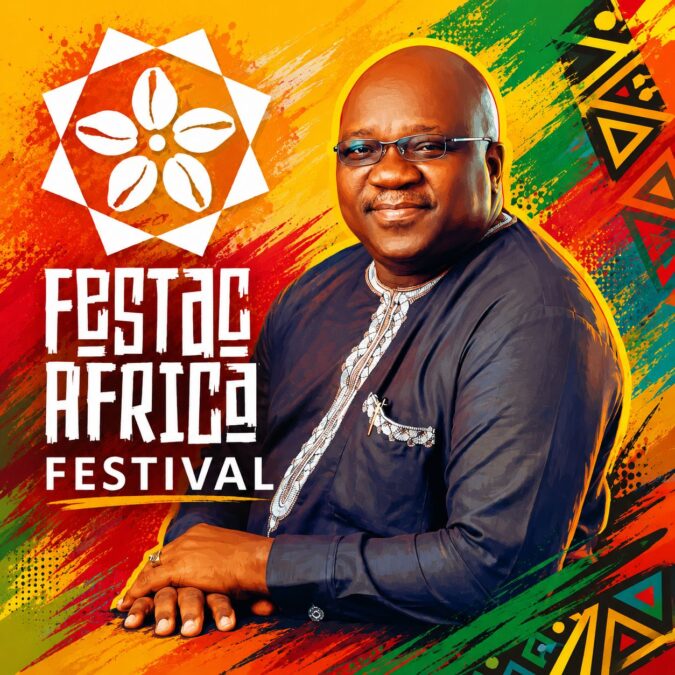
Five decades after Lagos hosted the great Black and African cultural gathering of 1977, Engr. Yinka Abioye is trying to turn FESTAC from historic memory into a living Pan-African movement of culture, trade, tourism, inclusion and continental reconnection.
For many Nigerians, FESTAC ’77 survives as a majestic memory: the month in 1977 when Lagos became the capital of Black and African civilisation; when artists, musicians, writers, dancers, dramatists, intellectuals and cultural delegations from across Africa and the diaspora gathered under one historic roof.
It was not merely a festival. It was a statement of identity. It was Africa announcing itself to itself and to the world.
But nearly 50 years later, the more urgent question is no longer whether FESTAC ’77 was great. That has already been settled by history. The real question is whether Africa can recover the imagination that made it possible — and whether Nigeria can once again stand at the centre of that cultural and Pan-African conversation.
That is where Yinka Abioye’s work becomes important.
As Chairman of FESTAC AFRICA, Abioye has become one of the most persistent voices arguing that FESTAC should not remain trapped in nostalgia. His argument is simple but powerful: the dream that produced FESTAC was never meant to be buried after Lagos. It was designed as a recurring platform for Black and African cultural confidence, continental solidarity and global connection.
At a FESTAC AFRICA town hall meeting held at Freedom Park, Lagos, on May 19, 2026, Abioye framed the coming return of FESTAC AFRICA to Nigeria in 2027 as more than the revival of a festival. To him, it is the “revival of a continental vision,” and Freedom Park was a fitting place to begin the activations because of its own symbolism as a site that carries the memory of colonial history and the promise of a freer African future.
That setting matters. FESTAC has always been larger than entertainment. Its deepest meaning lies in memory, identity and reclamation. To return to the idea from Freedom Park is to insist that culture is not an ornament in Africa’s development story. It is one of the foundations of that story.
From Dakar to Lagos, then back to Africa
Abioye traces the FESTAC dream to the Negritude movement and the 1966 gathering in Dakar, Senegal, under the influence of Léopold Sédar Senghor, one of Africa’s great Pan-African thinkers and cultural statesmen. After that first expression, the festival went into a long pause before Nigeria hosted the historic 1977 edition under the leadership of General Olusegun Obasanjo.
That history gives the current revival its emotional weight. FESTAC ’77 was not an ordinary Nigerian cultural event. It was one of the largest Black and African cultural gatherings in modern history. It brought Africa and the diaspora together at a time when newly independent nations were still trying to define themselves, recover from colonial humiliation and assert their place in the world.
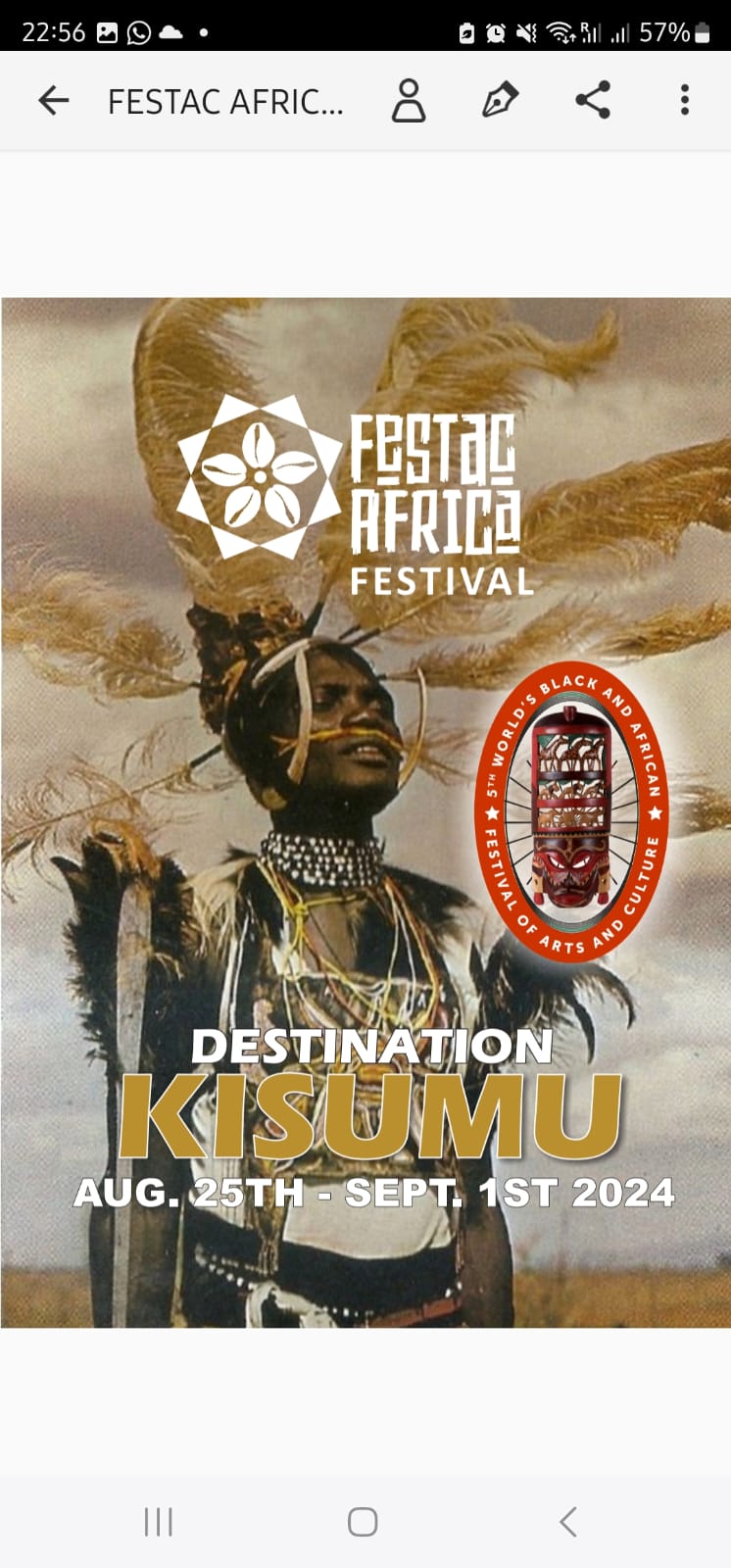
Yet after that magnificent showing, the festival again slipped into silence for decades. Abioye describes that period as one in which the festival effectively went into a long coma before its resuscitation in 2022. Since then, according to his account, the revived FESTAC AFRICA has moved annually through Zanzibar in 2022, Arusha in 2023, Kisumu in 2024 and Accra in 2025, with Dakar planned for 2026 to mark 60 years since the original Dakar beginning.
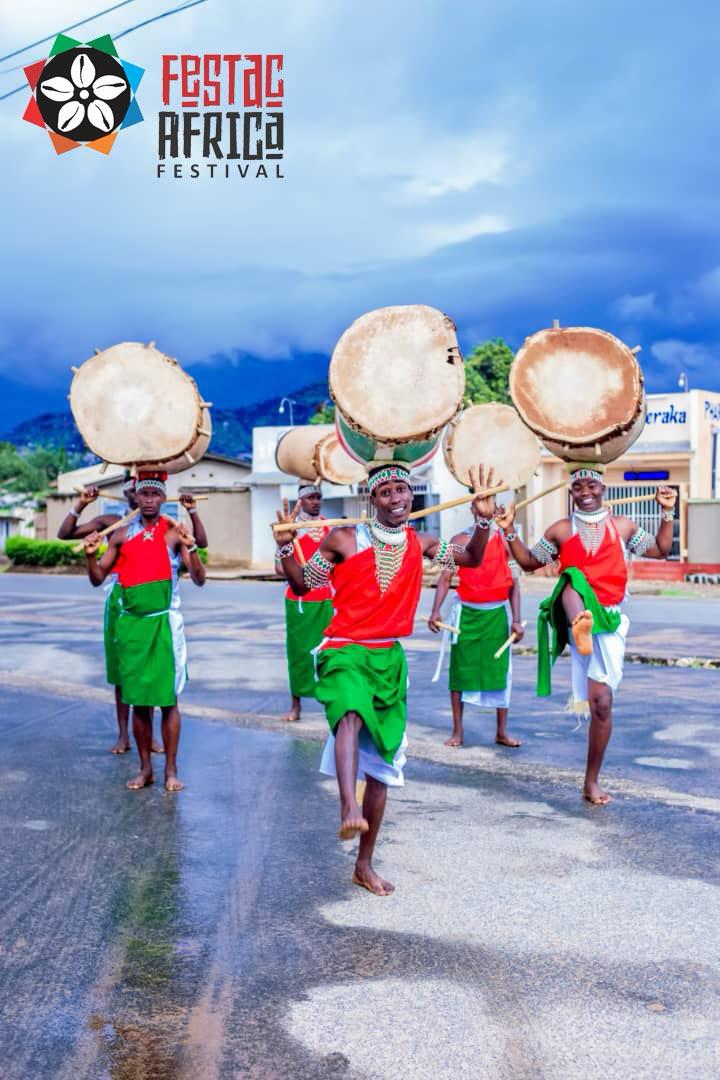
That trajectory is central to understanding Abioye’s effort. He is not simply trying to recreate Lagos 1977 as a one-time spectacle. He is trying to restore FESTAC as a moving African institution — a festival that can travel from city to city, country to country and community to community, carrying the old spirit of cultural reclamation into the economic, diplomatic and creative realities of today’s Africa.
Why Nigeria in 2027 matters
In 2027, FESTAC AFRICA is expected to return to Nigeria. For Abioye, that return is both symbolic and strategic. Nigeria, he argues, represents the heartbeat of African culture — a country whose influence in music, literature, fashion, film, technology and entrepreneurship now reaches across the world. From Nollywood to Afrobeats, from publishing houses to innovation hubs, Nigeria has become one of the most visible carriers of African creativity.
That is why the 2027 edition cannot be treated as a routine anniversary event. It should be seen as a bridge: between past and future, heritage and innovation, Africa and its diaspora. Nigeria understands FESTAC because Nigeria lived it. It still carries the cultural memory, the symbolic infrastructure and the creative energy to host such a gathering again.
But Abioye’s argument goes even further. Nigeria, in his view, is not just a host. It is a custodian of Pan-African expression. That places a responsibility on the country. A nation that once gathered the Black world in Lagos cannot approach the golden anniversary of FESTAC ’77 casually.
The return must be worthy of the memory.
From nostalgia to movement
The old FESTAC was built on the politics of postcolonial confidence. The new FESTAC, as Abioye frames it, must be built on the realities of a younger, more entrepreneurial, more mobile and more digitally connected Africa.
That is why his version of the renaissance project goes beyond dance, music and costume. It includes tourism, trade, investment forums, business exhibitions, youth engagement, sports, film, fashion, food, technology, women’s issues, disability inclusion and intra-African networking.
For Abioye, the ambition is not simply to stage another colourful cultural festival. The deeper goal is to position FESTAC AFRICA as a serious continental platform — one capable of bringing Nigeria, Africa and the diaspora into a stronger conversation around culture, development, mobility and shared opportunity.
“The goal is to position FESTAC AFRICA as the leading platform for bringing Nigeria, Africa and the diaspora together,” Abioye says.
He believes the festival must become a space where African countries, institutions, creatives, entrepreneurs, policymakers and diaspora communities can exchange ideas and build practical networks. In his view, the new FESTAC must be anchored on sharing best practices, regional integration, travel and tourism, trade improvement and disability inclusion.
“All of these work toward the same purpose: fostering togetherness to drive development across the continent,” he says.
That statement is important because it shows the larger thinking behind the renaissance project. Abioye is not treating culture as entertainment alone. He is framing FESTAC as a development platform — one that can use heritage, movement, storytelling and commerce to deepen African cooperation.
Festivals as economic engines
One of the strongest ideas in Abioye’s 2026 town hall speech is that festivals can no longer be treated as temporary celebrations. He argues that they must become economic engines and knowledge platforms. In that framework, FESTAC AFRICA 2027 is being designed not merely as an event, but as a creative economy accelerator, a tourism driver, a cultural diplomacy platform, a platform of inclusion for people with disabilities, a regional integration tool, an intra-African trade booster and a Pan-African policy and innovation dialogue.
This is perhaps the most important evolution in the FESTAC story. Abioye is trying to reposition culture as infrastructure — not soft decoration, not ceremonial entertainment, but a platform around which tourism, commerce, diplomacy, identity and youth opportunity can be organised.
In that sense, the FESTAC renaissance project is cultural, but it is also economic. It asks a serious question: if Africa’s music, fashion, food, film, festivals, literature, spirituality and heritage already carry global fascination, why should the continent not build stronger platforms to capture more of the value?
Properly structured, FESTAC could become a marketplace of African creativity. It could host film markets, fashion showcases, food festivals, publishing conversations, music performances, investment forums, tourism exhibitions, policy dialogues, youth innovation programmes and diaspora engagement platforms.
That is the larger promise Abioye is chasing.
Pan-Africanism as self-love
Abioye’s language around Pan-Africanism is also revealing. He does not treat it as an old slogan from the independence era. He describes Pan-Africanism as a living reality and, in one of the most striking lines from his speech, says there is no shame in being called a Pan-Africanist because Pan-Africanism is self-love.
That line gives the article a deeper emotional centre. For Abioye, FESTAC AFRICA is not simply about looking backward. It is about helping Africans see themselves differently now. When African music tops global charts, when African designers influence global fashion, when African filmmakers tell authentic stories and when African entrepreneurs build across borders, Pan-Africanism is no longer just an ideology. It is activity. It is exchange. It is confidence.
FESTAC AFRICA, in this sense, becomes a meeting point between memory and ambition. It reconnects Africa with its diaspora, youth with heritage and technology, creativity with economic opportunity, and culture with development.
Pan-Africanism today, Abioye suggests, must mean collaboration over competition. It must mean shared prosperity. It must mean Africans building together across borders.
The support Abioye is asking for
But Abioye is also clear that ambition alone will not sustain the project. At this stage, he says, FESTAC AFRICA needs support from both corporations and government. More specifically, he wants government to publicly back the initiative, arguing that such endorsement would help give confidence to private-sector sponsors.
“At this stage, we need support from both corporations and government,” Abioye says. “Specifically, we need the government to publicly back the initiative. That public support will encourage corporations to come on board as well.”
His proposed model is both symbolic and global. FESTAC AFRICA, he says, should maintain a permanent emotional connection to Nigeria while continuing to travel as a Pan-African and diaspora-facing movement.
“We also plan to hold a symbolic FESTAC event in Nigeria every year, honoring what FESTAC means to the country, while taking the project on tour around the world,” he says.
This is perhaps the clearest summary of Abioye’s strategy: keep Nigeria as the spiritual anchor of FESTAC, but allow the festival to move across Africa and the world as a living expression of Black and African cultural power.
A national opportunity, not just a cultural event
Abioye’s call to Nigeria is direct. He argues that government leadership, private-sector participation, cultural institutions and citizens all have a role to play. Support, in his view, can come through strategic national partnerships, infrastructure readiness, hospitality support, cultural programming, creative industry participation, youth engagement, educational collaboration, tourism promotion and international visibility.
That gives Nigeria a major positioning opportunity. FESTAC AFRICA 2027 could allow the country to showcase itself not only as Africa’s largest economy, but as its cultural capital. It could also help reposition Nigeria internationally at a time when countries increasingly compete through soft power, tourism, creative exports and global storytelling.
In Abioye’s formulation, this is nation building, nation positioning and nation branding at a continental scale.
That framing should interest government, but it should also interest the private sector. Banks, telecoms companies, FMCGs, aviation brands, hospitality groups, media organisations, technology firms, educational institutions and tourism operators all have a natural place in the FESTAC AFRICA ecosystem. Abioye has specifically called on partners across these sectors to help shape a festival that will resonate far beyond 2027.
Culture, commerce and legacy
The corporate argument is straightforward. FESTAC AFRICA should not be seen only as sponsorship inventory. It is a legacy platform. A company that aligns with it is not merely buying visibility. It is associating itself with Africa’s creative economy, diaspora connection, youth culture, tourism growth and continental identity.
That is a far stronger proposition than conventional event sponsorship. It allows brands to participate in a story larger than marketing. They become part of an effort to rebuild one of the most important cultural platforms in Black and African history.
For global investors and diaspora communities, the opportunity is equally significant. Africa’s cultural industries are among the most powerful growth areas of the 21st century. Music, film, fashion, food, festivals, heritage tourism and digital storytelling are no longer marginal sectors. They are part of the emerging architecture of global influence.
FESTAC AFRICA could become one of the platforms through which that influence is organised.
The Obasanjo connection and the burden of history
Abioye’s revival campaign has also consciously sought legitimacy from the old custodians of the FESTAC memory. One of the most symbolic elements of the project is its connection to former President Olusegun Obasanjo, Nigeria’s military Head of State when FESTAC ’77 was held.
That connection matters. FESTAC ’77 was not an ordinary Nigerian cultural event. Its memory belongs not only to Nigeria but to Africa and the diaspora. To reach back to figures associated with that era is, in effect, to seek a bridge between the generation that hosted the festival and the generation now trying to revive it.
But Abioye’s project cannot live only on historical blessing. Its success will depend on whether the new generation sees itself inside the idea. That is why youth engagement is so important to the revived FESTAC AFRICA agenda. Abioye has said directly that the festival belongs to young people, and that their creativity, innovation, voice and dedication will define the new era.
That is the right emphasis. A FESTAC revival that speaks only to those who remember 1977 will remain a commemorative project. A FESTAC revival that speaks to young Africans can become a movement.
A new geography of FESTAC
The movement of the festival across African cities also reflects Abioye’s wider thinking. The FESTAC renaissance project is not being imagined as a Lagos-only commemoration, even though Nigeria remains its spiritual centre. It is being built as a travelling platform capable of drawing African countries and other “African-Diaspora” nations into a common cultural and development conversation.
That is why the editions in Zanzibar, Arusha, Kisumu and Accra matter, and why Dakar in 2026 carries symbolic weight. It suggests a deliberate attempt to create a new geography of African cultural exchange — one that links East Africa, West Africa, the diaspora and the memory of earlier Pan-African gatherings; until the imaginary boarders created by the colonial masters are fully erased.
Pan-Africanism cannot survive only as rhetoric. It needs platforms, calendars, movement, exchange and repetition. It needs people to meet, artists to perform, businesses to exhibit, governments to support, media to amplify, and young Africans to see themselves as part of a larger continental story.
Abioye’s FESTAC AFRICA project is trying to supply that missing machinery.
No one left behind
One of the more important parts of Abioye’s speech is his insistence on broad participation. He spoke of reaching out to presidents, legislatures, governors, ministers, commissioners, kings, emirs, community leaders and community organisations to ensure that no one is left behind. He also mentioned collaborations with institutions and cultural figures, including Freedom Park, DIDI Museum and Prince Tunde Odunlade Museum, as part of efforts to build satellite offices and regional participation across Nigeria.
This detail strengthens the article because it shows that the FESTAC revival is not just being imagined from the top. Abioye appears to understand that for FESTAC AFRICA 2027 to work, it must not be reduced to a Lagos elite cultural event. It has to draw energy from the North, South, East and West. It has to bring in traditional institutions, museums, youth communities, creative hubs, state governments, tourism boards, schools, investors and the diaspora.
That is a difficult task. But it is also what gives the project scale.
The man carrying a difficult dream
There is something almost audacious about Abioye’s project. To revive FESTAC is to wrestle with one of Africa’s most emotionally charged cultural memories. It is to invite comparison with 1977, a festival whose scale, symbolism and ambition have become almost mythical. It is also to confront the logistical, financial and political difficulties of moving people, artists, businesses, governments and institutions across a continent still burdened by visa restrictions, weak travel links and fragmented markets.
Abioye appears to understand this. That is why his language repeatedly returns to travel, tourism, trade, integration and togetherness. He is not merely asking Africans to celebrate culture. He is asking them to use culture as a reason to move closer to one another.
That is why the FESTAC renaissance project should be understood not only as an arts festival, but as a practical Pan-African experiment. Every edition tests whether Africans can gather, trade, perform, debate, travel, exhibit, collaborate and imagine together across borders.
This is the light the article should shine on Yinka Abioye: he is attempting to move FESTAC from archive to action.
He is not the sole owner of the dream. FESTAC belongs to Africa, to Nigeria, to the diaspora, to the artists who performed in 1977, to the young people discovering the story today, and to the institutions that must now decide whether culture can become a serious instrument of continental renewal. But Abioye has become one of the visible custodians of the revival effort — a man trying to carry forward a difficult inheritance.
Africa is now
As 2027 approaches, Nigeria has a choice. It can remember FESTAC ’77 as a glorious past, or it can treat the anniversary as a mandate.
Abioye’s closing message captures the urgency of the moment. FESTAC AFRICA 2027, he argues, is more than a return. It is Africa reclaiming space, celebrating itself and inviting the world to engage with its creativity, intellect and humanity. In his words, the drums that sounded in 1977 are sounding again, and Nigeria will once again welcome Africa home.
That is the power of the moment. The anniversary is not just about what happened 50 years ago. It is about what Africa chooses to do with the memory now.
Abioye’s message is clear: Africa should not merely celebrate what FESTAC was. It must rebuild what FESTAC was meant to become.
Or, as he puts it with the certainty of a man trying to revive a continental dream: Africa is not the future. Africa is now.

Join BusinessDay whatsapp Channel, to stay up to date
Open In Whatsapp