Biography
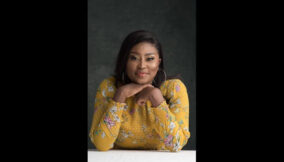
Tara Fela-Durotoye is the Chief Executive Officer and Creative Director, House of Tara International. She is a veteran in the beauty industry, who pioneered the bridal make up profession in Nigeria. She is a Lawyer from Lagos State University and a trained and certified makeup artist of Charles Fox, Convent Garden, London. In a series of firsts, she set up the first make up studio and established the country’s first make up school.
Tara also launched the Tara Product line, a brand that promotes ethics and ethnicity, by empowering young women for economic independence without moral compromise, just as it flies the proudly Nigerian flag. Tara started the chain reaction that has produced a large number of makeup artists (over 3500 via the makeup school); some are now active players in Nigerian beauty industry.
She has also succeeded in empowering young ladies -over 4000 of them – in the tertiary institutions with the Tara Orekelewa beauty representatives’ initiative that makes them financially independent, improves their self esteem while building their marketing and entrepreneurial skills.
She has received several national and international awards for her contribution to the industry and active role in empowerment.
Pioneering the transformation in the makeup industry
When I look at how far the industry has come and the impact made, I still get very emotional because I see the fruit of something I stumbled unto. I think about the sheer number of jobs that have been created; one makeup artist employing another makeup artist, the Instagram posts I see daily of makeup artists hiring because they need more hands.
I think about the micro to medium scale enterprises that have been birthed because of the skill of one’s hands, the boom in the retail industry and the way makeup is now presented and sold to the consumer. We now see world class content and uniformity in publications and consistency.
On social media platforms as well, we see a ‘bellanaijabeauty’ that has been created because there is content from makeup artists online and there are thousands of followers that can drive followers and revenue.
‘Makeup Studio’ how did you come up with this?
I opened my first studio, a boys’ quarters in 2003 on Adeola Hopewell whilst I was an undergraduate. Life coach, Lanre Olushola was my landlord at the time and was kind enough to give me a payment plan.
I rented a location because I felt a need that some of my brides coming to my home needed more privacy while I did their test makeup. I was confused as to what to call it as it also wasn’t a shop since I wasn’t selling anything. I wasn’t also sure how to set it up. I walked up to an older friend in church who was an interior architect at the time who said I should go and sit in there every day and ideas would come to me. I took her advice. As I sat down in my rented space, Ideas came to me in drops. It took me one year to complete the renovation.
Finally, the idea came to me that it was a studio and I the makeup artist but because I was not a traditional artist, it could not just be an art studio. It had to be more. The more I thought about the makeup studio, the more ideas I had of other aspects that could lie within it- people could have their makeup done on their way to parties, tie their gele.
Yet again, it is interesting to see chains of makeup stores- house of Tara owns over 20 in Nigeria and smaller brands have their makeup studios. Make-up studio is what they call it and that is what it has become, they also became retail spaces as well.
Your challenges with counterfeiters
I always knew that the risk of running businesses in Nigeria is high but sometimes, you do not know to what extent and counterfeiting my products to me was a surprise. I sat at home one day and someone who knew me well sent me a message from China and cried as she saw that my products had been counterfeited and a Chinese person was asking her if as a Nigerian she was interested in buying Tara products. She knew I was not the one selling it because of the way the guy presented it to her. I saw that happen to many international brands and they were destroyed.
Many of them were not owned by Nigerians and Nigeria was not their major market. For a local brand like mine that was built in Nigeria that do by usiness primarily in Nigeria, it becomes a major problem for us as a business. The impact is that when we do an annual forecast, stock becomes stuck in the warehouse; money is tied down for a long period in stock.
As a business that plans to outlive its founder, counterfeiting creates the risk of destroying the longevity of the brand. There is now a major attack on the band itself and it is almost near impossible to see the brand go faster.
Also, because beauty products are on the list from the Central Bank of Nigeria that cannot access foreign exchange for purchase, it means that we would have to start manufacturing in Nigeria. If we currently are unable to move the volumes that we have currently out- source manufactured, how possible would it be to build the factory? There is the volume that needs to be sold and the need for the machines to run consistently. There is also the job opportunity that is lost as a result of the factory. It becomes a critical problem. I think the Government needs to not only support businesses in terms of creating policies that help but to look closely at businesses like ours, identify the challenges and create a structure that helps businesses like mine move from importing to manufacturing. I have always thought we had no competition; brands like MAC and Maybelline are international brands and part of their brand proposition is that they are not owned by locals and could be purchased anywhere in the world. For us, our brand is one that promotes our culture, ethnicity and language. It is also a brand that has empowered young women for financial independence. We are seeking regulators like NAFDAC, Nigerian customs, the office of the Ministry of Health to look at these issues more aggressively and see the importance that a company like House of Tara is playing. During the US recession, the government decided to ensure none of the big banks went under as they understood the impact it would have on the economy. This is a local brand, a Nigerian brand that created an industry that did not exist before and it becomes important that the government pays closer look to ensure this brand succeeds.
‘Inspirational woman of the year’ award
Some of the recipients have been Ibukun Awosika, the first female Chairman of First Bank and Bola Adesola, the current CEO of Standard Chartered Bank. These are not women in my league by any measuring standard but I believe it is a representation of women who have done something significant in a group.
I feel that being recognised by the Committee Of Wives of Lagos State Officials (COWLSO) makes it clear to me that many times, people are watching what you are doing without you realising it and they could be people who you do not expect. It was not an award I thought I could be considered for- it is a Lagos State award recognising someone who is not from Lagos State, recognising someone who is not Yoruba but someone who is a pacesetter.
It was also an honour as it was presented by 3 Governors in the presence of about 6 First Ladies. It was an overwhelming experience and I was humbled. I recognise the role Lagos has played to my growth as a usiness. Lagos has become a fashion hub and sets the pace for fashion in Nigeria and this has contributed to the success of my business.
What necessitated the TFD series?
My mentor, Ibukun Awosika who wanted to spend time with ladies younger than I am had seen the impact that the time she’d spent with me had and felt that she could give more by helping young women shape their purpose and live a full life; not just successful at work but make the right choice for a spouse, wealth creation and management and more.
When she shared this desire, I took it upon myself to create a platform where she could express herself, I engaged about 10 of my mentees to invite 10 people each in their network and come to listen to her thoughts on various issues, come with questions and all.
We had over 70 people attend the first event. This is a busy woman with a tight schedule and the ladies really appreciated it. The time was too short and she wanted to spend more time with the ladies so we decided to create a second event which we made bigger, we had over 250 women.
One of the greatest things about the TFD series is the Paying It Forward; if you have attended it in the past, you need to pass on the teachings to a group of younger women in your network. That creates a ripple effect. The next one will be in December where her focus will be on investment and wealth creation as executives on entrepreneurs.
Nigerian economic situation and its effect on entrepreneurs
It is very tough and this is about perspective. My prayer is that as a nation, we would learn the lessons in this season and we would not forget what we have learnt. As a business, there is high focus on cost efficiency, while maintaining the same quality or even better. As a people, culturally we need to fix how we spend.
It helped us in House of Tara refocus on the things that are important as a business: impacting lives, customer service, wow experience, being the best place to work especially for our staff, our first customers.

Join BusinessDay whatsapp Channel, to stay up to date
Open In Whatsapp