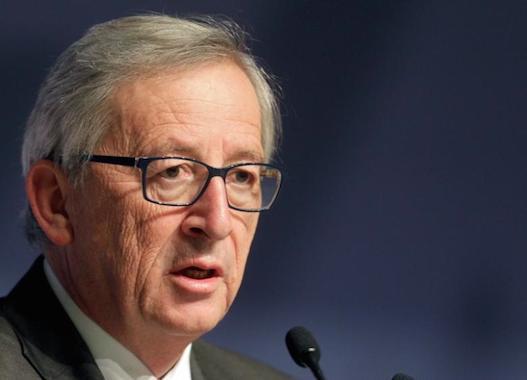
The European Union needs a military headquarters to work towards a common military force, the Commission president has told MEPs in Strasbourg.
Jean-Claude Juncker said the lack of a “permanent structure” resulted in money being wasted on missions.
Part of his annual state of the union address was devoted to the UK’s unexpected vote to leave the EU.
He insisted that the bloc was not at risk and urged Brexit negotiations to take place as quickly as possible.
Juncker warned that the UK could not expect selective “a la carte” access to the internal market without accepting free movement of people.
The single market has dominated the Brexit debate in the UK. Prime Minister Theresa May distanced herself from remarks by Brexit minister David Davis when he said remaining in the single market would be “very improbable” if it meant giving up control of British borders.
The Brexit vote has given added impetus to plans for greater defence co-operation, because the UK has always objected to the potential conflict of interest with Nato.
But Mr Juncker said a common military force “should be in complement to Nato”. “More defence in Europe doesn’t mean less transatlantic solidarity.”
A European Defence Fund would stimulate military research and development, he said.
Jean-Claude Juncker and his team agonised over the wording of Wednesday’s speech.
The UK’s vote to leave the EU is undoubtedly one of the biggest crises the bloc has ever faced but Juncker was determined not to dwell on it.
There were few words on Brexit. His main message: “The European project continues. Let’s choose to look forward. Be positive.”
Applause resounded around the chamber of the European Parliament but how will the voters outside react?
Are they even listening? The drumbeat of nationalist, Eurosceptic populism reverberates around the continent. Public trust in the establishment is low – whether traditional politicans, bankers or EU bureaucrats – and Mr Juncker is an unelected president.
Juncker admitted the EU was facing an “existential crisis”, but he said it had to deliver “concrete results” in response – highlighting priorities including ensuring stability, security and tackling social injustice.
He urged a renewed focus on the EU as a “driving force that can bring about unification, for instance in Cyprus”.
“Above all, Europe means peace. It is no coincidence that the longest period of peace began with the formation of the European community,” he said.
Splits in the Union had led to “galloping populism” and Europe had to be protected from them, he said.
In a blunt criticism of recent attacks on immigrants in the UK, he said he would “never accept Polish workers being beaten up and harassed on the streets of Essex”.

Join BusinessDay whatsapp Channel, to stay up to date
Open In Whatsapp