Kosiso Ugwuede examines the scorecard of the millennium development goals (MDG) while pointing out that Africa still has a long way to go at attaining the sustainability……
In September 2000, at the United Nations Millenium Summit, world leaders adopted the UN Millenium Declaration with a 2015 target that has come to be known as the Millenium Development Goals.
Its goals were noble. Hinging on global partnerships, the time bound goals were to ameliorate poverty in all its forms, ensure basic education for all, reduce infant and maternal mortality to the barest minimum, promote gender equality and fair treatment of women around the globe, protect the environment and wipe out prevalent diseases like malaria and HIV/AIDS.
Significant progress has been made over the last decade towards the attainment of these goals. All across the eight goals, landmark achievements were recorded in various continents with the help of the United Nations, national government agencies, world agencies, non-governmental parastatals, state and local governments, private bodies, communities and even individuals.
As at 2015, the number of people living in extreme poverty had declined from 1.9 billion in 1990 to 836 million even though global population had snowballed. The proportion of undernourished people in developing regions had also decreased by almost half, from 23.3% in 119-1992 to 12.9% in 2014-2016.
In efforts at achieving universal basic education, the number of out-of-school children of primary school age worldwide decreased to 57 million in 2015 from 100 million in 2000; a decline by more than 50%.
Also, in relation to infant mortality, deaths recorded for children under the age of five decreased by almost half from 12.7 million in 1990 to 6 million in 2015. This was despite the ever growing population in developing countries during this period.
Worldwide, maternal mortality ratio declined by 45%, with most of this decline recorded after the year 2000. In 2014, more than 71% of assisted births were conducted by skilled personnel as against only 59% in 1990.
Globally some 2.1 billion people have gained access to improved sanitation with 95 countries having met the sanitation target for the MDGs’ and 147 countries having met the drinking water target.
Sub-Saharan Africa’s snail pace
Despite the landslide achievements recorded so far, the progress at making the world a better place has largely been one-sided with sub-Saharan Africa lagging behind in advancements in different categories.
‘‘I am keenly aware that inequalities persist and that progress has been uneven. Disparities between rural and urban areas remain pronounced,’’ expressed United Nations General Secretary, Ban Ki-moon in a foreword in the MDG Review 2015 Report.
By 2011, all regions except sub-Saharan Africa had halved their proportion of people living in poverty. Globally, the number of people living below the $1.25 a day mark had been halved by 2015. However, majority of people still living below this mark have become concentrated in the sub-Saharan region. Together with Southern Asia, the sub-Saharan region accounts for 80% of people below the poverty lines. Nigeria is currently ranked the second highest country with people living in extreme poverty. India comes first.
 Since 1990, the number of undernourished people in sub-Saharan Africa has increased to 44 million. At 23% in 2014-2016, we are still to feed fully, our teeming populace.
One-third of the 90% of children under five who are malnourished are found in this region and while regions like East Asia were able to clearly meet the MDG targets, the rate of undernourished children in sub- Saharan Africa only fell by one-third since 1990.
About half of the world’s under-five deaths, at 3 million in 2015, are recorded in sub-Saharan Africa. 86% of maternal deaths in 2013 occurred in sub-Saharan Africa and Southern Asia. These two regions still account for the highest rates of infant and maternal mortality in the world.
Despite the fact that Africa recorded the most increase for the number of women in political offices and parliament, more women in sub-Saharan Africa are still more likely to be unemployed in comparison to their male counterparts. They are also more likely to be engaged in the informal sector and vulnerable employment in comparison to their male counterparts.
Creating avenues for sustainable development
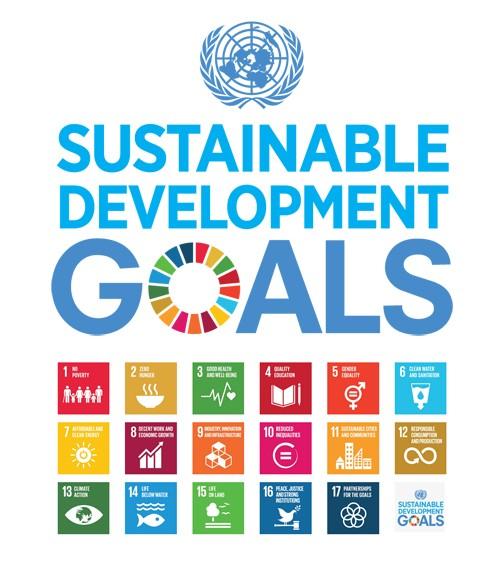
In September 25th 2015, countries adopted a new set of goals, 17 in number to guide development and work to provide a better quality and lease of life for mankind in the next 15 years. More like a post-MDG project, to set new goals and working collectively to give everyone an opportunity to live a better life.
In addition to some goals carried over from the MDGs, there are a couple of additions aimed at driving economies, innovation and sustaining growth and development in line with our evolving world. The deadline for the SDGs is 2030 and the race is on already.
No doubt the African continent has recorded some level of growth in the last decade in line with achieving the former MDG goals within the timeline set.
The continent has had the best record of improvement in primary basic education since the MDGs were established; for example, primary school children enrolled in Kenya rose by over 2 million in 2007 after school fees were abolished.
And despite soaring child mortality figures in the region, child mortality rate has fallen from 179 deaths per 1,000 births in 1990 to 86 in 2015.
However, to measure up to the level of progress recorded in other continents there is still a whole lot of work to be done.
The poverty line has to go way below 80% in the next decade and the rate of child deaths still has to decline rapidly from 86 deaths out of 1,000 live births, more women need to be empowered and more children still need basic education.
To create sustainable growth on the continent, measures aimed at tackling prevalent issues have to be more intergral and deep-rooted. Economic development programmes and implementations have to start from the roots and sturdy structures need to be incorporated to ensure that policies and processes outlive a certain duration or timeframe.
That is what sustainability entails. We are no longer allowed a business-as-usual and surface-only approach to addressing our core development and infrastructure issues.
African economies need to stop relying on a sole sector as the mainstay of its economy. Take Nigeria for example. The country earns revenue from various formal and informal sectors yet majority of its economic activities and revenue have been hinged on oil production over past decades.
Exploration and export of materials like coal and tin took back stage. Currently, with the restiveness in the oil producing Niger Delta region and falling oil prices, the county has been plunged into a recession.
Equal investments need to be made on growing diverse sectors of the economy to ensure that any unplanned mishaps or changes such as currently being witnessed in Nigeria does not cause a retrogression in progress made over the years to meet the set goals for 2030.
Asides programmes aimed at empowering women, cultural barriers impeding the social and economic opportunities of women also need to be addressed properly.
 We must also provide a condusive environment that fosters sustainable partnerships amongst countries, individuals, small businesses and governments in sub-Saharan Africa. Without strong partnerships, we as a continent will not make much progress.
Rapid response to situations of crisis is almost non-existent in sub-Saharan Africa. Take the struggle to curb the activities of Islamic sects in places like Chad, Nigeria and Niger.
Tens of thousands of people have been displaced and are currently in refugee camps in danger of starvation, poor sanitation and lack of access to primary healthcare in case of emergencies, the very battles the goals aim to eradicate. While some of these activities may be unavoidable, preparedness to tackle them early on and head on will go a long way to growing the economic stability of the continent as nothing much is ever achieved in times of unrest.

Join BusinessDay whatsapp Channel, to stay up to date
Open In Whatsapp