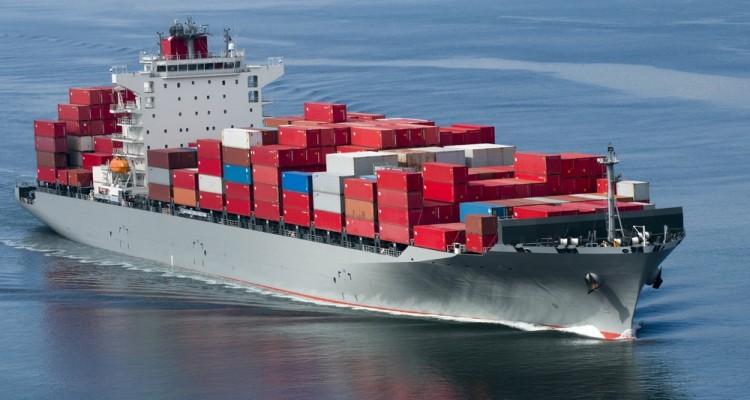
Nigerians will likely get relief from the grueling fuel queues which have persisted for weeks, as ships laden with about 194 million litres of fuel start to arrive the country’s ports this weekend, an industry player has told BusinessDay.
According to the source who does not want his name mentioned, six vessels, three of them laden with 40 million litres each and the others with 27 million litres, 25 million litres and 22 million litres respectively, are closing in, and the first batch will berth the nation’s ports at the weekend.
He said following the arrival of these cargoes, it is expected that there would be back to back supply, which would eventually ease the queues at filling stations.
From next week on, it is expected that cargoes would begin to arrive as frequently as they should, in such a way that before long the queues would disappear, he said.
Our source said that incoming fuel cargoes had been infrequent in the past weeks.
“In the real sense of it, there was not enough to go round to meet the demand of Nigerians who have been sleeping at filling stations”.
Business Day had reported last Monday, that half of Nigeria’s 60-member Depot and Petroleum Products Marketers Association owe international gasoline suppliers a staggering $1.2 billion due to insufficient foreign-exchange sales by the Central Bank.
The indebtedness was disclosed by the group’s executive secretary, Olufemi Adewole, in an interview with Bloomberg, opening a new, frightening dimension to Nigeria’s petrol supply quagmire.
“Unless we have adequate FX and our refineries are functioning, there will be product scarcity,’’ he said further.
The Federal Government had deployed police and soldiers to some gasoline stations to maintain order, as fuel shortages grip Africa’s biggest oil producer.
The debt is just one of the many ills plaguing the petroleum downstream sector in Nigeria.
There is also the flawed policy of government which seeks to hold the pump price of petrol at a particular level, while at the same time insisting that it will not pay subsidy or completely do away with the controversial subsidy regime.
The most severe fuel scarcity in a year in Africa’s most populous nation has left motorists paying more than double the government’s official price for gasoline and put increasing pressure on a stagnating economy that’s been hit by tumbling oil prices.
The national statistics office blames the shortages, which have been on and off, since May and have peaked again in the last month, for contributing to an 8 percent drop in labour productivity in the fourth quarter.
“The fuel industry is holding the whole economy to ransom,” Nema Ramkhelawan-Bhana, an analyst at Rand Merchant Bank in Johannesburg, said by phone. “Nigeria is already suffering from low oil prices, and now fuel shortages are exacerbating the problem.”
The latest fuel crisis has been worsened by Central Bank foreign-exchange controls that have left retailers paying higher costs to import supplies at a time when President Muhammadu Buhari’s government has removed subsidies and imposed a price cap at N87 a litre ($1.67 a gallon). As a result, gasoline is scarce, and the average cost on the market was N135 a litre in March, the highest since the country’s National Bureau of Statistics began compiling such data in June 2014.
The shortages are undermining Buhari’s claim that he is protecting the country’s poor and also his bid to kick-start the oil-dependent economy with a record 6.1 trillion-naira budget. Growth is expected to slow to 2.3 percent this year, from a 16-year low of 2.8 percent in 2015, according to the International Monetary Fund.
“The fuel shortage has reached levels where people are either having to temporarily close down their offices or to reduce their working hours,” Manji Cheto, an analyst at Teneo Intelligence in London, said in e-mailed responses to questions. “The effect of this on economic activities is obviously negative; the manufacturing sector, which has already taken a major hit in the last quarter, remains quite vulnerable.”
Drivers in Kano, the main city in the north, have been spending entire days in lines stretching a mile, and in Abuja, the capital, police have been deployed to reduce chaos around filling stations.
“The security people you see at filling stations are there to keep law and order,” Nigerian National Petroleum Corp. spokesman Garba Deen Muhammad said by phone on Tuesday.
In northeastern Adamawa state, gasoline sold for as much as N300 a litre earlier in the month, pushing up an inflation rate that reached an almost four-year high of 12.8 percent in March.
While Nigeria is pumping more than 1.8 million barrels of oil per day, the West African nation doesn’t have adequate refining capacity, and imports at least 70 percent of demand. On April 19, Buhari’s administration invited tenders to rehabilitate and operate its four refineries, and build new ones, as part of a long-term plan to reduce fuel imports.
NNPC spokesman, Muhammad, said fuel supplies were boosted this week. “We should return to normal in a few weeks,” he said.
In the meantime, the state minister for petroleum resources, Ibe Kachikwu, said he asked international energy companies including Total SA, Exxon Mobil Corp. and Royal Dutch Shell Plc. to provide foreign currency to retailers to enable them to import more.
“They are in effect asking companies to subsidise them,” John Ashbourne, an economist at London-based Capital Economics Ltd., said by phone. “I don’t see how that will work.”
Olusola Bello

Join BusinessDay whatsapp Channel, to stay up to date
Open In Whatsapp