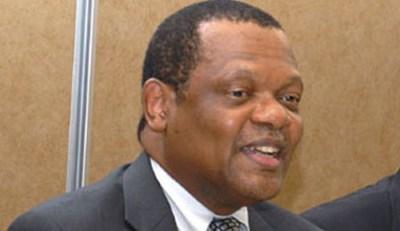
The Nigerian economy offers opportunities for longer term investors amid the current scramble for scarce dollars by the private sector, says Atedo Peterside, chairman of Stanbic IBTC Holdings Plc.
Peterside, who delivered the welcome address at the Standard Bank Seventh West Africa Investors’ Conference, said the pursuit of scarce forex for today’s needs has become the main game in town and this has exacerbated the pressures on Nigeria’s foreign exchange reserves and the naira, via the one-way bet that is currently on against the currency.
“By rising above the distractions and uncertainties surrounding the short-term foreign exchange situation and evaluating Nigeria’s long-term potential in key sectors of the economy, such as infrastructure, power and gas, consumer goods, agriculture, etc., investors will be better guided and positioned to take informed decisions on where the best long-term returns on investment will eventually emerge from,” Peterside said.
“Given the government’s plan to boost economic activity through extensive spending on infrastructure, as well as on social projects, it potentially provides a platform through which the private sector can partner with government.”
Peterside noted that an in-depth look at the 2016 budget proposal being deliberated upon in the National Assembly brings up a number of opportunities for the private sector, which if properly executed would enable the Nigerian economy tap its potential growth opportunities and boost aggregate demand.
Nigeria’s 2016 budget proposes to spend N6.07 trillion in total, with N2.64 trillion allocated for recurrent non-debt expenditure, N1.84 trillion for capital expenditure, and N1.47 trillion on debt service.
The budget has an embedded deficit of N2.2 trillion to be funded mainly from domestic and external borrowings.
Peterside says the 2016 capital expenditure budget of N1.84 trillion (vs. N557 billion in 2015), presents an opportunity for the private sector.
“Even if the government is not successful in implementing 100 percent of the programmed capital expenditure, it is still plausible that a significantly higher expenditure on infrastructure should take place in 2016 than anything that has been spent on infrastructure in recent years. There is clearly an opportunity for private capital to leverage upon this,” Peterside observed.
Diversifying the economy through government’s partnership with the private sector will be a challenge for policy makers to execute, as long as the private sector is preoccupied with the short-term pursuit of scarce forex at official rates, according to Peterside.
The Central Bank’s efforts to all but fix the naira against the dollar for the past year, by restricting foreign-currency trading by banks has caused a shortage of dollars, hampering companies from expanding or accessing imports.
Parallel market rates for the dollar N400 per $1 last Friday as importers scrambled for the greenback.
Growth is estimated to have slowed to 3 percent last year, the lowest since 1999, according to the Nigerian Bureau of Statistics (NBS).
Peterside observed that naira prices of various capital goods are being “correctly” priced purely on the basis of realistic expected replacement costs.
“The economy is sliding towards an unpalatable scenario where the consumer suffers the “pains” of devaluation (rising prices) without witnessing any of the expected “gains” such as enhanced fiscal viability (in local currency terms at least) of the three tiers of government and increased competitiveness of Nigerian businesses,” Peterside said.
“The much craved economic diversification can only take place meaningfully if new capital investment activity takes place to take maximum advantage of increased domestic competitiveness.”
He said the uncertainty surrounding the exchange rate regime and its sustenance has cowered both local and foreign investment activity.
“It is also worrying that the Federal Government is considering further borrowing to “bridge” a fiscal viability crisis that is caused in part by its decision to sell its forex to the private sector at rates that guarantee the latter huge windfall incomes, while the cash strapped government goes a borrowing,” he said.
PATRICK ATUANYA

Join BusinessDay whatsapp Channel, to stay up to date
Open In Whatsapp