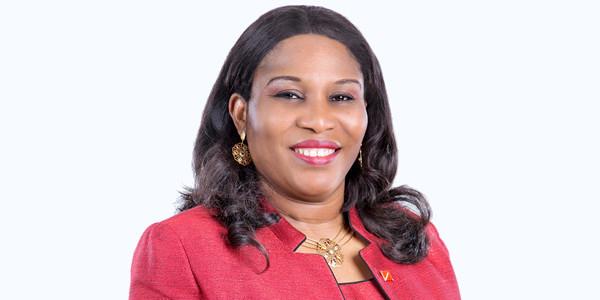
United Capital Plc, a Nigerian-based financial and investment services company says its high networth clients are shunning equities and moving assets into fixed income to beat market uncertainty.
“Most high end clients are playing the fixed income space due to the need for asset preservation and to its inherent liquidity,” Chief Executive Officer, Oluwatoyin Sanni said in a Feb 18 interview at the firm’s corporate headquarters in Lagos.
“We are also providing access to FX for their kids who are schooling overseas,” she said.
Nigeria raised N90 billion in local currency denominated bonds maturing in 2020 and 2026 at an auction on February 10, with yields ranging between 12.19 percent and 12.39 percent.
Subscriptions from investors stood at N234.25 billion, compared with N149.43 billion at the last auction, a month earlier.
The CPI at 9.6 percent for December means investors are earning real returns on the bonds of about 300 basis points above inflation.
The Nigerian Stock Exchange (NSE) main index for equities has however lost 14.69 percent this year, one of the worst performers globally.
The fundamentals of Nigerian banks are still strong despite some exposure to oil loans to firms, and potential spike in nonperforming loans for 2015, according to Sanni.
The uncertain macro environment, scarcity of foreign-exchange and slower growth means the “outlook for 2016 is not very favourable for equity markets,” Sanni said.
“The markets will react to government policy in the coming quarters. Foreign Portfolio investors have driven market sentiment so far with Nigerians mostly sitting on the sidelines,” She said.
Investors are shying away from Nigeria as it confronts its worst economic crises since 1999 due to a slump in oil prices, a source of about two-thirds of government revenue and 90 percent of foreign-currency earnings.
The Central Bank’s efforts to all but fix the naira against the dollar for the past year by restricting foreign-currency trading by banks has caused a shortage of dollars, hampering companies from expanding or accessing imports.
Growth is estimated to have slowed to 3 percent last year, the lowest since 1999, according to Nigerian Bureau of Statistics (NBS).
The Investment Bank which played a big role in funding the privatisation of power assets has not seen any major cases of distress by power asset buyers, according to Sanni.
“The upward review of tariffs is a positive for the sector, as well as support from the Central Bank and Power Ministry,” Sanni said.
United Capital’s Net income expanded 18.75 percent to N1.9 billion in the nine months through September, while revenue rose 29 percent to N4 billion.
The firm’s shares fell 1.49 percent to N1.32 per share at the close of trading in Lagos, on Friday valuing it at N8.04 billion.
The shares are down 0.75 percent in the past year compared with a 16.56 percent decline by the Nigeria Stock Exchange All Share Index for the period.
United Capital’s principal activities include provision of investment banking services, portfolio management services, securities trading and trusteeship. The company’s investment business provides advisory services, including project finance, capital markets, mergers and acquisitions and structured finance. The asset management business provides investment services to corporate, institutions, government agencies, high net worth individuals and retail investors.
PATRICK ATUANYA

Join BusinessDay whatsapp Channel, to stay up to date
Open In Whatsapp