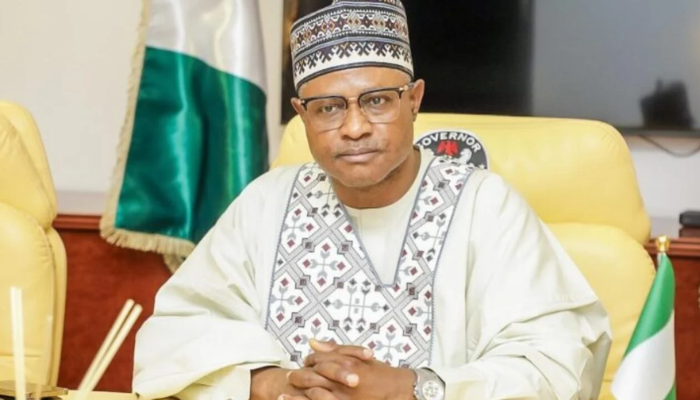
With the 2027 general elections still months away, political calculations are already reshaping Kaduna State, where the ruling (APC) faces one of its toughest electoral tests. At the centre of the unfolding contest are the governor’s expected re-election bid, growing debate over the party’s likely deputy governorship candidate, and shifting alliances that could determine control of the state’s three senatorial districts.
For political observers, the outcome will depend not only on the governor’s performance in office but also on whether the APC can balance religion, regional interests and internal party dynamics in a state where voting patterns have often reflected both governance issues and identity politics.
The most closely watched question is whether Governor Uba Sani will retain a Muslim-Muslim governorship ticket or nominate a Christian running mate ahead of 2027.
A political analyst and lecturer at Kaduna State University in the political science department, Usman Danfo argue that while the Muslim-Muslim ticket delivered victory in 2023, the political environment has evolved. He contends that choosing a Christian deputy could broaden the APC’s appeal, particularly in Southern Kaduna, where Christian voters form a significant proportion of the electorate.
Others, Inuwa Musa and Shahya, however, believe the governor may prioritise political loyalty, administrative experience and electoral strength over religious balancing, insisting that governance performance will weigh more heavily than the faith of the running mate.
Beyond the governorship, the battle for the National Assembly is also attracting attention.
Former senator Shehu Sani has continued political consultations and campaigns after winning the just-concluded APC primary elections for the Kaduna Central Senatorial District.
Similarly, former Kaduna State governor Labaran Yero haven won the ruling party’s ticket for the Kaduna North Senatorial District seat for the forthcoming general elections, is gathering momentum, banking on the already existing one, as the former number one citizen of the state has shown the party’s possibility of coming out Victoriously in the 2027 elections.
In Southern Kaduna, political attention remains focused on whose influence in the district continues to shape discussions about the region’s political future.
Southern Kaduna remains strategically important because of its voting strength and predominantly Christian population. Historically, the area has largely supported the PDP in many elections, making it a key battleground in any statewide contest.
However, recent developments suggest that the political landscape may not remain static.
Salisu Ibrahim, a political stakeholder in Kafancha Local Government Area of southern kaduna point to the appointment of Nigeria’s Minister of Defence, Christopher Musa and the Federal Government’s increased security focus in the North-West as factors that could influence political alignments. Some stakeholders like Yunusa Isa believe stronger collaboration between federal and state authorities on security and development could improve the APC’s standing in parts of Southern Kaduna and other districts.
Others caution that ministerial appointments alone rarely determine electoral outcomes, arguing that local issues such as security, infrastructure, employment, agriculture, healthcare and education will remain decisive.
Political analysts, Labaran Kataf also say the APC’s chances will depend on its ability to maintain internal unity and avoid pre-election disputes over party nominations.
The PDP, despite recent internal challenges, still commands significant grassroots support in several local government areas. Should it resolve internal divisions and present a united front, analysts believe it could mount a formidable challenge against the ruling party.
At the same time, supporters of Governor Uba Sani argue that ongoing investments in roads, education, healthcare, rural infrastructure and agricultural development could strengthen the APC’s campaign message ahead of the polls.
Ultimately, Kaduna’s 2027 election is expected to be shaped by a combination of governance performance, candidate selection, party cohesion and voter sentiment rather than any single issue.
While speculation over a Muslim-Muslim ticket, a Christian running mate or possible political realignments continues, the APC and PDP have yet to formally announce their candidates. Until then, much of the debate remains political analysis rather than established fact.
As Kaduna’s political season gathers momentum, one reality is already clear: whichever party successfully balances inclusion, performance and grassroots mobilisation is likely to hold the advantage in one of Nigeria’s most politically significant states.

Join BusinessDay whatsapp Channel, to stay up to date
Open In Whatsapp