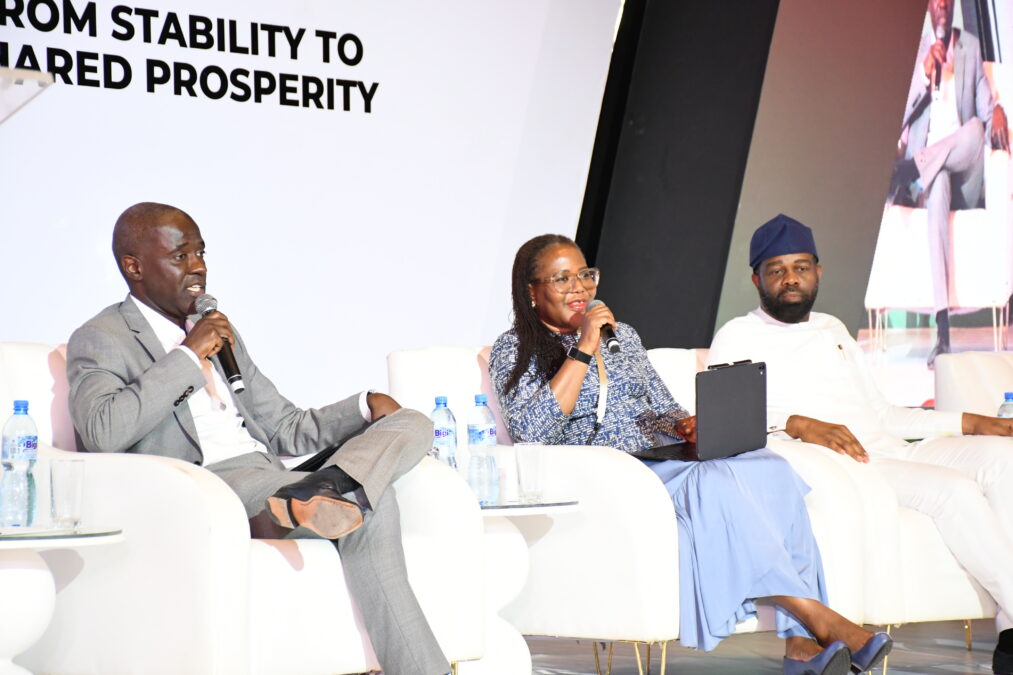
Aminu Maida, executive vice chairman and chief executive officer of the Nigerian Communications Commission (NCC), has called for greater investment in specialised technology skills.
He said this while speaking on the theme ‘Technology, Well-being and Workforce Efficiency’ at BusinessDay’s 2026 CEO Forum, saying Nigeria’s next phase of digital transformation will depend on a workforce equipped to drive innovation across critical sectors of the economy.
Maida said Nigeria must move beyond expanding digital infrastructure to developing sector-specific talent capable of leveraging emerging technologies in healthcare, education, manufacturing, finance and public services.
“We have established institutes that we are trying to revive because the industry needs specialised skills that can drive innovation,” he said.
He noted that while initiatives such as the Federal Government’s Three Million Technical Talent (3MTT) programme are expanding the country’s digital workforce, more focused investments are required to prepare professionals for rapidly evolving technologies.
“This is a challenge we need to take seriously,” he said.
According to Maida, Nigeria’s digital economy has reached a stage where simply increasing connectivity is no longer enough to unlock economic growth.
“What we are seeing is not just digital transformation; it is really a transitional transformation,” he said. “The structures will change, people will change, and organisations must prepare workers to adapt to new technologies and new ways of working.”
He explained that telecommunications has evolved beyond its traditional role of connecting people and now serves as the digital backbone supporting sectors such as healthcare, education, manufacturing, financial services and government operations.
Reflecting on the industry’s growth since liberalisation in 2000, Maida said Nigeria has expanded from fewer than half a million telephone subscribers to more than 180 million active mobile connections, providing the infrastructure needed to accelerate digital innovation.
However, he argued that the country’s priority should now shift from connectivity alone to ensuring technology is effectively deployed to improve productivity across the economy.
“The question now is not simply whether people have connectivity, but what they are using technology for,” he said. “There is enormous opportunity to deploy digital technologies in healthcare, education, manufacturing and other productive sectors.”
Maida also called for a more balanced distribution of digital infrastructure, noting that critical assets such as data centres remain heavily concentrated in Lagos despite nationwide fibre deployment.
He said the challenge is less about the availability of fibre infrastructure and more about creating a transparent wholesale market that enables internet service providers (ISPs) to access existing networks on fair and competitive terms.
“We actually do have connectivity and a lot of fibre across the country,” he said. “What we don’t have is a framework that enables fair and transparent access to that infrastructure.”
He noted that the NCC is working on a wholesale market framework that will establish transparent pricing mechanisms and encourage greater competition among service providers.
“We want anybody that needs access to infrastructure to be able to do so under a regulated and transparent regime,” he said, adding that stronger competition would improve broadband availability and affordability, particularly in underserved regions.
Maida stressed that regulators have a responsibility not only to promote market efficiency but also to ensure digital infrastructure supports broader national development objectives.
“As we pursue commercial growth, we must also ensure that essential public services such as healthcare, education and agriculture benefit from affordable digital infrastructure,” he said.
Maida said the commission would continue to use regulation to guide the market towards greater efficiency while creating conditions that encourage competition and expand access to digital services across the country.
“Our goal is to create a more competitive and efficient market that delivers better outcomes for consumers and supports Nigeria’s digital economy,” Maida stated.


Join BusinessDay whatsapp Channel, to stay up to date
Open In Whatsapp