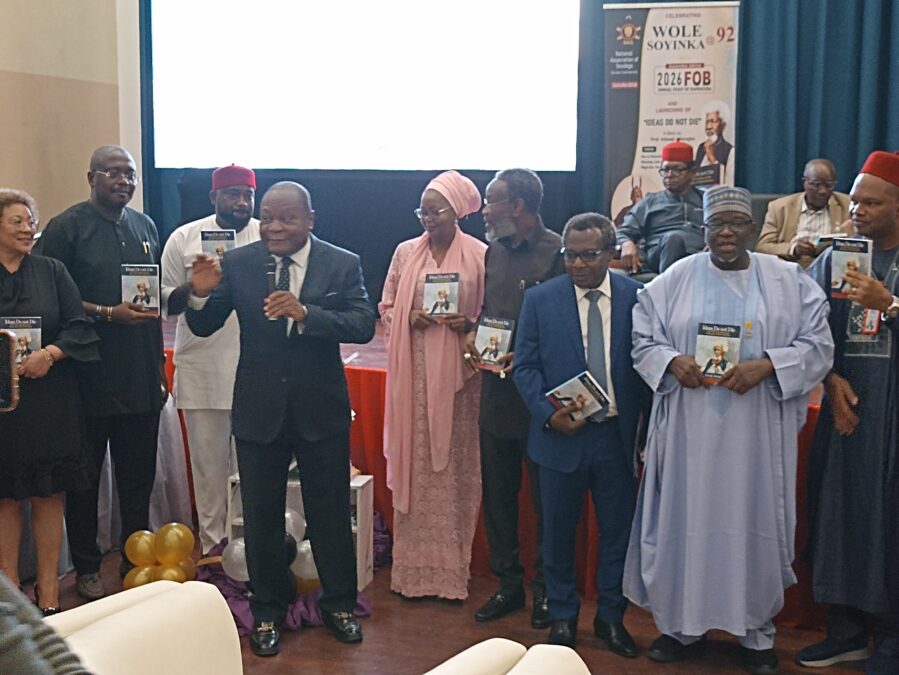
Stakeholders have identified moral decay, weak accountability and the erosion of civic values as the underlying drivers of Nigeria’s persistent insecurity, insisting that strengthening policing and military operations alone will not restore peace without a renewed national commitment to justice, ethical leadership and responsible citizenship.
Speaking on Monday in Abuja while delivering the keynote address at the 2026 Feast of Barracuda organised by the National Association of Seadogs (NAS), Sahara Deck, Lai Labode, The Aare of Egbaland, said Nigeria’s worsening security crisis cannot be resolved through policing and military operations alone, insisting that the country must confront what he described as a deeper failure of conscience, justice and civic responsibility if it hopes to achieve lasting peace.
The event, themed “Moral Rebellion as the Missing Link in Addressing Nigeria’s Security Challenges,” also celebrated the 92nd birthday of Nobel laureate, Wole Soyinka and featured the launch of the book Ideas Do Not Die by Adesoji Adesugba.
According to him, Nigeria’s security challenge should be viewed not merely as a law enforcement problem but as a nation-building challenge that requires ethical leadership, economic inclusion and active citizenship.
“I want to suggest that reframing insecurity as a security-building challenge is in itself an act of moral rebellion. It refuses the passive posture of a nation perpetually cataloguing what has gone wrong and instead demands the harder task of deciding what kind of society we must build,” he said.
Citing estimates by the Institute for Economics and Peace, Labode noted that insecurity costs Nigeria roughly eight per cent of its Gross Domestic Product annually, while billions of naira have been paid as ransom and millions displaced by violent conflicts.
He argued that sustainable security must rest on three pillars, economic dignity, cultural pride and principled resistance to injustice.
“A young person with a stake in the economy, a pathway to savings and a functioning system that rewards honest effort is far less available for recruitment by those who traffic in resentment and violence,” he said.
Labode also stressed that preserving cultural identity and heritage was critical to preventing violent extremism, saying young people who feel connected to their communities are less susceptible to radicalisation.
While referencing Chinua Achebe’s famous assertion that Nigeria’s greatest problem is leadership, he said citizens also have a responsibility to reject injustice and demand accountability.
“Leadership divorced from conscience produces only temporary order, never lasting peace,” he added, urging Nigerians to embrace what he described as “moral rebellion” against corruption, impunity and official failure.
Speaking during the launch of his book, Ideas Do Not Die, Adesoji Adesugba, the author, said the publication was inspired by the enduring ideals of Wole Soyinka, whose life of courage and principled activism continues to influence generations of Nigerians.
Adesugba said the book attempts to capture Soyinka’s philosophy on justice, integrity and nation-building, arguing that enduring ideas, not personalities, are what ultimately shape societies.
Reflecting on his own public service career spanning over four decades, he said the values he learned from Soyinka helped him navigate difficult leadership responsibilities.
He also warned that Nigeria’s rapidly growing population presents both an opportunity and a major risk if not properly managed.
“Nigeria is adding millions of children every year. If we fail to plan for them, we are planning for kidnappers, scams and a more impoverished country. We have all the opportunities, but we must deliberately educate, empower and create jobs for our young people,” he said.
Earlier, the National Association of Seadogs described the Feast of Barracuda as more than an annual tradition, saying it has become a platform for meaningful dialogue on national issues and practical solutions to Nigeria’s development challenges.
The association said it remains committed to promoting justice, equity, accountability, good governance and sustainable national development through informed public discourse and community service.

Join BusinessDay whatsapp Channel, to stay up to date
Open In Whatsapp