…Oil company CEO gives tips on success of host community trusts, as stakeholders agree template at Bayelsa forum
Stakeholders including players in the oil and gas industry with some officials of the regulatory bodies have put out ways the Petroleum Industry Act (PIA) should operate as it relates to host communities to bring to an end conflicts and crisis at the bottom level of the hydrocarbon industry.
The exercise is said to be to deepen understanding and collaboration at the host community level by making the Host Community Development Trust (HCDT) system viable and seamless. The forum held in Yenagoa, Bayelsa State capital, some few weeks ago and came up out with recommendations to the various levels of interest and participation.
A strong and propelling voice come as opening remarks from Ademola Adeyemi-Bero, the Managing Director of First E & P, who was represented by Ayebatonye Benjamin-Basuo.
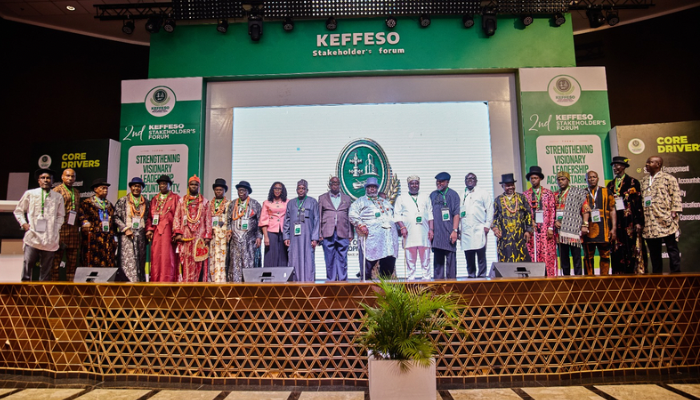
The Yenago event was under the auspices of the KEFFESO HCDT (KHCDT) which is the summation of 11 communities under the MPL 53 and 54 including Koluama 1, Koluama 2, Ekeni, Fishertown, Foropa, Ezetu 1, Ezetu 2, Sangana, Ogonibiri, Opu-Okunbiri, and Okunbiribeleu. It was held at the Nigerian Content Tower, Oxbow Lake Road, Yenagoa, Bayelsa State.
The communique at the end of the forum said the second edition (2026) successfully convened key stakeholders, including host community leaders, government regulators, operators, and development partners to deepen engagement and strengthen collaboration toward sustainable host community development.
The organisers said building on the foundation established at the inaugural 2025 Forum, the 2026 engagement focused on strengthening leadership capacity, enhancing collaboration, and promoting inclusive participation across KEFFESO communities.
Apparently finding the outcome very useful in terms of the communities embracing the modalities, the stakeholders adopted a resolution to make the template a uniform blueprint for all oil communities.
The Forum was said to have featured two structured workshops, a documentary on KEFFESO’s journey to date, and a plenary session, all designed to move beyond dialogue toward practical and actionable outcomes.
Participants were said to have been engaged meaningfully across sessions, resulting in stronger alignment, clearer priorities, and renewed commitment to advancing development across host communities.
Key outcomes included improved stakeholder alignment, identification of priority development areas, and agreement on actionable next steps to guide post-Forum implementation.
The key recommendations targeted the HCDT leadership which was asked to strengthen visioning and strategic planning; and enhance leadership coordination.
The stakeholders urged the oil companies to deepen collaboration with communities; and support capacity development initiatives. To the regulators, the stakeholders urged them to continue providing guidance and oversight, and to support institutional strengthening.
The communities were asked to promote unity and collaboration as well as increase participation and ownership.
Action plan was developed whereby the HCDTs should all have a properly articulated ‘Vision Framework.’ Stakeholder’s across all levels were urged to ensure that engagement structures were strengthened; and that there should also be deliberate interventions and activities to promote inclusive participation.
The ‘KEFFESO Stakeholder Forum 2026’ which represents a significant step forward in strengthening collaboration and advancing sustainable development across host communities was mandated to create feedback system.
The managers of the forum monitored the feedback and said it indicated a highly positive reception of the KEFFESO KHCDT Stakeholder Forum.
The importance of the exercise was underlined by very strategic and sensitive groups that participated and gave goodwill messages.
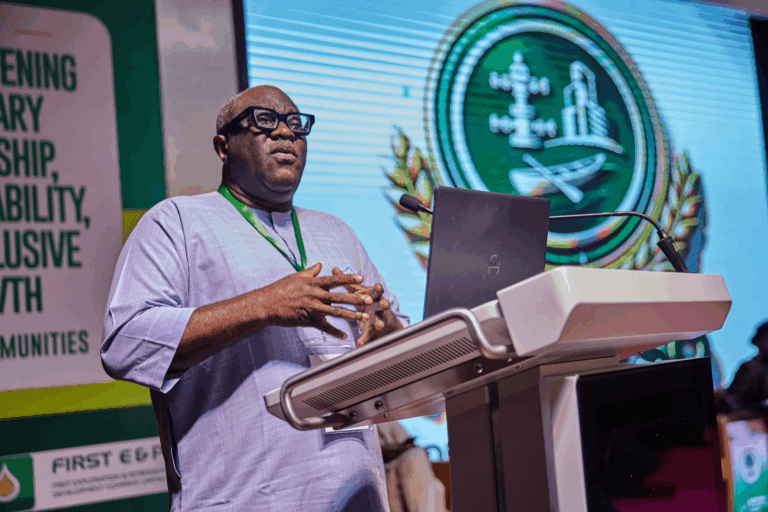
Opening remarks were given by First E & P’s Adeyemi-Bero (as represented by Benjamin-Basuo, who emphasised that legislation alone does not guarantee development, and that achieving meaningful outcomes required strong leadership and institutional capacity; clear alignment of stakeholder expectations; and commitment to accountability and inclusive participation.
The formal session commenced with a welcome address by Moses Theophilus, king and chairman of the KEFFESO HCDT Board of Trustees. He underscored the importance of vision-driven leadership, stakeholder alignment, and deliberate action in achieving sustainable development outcomes.
He highlighted that while the PIA provides a robust framework, implementation gaps remain, particularly in areas of community participation, employment generation, and capacity development.
Goodwill messages and keynote addresses from stakeholders came from the Bayelsa State Government, NCDMB, NMDPRA, NUPRC. These reaffirmed a shared commitment to structured, predictable, and sustainable development, with emphasis on local content and participation, enterprise development, and job creation and economic inclusion.
The plenary session provided a platform for multi-stakeholder dialogue, bringing together regulators, operators, development partners, and community representatives.
A report by the organisers said overall, respondents rated the experience as excellent or good with the majority confirming that the event met or exceeded their expectations.
It stated: “Participants also affirmed that the theme of the forum was highly relevant to their communities, reflecting strong alignment with current development needs within the HCDT ecosystem.
“The workshops were widely described as very impactful, with participants highlighting the quality of discussions, presentations, and facilitation.”
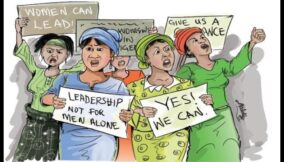
Key takeaways from the forum were said to centre on the importance of collaboration and partnerships for sustainable development, inclusive governance involving women, youth, and persons with disabilities, and the need for strong leadership, accountability, and effective communication.
In terms of outcomes, the report said most participants reported feeling better equipped to contribute to leadership, accountability, and inclusive development, with intended actions including strengthened stakeholder engagement, improved collaboration, community inclusion initiatives, and expanded advocacy efforts across platforms.
Areas identified for improvement included were said to be better time management, increased interaction during sessions, sustained post-forum engagement, and greater inclusivity and participation from wider stakeholders, including settlors.
“Participants also recommended incorporating more interactive formats such as syndicate or breakout sessions to enhance cross-learning.
Overall, the forum was regarded as a highly impactful and well-structured engagement platform that strengthened stakeholder understanding, promoted inclusive development, and reinforced the importance of collaboration for sustainable community growth.
The major outcome was the call by the stakeholders for strategic partnerships between host communities, oil and gas companies, regulators, and government, saying it is crucial for the effective implementation of the PIA.
A peep into the background showed that the establishment of the KEFFESO Host Communities’ Development Trust (HCDT) under the Petroleum Industry Act (PIA) provides a structured framework for community-led development within the NNPC–First E&P Joint Venture operational areas.
Following the success of the 2025 Stakeholder Forum, which created a platform for dialogue and engagement, the 2026 Forum was designed to deepen these conversations and address identified gaps, particularly in visioning, leadership alignment, and collaboration.
The Forum is said to reflect KEFFESO’s continued commitment to strengthening its institutional capacity and fostering partnerships that drive sustainable development outcomes.
The objectives of the Forum were said to be to strengthen leadership capacity within HCDTs, promote collaboration among stakeholders, enhance inclusive participation across communities, align stakeholders on sustainable development priorities, and identify practical actions and pathways for implementation.
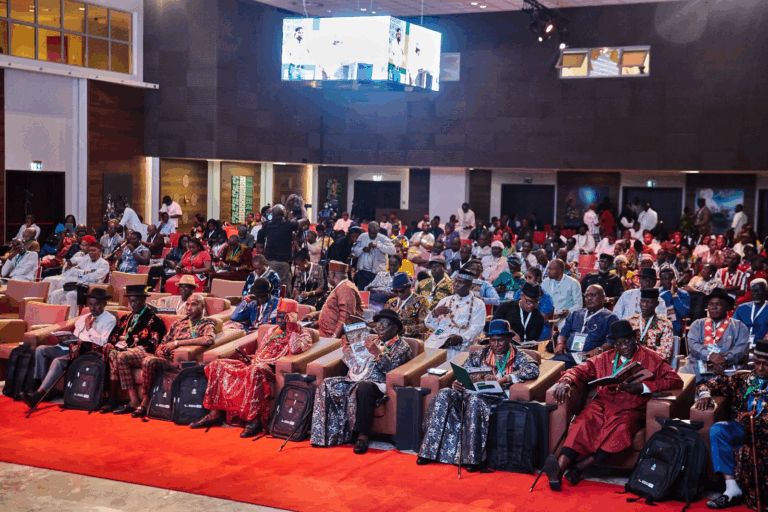
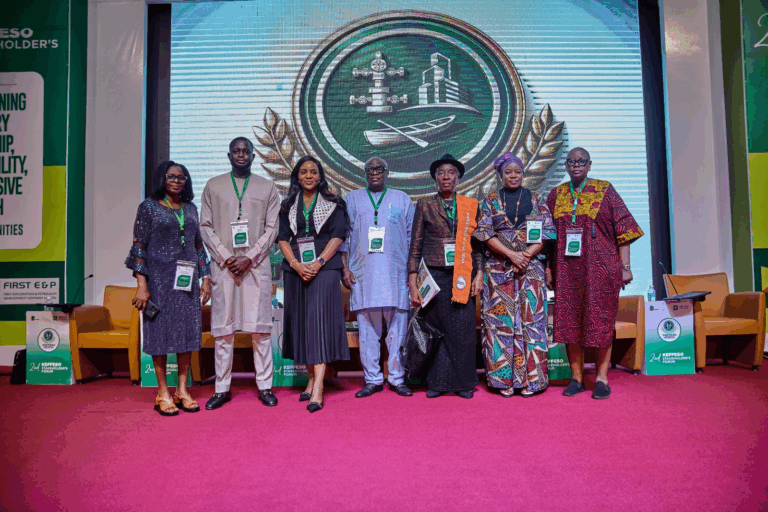
Participation was said to be topclass. The Governor of Bayelsa State was represented by the Commissioner of Mineral Resources; the KEFFESO HCDT Board of Trustees and Management were present; paramount rulers were on hand; representatives from host communities were present; NNPC–FIRST E&P Joint Venture (Settlor) showed powerful presence; regulatory bodies (NUPRC, NMDPRA, NCDMB) were at hand; development partners and NGOs (PIND, NNF and others) were present; while community leaders, youth, and women representatives were not left out. Thus, the event was indicated to have recorded strong participation and active engagement across all sessions, with a total of 270 delegates in attendance.
The Forum was said to have been structured to encourage both strategic alignment and inclusive participation through with two parallel workshops focusing on leadership and community engagement (held before the official opening ceremony); opening ceremony and keynote addresses; a plenary session bringing together all stakeholders; a closing session highlighting key outcomes and next steps.
At the end of the various workshop sessions, visioning, strategic leadership & collaboration overviews, actions were agreed to. These included development of a structured vision framework; strengthening collaboration across KEFFESO communities; and improved alignment between leadership and stakeholders
The workshops treated strengthening participation, inclusion, and community engagement with discussion points as importance of inclusive participation, community engagement and ownership, strengthening trust through improved communication Key Insights, inclusion of youth and women is critical to sustainable development, how community ownership enhances project sustainability, and how engagement builds trust and cooperation.

Join BusinessDay whatsapp Channel, to stay up to date
Open In Whatsapp