Since the return to democratic governance in 1999, Nigeria has been witnessing rising costs of expression of interest and nomination forms across the political divide, which has sparked concerns for the future of politics in Africa’s most populous nation.
This year, the All Progressives Congress (APC) pegged the presidential forms at N100 million (₦30 million for expression of interest and N70 million for nomination), governorship forms went for N50 million, Senate N20 million, House of Representatives ₦10 million, and state House of Assembly N6.0 million.
For the People’s Democratic Party (PDP), the combined cost of the presidential forms was N51 million, while the African Democratic Congress (ADC) charged the presidential forms at N90 million after a downward review, and the governorship forms cost N30 million, Senate N10 million, House of Representatives N5.0 million, and state House of Assembly N2.0 million.
Both the Labour Party (LP) and Action Democratic Party (ADP) charged N15 million each for the presidential forms.
In the past, it was the PDP that used to charge higher amounts for their nomination forms because it was believed that the party’s ticket was a guarantee for electoral victory; now it is the APC.
The exorbitant fees have drawn the attention of a non-partisan group, Citizens Platform for Political Inclusion (CPPI), which has challenged political parties on the high fees charged for the expression of interest and nomination.
CPPI, a coalition of citizens, public policy advocates and democratic governance stakeholders, committed to promoting inclusive political participation and strengthening Nigeria’s democracy, said the exorbitant fees exclude poor citizens from participating in the political process.
In association with the Athena Centre for Policy and Leadership and the Embassara Foundation, CPPI said it has commenced robust and coordinated legal and legislative steps to challenge the exorbitant expression of interest and nomination form fees charged by political parties in Nigeria.
The group has issued pre-action notices to all the major political parties, and is also seeking the intervention of the National Assembly to put an end to the exorbitant nomination fees.
It issued separate pre-action notices to the national leadership of the All Progressives Congress (APC), African Democratic Congress (ADC), Nigeria Democratic Congress (NDC) and the People’s Democratic Party (PDP).
In the letter to the APC addressed to Nentawale Yilwatda, national chairman of the party, made available to BusinessDay Sunday, CPPI said it is “acting in the public interest and on behalf of millions of Nigerians who are effectively excluded from seeking elective office by prohibitive fees.”
The letter was signed by all the members of the Steering Team of CPPI including Osita Chidoka, Amagbe Denzil Kentebe, Iniruo Wills, Ken Lewis-Allagoa, Famous Obebi Famous, and Adeniyi Ajayi.
BusinessDay Sunday reliably gathered that the letters to the other political parties bore the same wording, and gave a 14-day ultimatum to meet their four demands.
They are: “The immediate review and substantial reduction of the expression of interest and nomination form fees charged by political parties including the All Progressives Congress.
“The immediate adoption of a reasonable, transparent and non-discriminatory fee structure which reflects the purchasing power and economic realities of the average Nigerian citizen and does not operate as a barrier to democratic participation.
“The publication of the criteria, methodology and legal basis upon which the current expression of interest and nomination form fees were determined and fixed by your party.
“The establishment of an appropriate compensation and/or refund mechanism for aspirants was have been adversely affected by the imposition of such prohibitive fees.
“Should your party fail, refuse or neglect to comply with these demands within fourteen (14) days of receipt of this letter, we shall be left with no alternative but to seek redress before a court of competent jurisdiction.”
It also referred to Articles 2, 3 and 13 of the African Charter on Human and Peoples’ Rights, which guarantee equality, equal protection of the law and every citizen’s right to participate freely in the government of his or her country.
“The imposition of prohibitive nomination fees also runs contrary to Articles 2, 3 and 13 of the African Charter on Human and People’s Rights (Ratification and Enforcement) Act, which guarantees equality before the law, equal protection of the law and every citizen’s right to participate freely in the government of his or her country.
“Nigerian courts have consistently recognised the African Charter as an enforceable part of our domestic law and have relied upon its provisions in public interest and human rights litigation,” the group said.
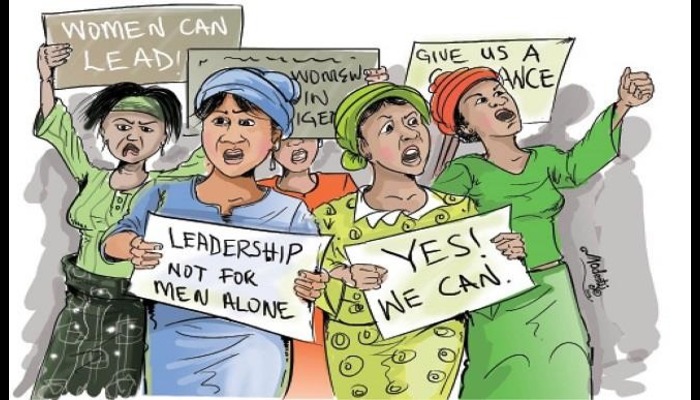
The group described the prevailing nomination fee regime as a grave threat to Nigeria’s constitutional democracy, and excludes a vast majority of Nigerians, including women, youths and the disabled from participating and seeking electoral office.
It its petition to the National Assembly, CPPI urged lawmakers to amend the Electoral Act by prescribing a statutory cap on nomination fees, empowering the Independent National Electoral Commission (INEC) to regulate and approve such fees, requiring political parties to justify and publicly disclose their fee structures, providing statutory fee concessions for women, youths and persons with disabilities, and mandating annual disclosure of nomination fees, the number of forms sold and revenues generated therefrom.
“To preserve the integrity of our electoral process and promote inclusive grassroots representation, we respectfully request the National Assembly to amend the Electoral Act to: Set a cap or maximum threshold for expression of interest and nomination form fees charged by political parties and empower INEC to regulate and approve the actual fees set by political parties.
“Mandate political parties to publicly submit their fee structures to INEC for oversight, preventing exclusionary and inflated charges.
“Require political parties to disclose and justify the basis and methodology used in determining expression of interest and nomination form fees.
“Provide for reduced and special fee arrangements that promote inclusion and encourage participation by women, youth and persons with disabilities.
“Require appropriate transparency measures, including public disclosure of nomination fees, the number of forms sold and revenues generated from nomination forms,” the petition stated.
The group also requested the Senate and House Committees on Electoral Matters to convene a public hearing on the impact of nomination fees on democratic participation in the country.
It urged the National Assembly to facilitate a broad stakeholder engagement involving political parties, INEC, civil society organisations, youth and women’s groups and constitutional law experts to examine appropriate reforms that will strengthen political inclusion and internal party democracy.
“We believe that full disclosure of revenues earned by political parties from nomination forms during electoral cycles, including the 2023 and 2027 electoral cycles, and how such revenues are applied, will further enhance transparency and accountability within Nigeria’s democratic process,” CPPI said.
According to the group, the inevitable consequence is the systemic monetisation of political participation across the Nigerian political landscape, whereby access to elective office is increasingly determined by wealth rather than merit, competence or public service.
CPPI maintained that the practice is inconsistent with the Constitution of the Federal Republic of Nigeria, 1999 (as amended), particularly Sections 40 and 42, which protect freedom of association and equality before the law.
It said the practice offends the spirit of Section 14(2)(c), which provides that the participation by the people in their government shall be ensured.
The group further cited Section 17(2)(a) of the constitution, which envisioned a social order founded on freedom, equality and justice, and Section 15(5), which enjoined the state to abolish corrupt practices and abuse of power.
“The disparity illustrates the extent to which excessive nomination fees exclude qualified Nigerians, particularly women, youths, persons with disabilities, low-income professionals and grassroots political actors, from seeking elective office.
“We believe that the imposition of such exorbitant barriers undermines the principles of democratic inclusion and constitutes a challenge to the constitutional guarantees contained in Sections 40 and 42 of the Constitution of the Federal Republic of Nigeria 1999 (as amended), which guarantees freedom of association and prohibit discrimination.
“We also believe that the practice is inconsistent with the spirit of Section 14(2)(c) of the Constitution, which requires that participation by the people in their government shall be ensured,” the group stated.
The statement noted that, although nomination fees imposed by political parties now run into tens and hundreds of millions of naira, Nigeria’s national minimum wage stands at N70,000 per month (N840,000 annually).
It observed that, “A Nigerian worker earning the national minimum wage would require well over one hundred years of income to afford certain presidential nomination forms,” describing the disparity as compelling evidence of the exclusionary nature of the existing regime.
The group said the consequences extend beyond financial exclusion, saying “Exorbitant nomination fees encourage political sponsorship, entrench godfatherism, promote undue financial influence over public office, incentivise the recoupment of political investments after elections and ultimately undermine internal party democracy, transparency, accountability and good governance.”
There has been the argument that the high cost of expression of interest and nomination forms helps to sanitise the electoral process.
It is believed that should the cost of the forms be so reduced to allow every interested citizen to participate, the field will become too crowded and also pose a serious challenge to INEC.
Johanna Raymond, a concerned resident of Port Harcourt, told BusinessDay Sunday that the issue often sparked debate, resulting in frustration amongst party members.
She said it rules out people who are not from affluent families and does not provide an equal playing ground for all aspiring elective office seekers while lowering the chances of healthy competition.
“The exorbitant nomination fees charged by political parties is a significant issue amongst party members that often sparks debate and frustration.
“This can discourage aspirants and prospective leaders because it tends to rule out those who are not from affluent backgrounds who possess the passion and vision for leadership.
“This also does not provide an equal playground for all aspirants and lowers the chances of healthy competition amongst party members,” she stated.

Join BusinessDay whatsapp Channel, to stay up to date
Open In Whatsapp