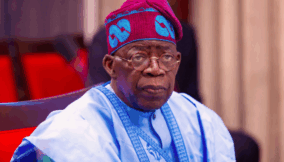
Bola Ahmed Tinubu, president of the Federal Republic of Nigeria, has directed the Federal Competition and Consumer Protection Commission (FCCPC) to investigate global technology companies, including Meta, Google, X and some Generative Artificial Intelligence (AI) platforms, over allegations that they are exploiting Nigerian media content without fair compensation.
The investigation, announced on Monday, follows a joint petition submitted to the Presidency by the Nigerian Press Organisation (NPO), which represents newspaper publishers, broadcasters, journalists and online publishers across the country.
The move marks one of Nigeria’s most significant regulatory actions against Big Tech and could reshape the relationship between global digital platforms and the country’s news industry.
The NPO comprises the Newspaper Proprietors’ Association of Nigeria (NPAN), the Nigeria Union of Journalists (NUJ), the Broadcasting Organisations of Nigeria (BON), and the Guild of Corporate Online Publishers (GOCOP).
The federal government conveyed Tinubu’s directive to the FCCPC through Mohammed Idris the minister of Information and National Orientation.
Read also: Africa’s biggest solar mini-grid operator secures IFC backing for Nigeria, Congo push
Why the investigation matters
For years, Nigerian media organisations have complained that while global technology platforms earn billions of dollars from digital advertising and online traffic, news organisations that produce original journalism receive little or no financial benefit.
Publishers argue that their reports attract readers to search engines, social media platforms and AI systems, yet the companies behind these services are allegedly using their content without negotiating fair commercial agreements.
The latest investigation suggests the Federal Government is taking those concerns seriously.
If the allegations are established, the outcome could influence how technology companies engage with Nigerian publishers and whether they will be required to compensate them for the use of their content.
AI also under scrutiny
Beyond social media and search engines, the FCCPC will also investigate Generative AI platforms operating in Nigeria.
A major focus of the inquiry is whether AI companies unlawfully extracted, scraped or used copyrighted news articles, broadcast materials and other journalistic works to train their artificial intelligence models without permission from content owners.
The investigation comes as governments around the world continue to debate how AI companies should use copyrighted material and whether content creators deserve compensation.
FCCPC promises fair process
Tunji Bello, the executive vice chairman and chief executive officer of the FCCPC, said the Commission would conduct an independent, transparent and evidence-based investigation.
According to him, the inquiry is not intended to presume that any company has broken the law.
Instead, he said the Commission will examine all available evidence, hear from every affected party and determine whether any conduct violated Nigeria’s competition and consumer protection laws.
“We recognise the strategic importance of the media to Nigeria’s democracy and the equally significant role of technology in driving innovation and economic growth.
“Our responsibility is to objectively determine the facts and ensure that competition within the digital ecosystem remains fair, transparent and consistent with Nigerian law,” Bello said.
He added that every organisation involved would be given the opportunity to present relevant information before any conclusions are reached.
Areas under investigation
According to the FCCPC, investigators will examine several key allegations.
These include claims that some technology companies may have abused their dominant market positions to the disadvantage of Nigerian media organisations.
The Commission will also investigate allegations that copyrighted news articles and broadcast content were extracted or commercially used without authorisation to develop AI systems.
Another major issue is whether Nigerian publishers have been denied meaningful opportunities to negotiate fair commercial agreements for the use of their content by global technology companies.
Ultimately, the Commission will determine whether any of the alleged practices violate the Federal Competition and Consumer Protection Act (FCCPA) 2018 or any other applicable Nigerian law.
A familiar regulatory battle
The latest probe is not the FCCPC’s first confrontation with a global technology company.
The Commission previously investigated Meta over alleged violations of the FCCPA, including data privacy breaches.
In 2025, the regulator secured a landmark judgment that resulted in a $220 million fine against the company. Meta has since appealed the decision.
The new investigation broadens the regulatory spotlight beyond privacy concerns to include competition, copyright, digital markets and the growing influence of artificial intelligence.
Lessons from South Africa
Nigeria’s action also mirrors developments elsewhere in Africa.
Following complaints by South African media organisations and an investigation by the South African Competition Commission, Google agreed to compensate South African news media with about R688 million (approximately $40 million) annually for between three and five years.
That agreement has strengthened calls for similar arrangements in other African countries where publishers argue that technology platforms benefit commercially from journalism produced at significant cost.
Read also: Presidential isolation is Nigeria’s biggest governance risk — Flutterwave co-founder
What happens next?
The FCCPC is expected to invite technology companies, media organisations and other stakeholders to provide evidence during the investigation.
Depending on its findings, the Commission could recommend regulatory actions, financial remedies or new commercial frameworks governing how digital platforms use Nigerian news content.
For Nigeria’s struggling media industry, the investigation could become a defining moment in the effort to secure fair value for original journalism in the digital age.
For Big Tech companies, it represents another sign that governments across Africa are becoming more willing to scrutinise the power and business practices of global digital platforms as artificial intelligence and online content reshape the media landscape.

Join BusinessDay whatsapp Channel, to stay up to date
Open In Whatsapp