…FG insists reduction in crude oil prices must reflect in retail markets
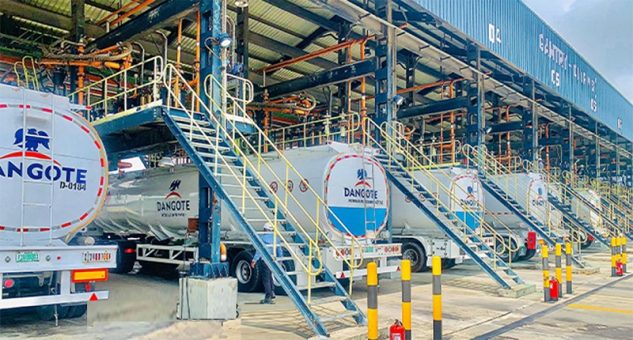
The Independent Petroleum Marketers Association of Nigeria (IPMAN) has hinted on possible reduction in the retail prices of petrol across the country, following a direct purchase agreement with the Dangote Petroleum Refinery.
Abubakar Maigandi Shettima, National President of IPMAN, disclosed this in Abuja on monday, commending the decision of Dangote refinery to sell directly to the independent marketers.
He said, “Reducing the price depends on the way we buy the product from the private depot owners and Dangote refinery. And I thank God now, Dangote refinery has accepted the independent petroleum marketers to start purchasing their product directly. So, it’s a plus.
“At any time when there is a reduction of price, we are ready to reduce the price to even below N800, not even N900.”
Prior to this development, independent marketers who control over 70 percent of Nigeria’s retail filling stations, largely relied on third-party private depots for products.
Shettima however explained that Nigerians will begin to see gradual reduction in petrol prices, provided that the marketers mark their margin and get a profit from their sales.
“The price of the product is bit by bit, even the time when the price was increased, if you see, we didn’t increase the price at the same time. Likewise, now, we have started reducing the price, if you observe very well. So, the price is coming down, and I assure Nigerians, independent petroleum marketers are ready to crash down the price at a required rate.
“If you check the price all over the country, you will see that independent petroleum marketers are reducing their price bit by bit. Presently, just as I have said, we have reduced to 125 Naira per litre, for every litre which people used to consume before, there is a reduction of 125 Naira nationwide,” he said.
Shettima emphasized that beyond domestic sourcing, the association is pushing for total deregulation that allows its members equal access to both local production and international supply chains to guarantee energy security.
The association urged the Federal Government to sustain its support for the Dangote refinery while simultaneously creating an enabling environment for other modular and private refineries to come online.
“Our major concern is a balanced distribution ecosystem. We want a situation where IPMAN buys directly from the Dangote refinery, but also, if we request licenses for importation, independent marketers should be allowed to import by themselves.
“So, but what we are trying to encourage, we are trying to encourage our local refinery, so let the government allow the local refinery to function properly, and assist those who intended to do refinering too,” Shettima added.
In his remarks, Heineken Lokpobiri, minister of petroleum resources (oil) stated that while the initial increase in crude prices exerted upward pressure on petrol prices, the subsequent moderation in crude oil prices has not translated into a commensurate reduction in pump prices across the domestic market with as Nigerians still pay as high as N1,296/ltr as at today.
The minister who noted that energy is a fundamental input across virtually every segment of the economy, said that when the cost of energy remains elevated beyond what prevailing market conditions justify, the results translate to inflation.
He explained that even though PMS pricing is influenced by several factors beyond crude oil prices, it is important to distinguish between genuine replacement cost and windfall gains arising from inventory management.
“While considerable progress has been made in moderating inflation from the
highs experienced in 2024 at 34 percent, the latest figures show that inflation currently stands at 15.9 percent. Sustaining high energy costs where underlying market fundamentals have improved risks undermining these gains.
“Temporary gains realised from inventories acquired at higher prices should not become the basis for sustaining elevated pump prices after replacement costs have declined. As inventories are replenished at lower costs, the benefits of those lower costs should be transmitted to consumers
in a timely and transparent manner. That is the essence of a competitive and efficiently functioning market,” he said.
The minister noting the Federal Government’s commitment to protect
public interest post deregulation, said that deregulation was never intended to create opportunities for excessive pricing or market distortions but rather promote efficiency, deepen competition and ultimately deliver value to Nigerians.
Also speaking, Rabiu Umar, Authority Chief Executive (ACE) of the Nigerian Midstream and Downstream Petroleum Regulatory Authority (NMDPRA) stressed the need to ensure a cost-reflective and fair pricing of petroleum products, particularly petrol.
He noted that over the past six months, the country navigated considerable volatility in the international crude oil market with increases in prices due to heightened geopolitical tension and global conflicts.
” Recently, we have witnessed a welcoming easing of those tensions, which has driven a downward shift and moderation of global crude prices. However, our domestic retail market has not yet harmoniously adjusted to these downward shifts.
“As a responsible regulatory authority, it is our duty to step in alongside you, our valued partners, to interrogate the market forces, understand the operational bottlenecks, and directly address this disconnect between falling replacement costs and sustained retail prices,” he said.
Umar speaking further, emphasized that deregulation is not licensed for market distortion or fair consumer pricing but a measure intended to drive efficiency, maximize value, and protect the public interest -Sustainable profitability for marketers and consumer welfare are not mutually exclusive.
He stressed the need to build a transparent ecosystem where the benefits of market improvements are passed on to the Nigerian consumer in a timely and fair manner, whilst protecting the sustainability of businesses.
“Our objective today is not to dictate, but to collaborate. We want to engage in an open, transparent, and solution-oriented dialogue. We want to hear your challenges, discuss market surveillance, look into inventory management, and align on how we can collectively accelerate key mechanisms like the National Strategic Stock to protect our energy security.”
“Just two weeks ago, many of us gathered in a similar forum to discuss the domestic gas sector. The candid dialogue and the actionable wins we secured during that session are already bearing fruit.
“Notably, we have seen LPG prices coming down significantly across the market, and we look forward to seeing even more reduction within the next two weeks. It is exactly this kind of tangible success that inspired today’s gathering,” he added. Join BusinessDay whatsapp Channel, to stay up to date