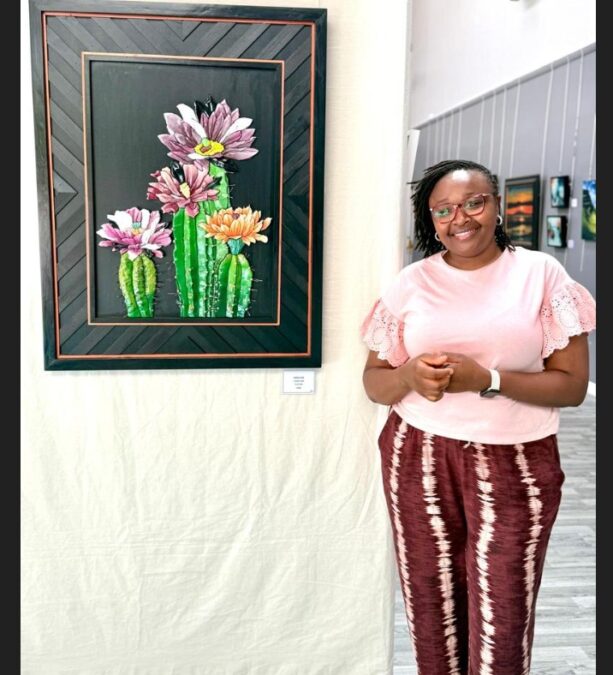
In a quiet studio in Aberdeen, Scotland, discarded timber finds a second life. Offcuts that would otherwise end up in a skip are sorted, sanded, and reshaped into wooden signs, sculptural pieces, and gallery works that have found their way into exhibitions far beyond the city’s craft fairs.
This is the practice of Rang Iliya, founder of HOP Creations, an artist who has built a career, and a philosophy, on the belief that nothing should go to waste, least of all stories.
Iliya’s path to woodworking began far from a workshop bench. Trained in architecture, she has long been drawn to the place where art, design, and function meet: the conviction that an object should do more than simply exist. “I’ve always been fascinated by the intersection of art, design, and functionality,” she says of her early influences.
That architectural sensibility, proportion, structure, and intention, still shapes the way she approaches a piece of wood today. In 2016, she founded HOP Creations with a clear mission: to give creativity and bold thinking a home, particularly for young people searching for an outlet.
The studio, built on local resources and a restless curiosity, became a gathering place for art enthusiasts. It was during the stillness of the 2020 lockdown that Iliya turned her attention to sign making, a craft that let her translate architectural precision into something tactile and lasting.
What sets Iliya’s work apart from much of the wood-craft world is where her material comes from. Rather than working with new stock, she actively sources scrap and reclaimed wood, offcuts, discarded timber, and materials others have set aside, and transforms them into finished, exhibition-ready pieces.
“There’s something quietly powerful in taking what’s been set aside and shaping it into work meaningful enough to stand in an exhibition space,” Iliya explains.
For her, sustainability isn’t a marketing angle layered onto the work after the fact; it’s the starting point. Every commission begins with the question of what materials already exist, what’s been overlooked, and how it might be made useful again.
That ethos has carried her work into gallery and exhibition spaces, where pieces built from reclaimed timber sit alongside more conventional fine art, proof, in Iliya’s eyes, that material origin doesn’t dictate artistic value. If anything, the history embedded in salvaged wood, its prior life, its wear, its grain, gives her finished pieces a depth that new lumber simply can’t replicate.
Running parallel to her environmental commitment is a deep investment in cultural awareness and retention. Many of Iliya’s pieces draw directly on heritage, faith, and identity, among them her “True Story Nativity Hut” and a series of faith-rooted wooden plaques bearing phrases like Blessed Beyond Measure and God is Within Her.
For Iliya, these works function as small acts of memory-keeping. They hold onto stories, traditions, and beliefs that might otherwise fade, and place them in front of new audiences, in a home, in a nursery, on an exhibition wall. Craft, in her hands, becomes a vessel for continuity, a way of ensuring that culture isn’t just remembered, but actively passed forward.
That commitment to passing things forward extends beyond the artworks themselves and into Iliya’s teaching practice. Alongside her commissioned pieces, she runs hands-on workshops, including African pot crafts, string art, and tote bag design sessions, designed to introduce participants to new making skills in a communal, low-pressure setting.
“Creativity should be accessible, communal, and a little fearless,” Iliya says. Her workshops are deliberately structured to guide without dictating, giving participants room to explore their own patterns and styles rather than replicate hers. It’s an extension of the same founding impulse behind HOP Creations: unlocking creativity in young minds, and ensuring the techniques she has built her practice on don’t end with her, but continue with whoever picks them up next.
Taken together, Iliya’s body of work resists easy categorization. It is craft and fine art, commerce and community practice, sustainability project and cultural archive.
A wood sign destined for a nursery wall and a reclaimed-timber piece destined for a gallery floor emerge from the same studio, the same hands, and the same underlying conviction: that materials, stories, and skills are worth saving, and worth handing on.
“My journey is rooted in empowering creativity,” Iliya reflects. “I’m committed to delivering unique, handmade wooden art that inspires and elevates any space.”
Increasingly, that space extends beyond living rooms and nurseries and into galleries, proof that what begins as scrap, in the right hands, can become a masterpiece.

Join BusinessDay whatsapp Channel, to stay up to date
Open In Whatsapp