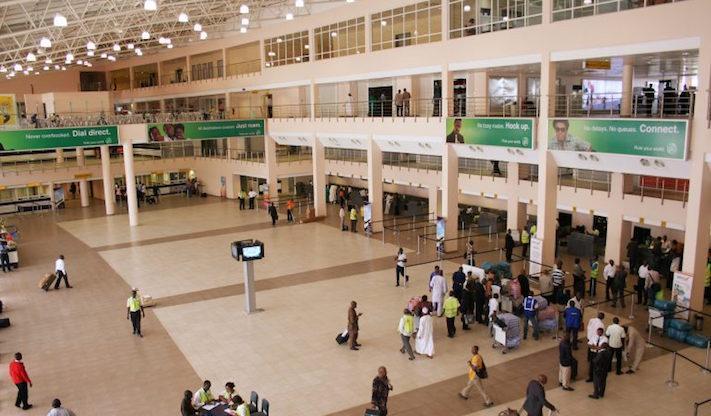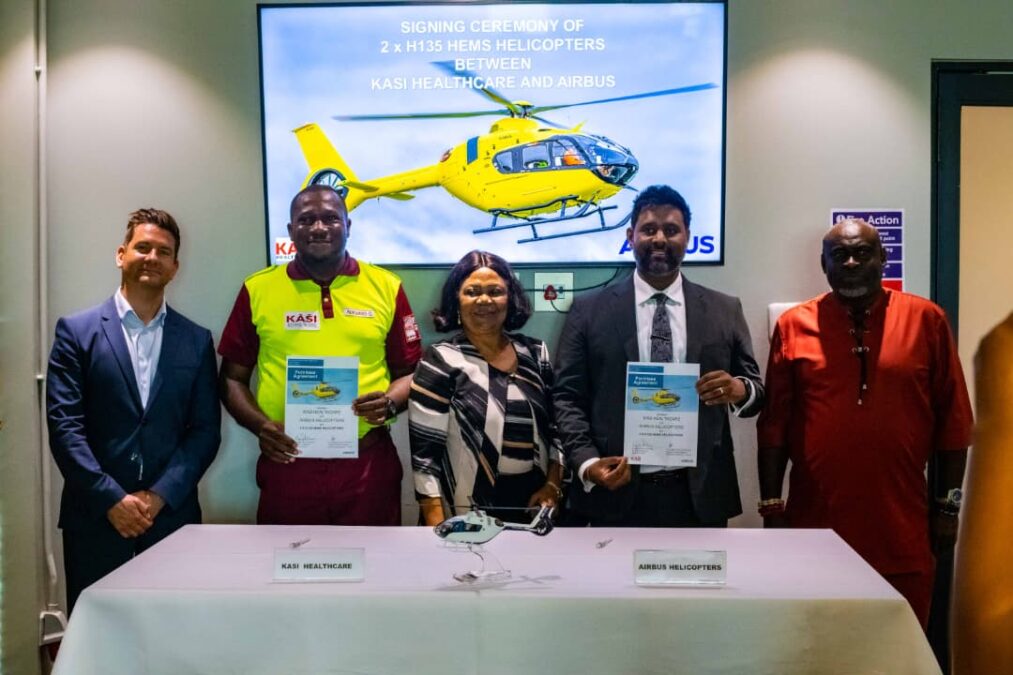
Airbus Helicopters and Kasi Healthcare have signed an agreement at the 3rd Nigeria Airlift Forum to procure up to two H135 helicopters.
The deal marks a major milestone for Nigerian aviation, introducing the country’s first purpose-built Helicopter Emergency Medical Services (HEMS) aircraft.
Configured specifically as flying intensive care units, these helicopters will drastically advance regional capabilities for critical medical missions, rapid accident response, and life-saving patient transfers.
The journey to the H135 procurement did not happen overnight. According to Dayo Osholowu, Medical Director of Kasi Healthcare, the foundation for the project began two years ago when Kasi Healthcare brought in teams from Airbus and Germany’s prestigious ADAC HEMS Academy to conduct an exhaustive pre-feasibility and cost study in Nigeria.
“The beginning and the end of the success of the story starts with data,” Osholowu explained. “We developed that study into a business plan to present to stakeholders. Moving forward, data will dictate exactly where we fly, where the greatest demand lies, and where strategic investments must be made in hospitals to ensure they are fully capable of receiving HEMS patients.”
Beyond aircraft acquisition, the partnership features a focus on building local capacity, including HEMS flight crew training, pilot development, and technical engineer training. To ensure these international standards of safety and reliability are met, Kasi Healthcare has established a regional training hub.
“We established an academy in partnership with the ADAC HEMS Academy, becoming their official West Africa site,” Osholowu revealed. “We are currently offering a full portfolio of medical courses, and we are looking forward to launching pilot and crew training courses. We understand that we need to develop local capacity—that is the actual reason for this strategic acquisition.”
Financing aircraft in West Africa has historically been a notoriously steep hill to climb, with international financiers traditionally redlining helicopter and HEMS projects in Nigeria. However, Osholowu credited recent structural shifts driven by the federal government and the Minister of Aviation, Festus Keyamo, for fundamentally changing the narrative over the last six months.
“Before the last six months, I had been all over the world speaking with aircraft financiers for this project, and everybody said no,” Osholowu noted.
“But today, the story has changed. We have many financiers talking to us now. We have to give kudos to the government, the President, and the Minister of Aviation for what they are doing. We are beneficiaries of these initiatives.”
Addressing the persistent challenge of high domestic interest rates, which hover around 25 percent, Osholowu highlighted that specialized aircraft financing offers unique buffers. Kasi Healthcare is securing comfortable 7-to-10-year asset financing terms and is actively engaging with the Bank of Industry (BOI) to unlock single-digit interest rates for the project.
Fabrice Rochereau, Head of Sales for Africa at Airbus Helicopters, echoed this sentiment, stating, “The H135 has proven itself globally as the premier choice for emergency medical missions due to its high performance and versatile cabin layout. This agreement underscores our commitment to supporting the expansion of life-saving air medical capabilities across West Africa.”
Operating an air medical service against the backdrop of Nigeria’s current economic inflation and security challenges is a formidable task, but Kasi Healthcare views the investment as a non-negotiable pillar of national resilience.
“Investing in health infrastructure is a matter of survival,” Osholowu stated firmly. “The challenges we’ve seen over the past five years—from COVID-19 to inflation and insecurity—are unprecedented. But we will only survive if we have capacity that allows us to be resilient. This project creates a critical safety net to fall back on.”
Whether a patient is caught in a severe highway traffic accident or suffers a medical crisis on a remote offshore oil rig, the H135 fleet is meant to bridge the gap during the “golden hour”—the critical first 60 minutes where definitive medical intervention dictates life or death.
“Historically, what got us past all of this is collaboration, cooperation, and being resilient. That is the spirit of Nigeria,” Osholowu concluded. “We see this as a blueprint to not only grow within Nigeria, but to eventually expand these vital life-saving capabilities across the entire West African region.”

Join BusinessDay whatsapp Channel, to stay up to date
Open In Whatsapp