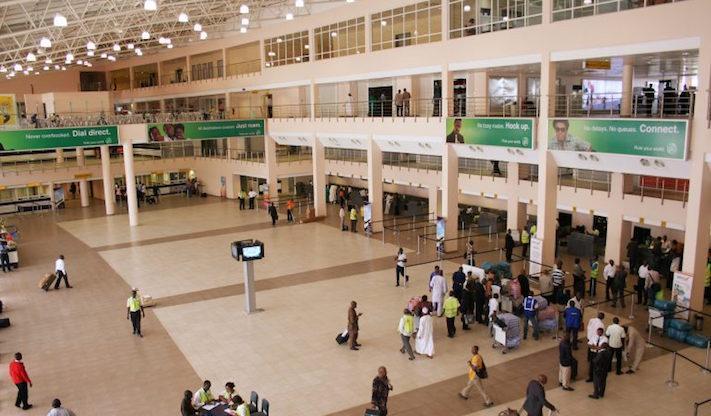
As the Federal Government of Nigeria prepares to sign off on a new wave of aviation concession agreements, the long shadow of past failures and errors looms over the negotiating table.
Failed airport concessions in Nigeria have historically been derailed by prolonged legal battles, breach of contract claims, and union pushback.
Following a 2003 Build, Operate, and Transfer (BOT) agreement, Bi-Courtney Aviation Services Limited, operators of the Murtala Muhammed Airport Terminal 2 (MMA2) concession, became mired in a bitter 20-year dispute with FAAN.
It escalated to a N132 billion Supreme Court judgment debt against the Federal Government. The contract suffered from constant wrangling over the General Aviation Terminal (MM1), exclusivity clauses, and unremitted concession fees.
Read also: Emirates becomes first airline cargo carrier to deploy the Boeing 777-300ERSF
The General Airport Concession Program (Lagos, Abuja, Kano, Port Harcourt), pushed heavily by the Ministry of Aviation since 2016, was a large-scale Public-Private Partnership (PPP) designed to modernise the country’s four major international airports. The attempt was stalled because of resistance from aviation unions who protested the lack of transparency, feared job losses, and questioned the government’s sincerity based on past failed ventures.
The most recent is the Akanu Ibiam International Airport (Enugu); a 30-year concession arrangement for the airport controversially handed over to Aero Alliance Limited, sparking immediate rejection from the Igbo Leaders of Thought (ILT). The group cited concerns that reduced Federal Government oversight would compromise infrastructure standards and passenger experience.
The government has also disclosed plans to concession Port Harcourt International Airport.
Sources close to the Ministry of Aviation told BusinessDay that the federal government is also making plans to concession more airports.
While industry operators in Nigeria looked forward to the airport concession because they believed that it would eliminate infrastructural challenges such as obsolete equipment, absence of IT-driven facilities like quick check-in equipment and flight delays; concerns have been raised that if past errors are repeated in new concession agreements, then successful airport concessions may be far-fetched.
“The reasons for consequential issues regarding concessions and related PPP deals in the Aviation Sector revolve around public perception versus facts, lack of due diligence in rigorously following rules, procedures, and varying stages of the privatisation process and related Public Procurement Act,” Seyi Adewale, the chief executive officer of Mainstream Cargo Limited, told BusinessDay.
Adewale mentioned other factors, including other critical stakeholders such as aviation unions, incentivised decision-makers, lack of transparency in the bidding process, and overbearing influence or interests of state actor(s) who yoke the nation into signing compromised contracts.
According to him, better articulated state laws and regulations with proper legislative acts endears the investors as per the operating framework.
Read also: FG hands over Enugu airport to Aero Alliance under PPP concession
“Importantly also, the clear rules and terms of engagement between (potential) equity partners, and acceptable responsibilities to all parties, including the state governments having non-controlling roles, help limit the fears of the preferred type of investors.”
He said part of the reasons why investors are now showing interest in airport concessions despite past challenges is because the federal government through its ministry of aviation and aerospace management largely supports the successes of these secondary gateways via good signed bilateral aviation safety agreements, promotion of an aircraft leasing company, reduction of (sovereign) insurance risks, global road shows and participation, and better funding for states via the federation accounts allocation committee.
Samuel Caulcrick, the former Rector of the Nigerian College of Aviation Technology (NCAT), told BusinessDay that several broader structural lessons were learned from the decades of legal and operational gridlock surrounding MMA2 in Lagos.
“With Enugu, we seem to have understood a need for ironclad contractual clarity. We now know that shifting the terms of a Build, Operate, and Transfer (BOT) agreement mid-process without open stakeholder communication creates grounds for ongoing litigation and political mistrust.
“There was also an adverse impact of a competing interest. The Federal Airports Authority of Nigeria (FAAN) delayed the transfer of the General Aviation Terminal (GAT) to Bi-Courtney while running competing terminals, limiting expected revenues for Bi-Courtney. This stifled expected financial returns and resulted in massive project-related losses over the years,” Caulcrick explained.
He said the exclusivity clause granted to Bi-Courtney effectively prevented state infrastructure expansion and became a highly contested barrier to development.
Olumide Ohunayo, industry analyst and director of research at Zenith Travels, told BusinessDay that airport concessions require dedicated negotiations and making sure that transparent agreements are done.
“When you have a deal which moved from 12 to 30 years stating that Bi-Courtney will take over all domestic operations in a hub like Lagos and nobody can build anything close to the structure; you do not sit alone for that kind of agreement, you have to bring in a new team of negotiators, look at the pros and cons and technical details before putting pen to paper,” he explained.
He, however, hinted that the recent Enugu airport concession is a bit easier because the state government is the one funding the airport infrastructure and can use this leverage to negotiate the assets.
“While I agree to the concession of all the airports non-aeronautical services, why would those in the government administration be giving out or doing the process of the Concession of the Airports in isolation to only one company instead of multiple applicants?” John Ojikutu, industry expert and the CEO of Centurion Aviation Security and Safety Consult, inquired.
He said the concession of MM2 became what it is today because it was done by isolating the public and other interested and prospective participants.
“Secondly, the concession of only the international airports would leave the domestic airports open to exploitative revenue generated from the international airports. Thirdly, why exclude Lagos and Abuja international airports from immediate concession?” Ojikutu said.
He stressed that the present reconstruction of a terminal in Lagos should not be an excuse, as the MM2 of the Bi-Courtney was built from ground zero.

Join BusinessDay whatsapp Channel, to stay up to date
Open In Whatsapp