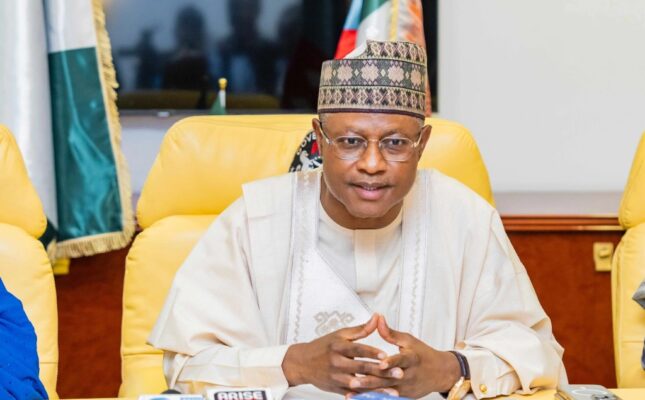
Kaduna State has strengthened its reputation as a leading example of transparent, accountable and citizen-centred governance after its open government reforms earned global recognition at the United Cities and Local Governments (UCLG) World Congress in Tangier, Morocco. The international acknowledgement reflects the growing confidence in Governor Uba Sani’s administration and its efforts to make governance more inclusive, participatory and development-driven.
Representing Governor Uba Sani at the global gathering, the Commissioner for Planning and Budget Commission, Mukhtar Ahmed Mohammed, showcased Kaduna’s achievements before policymakers, development experts and government officials from across the world during a high-level session on “Human Capital and Democratic Transformation: What Future for the Global South?” His presentation highlighted how the state’s governance reforms have translated into measurable improvements in education, healthcare, agriculture and public accountability.
The recognition comes as Kaduna continues to implement the Governor’s SUSTAIN Agenda, which places emphasis on security, infrastructure, agriculture, institutional strengthening, human capital development and citizen engagement. According to Mukhtar Ahmed, these priorities have produced significant milestones, including the construction of 736 classrooms, recruitment of 10,000 teachers, revitalisation of 255 Primary Healthcare Centres, establishment of 23 Centres of Excellence, restoration of over 500,000 hectares of farmland and the allocation of more than 11 per cent of the 2026 state budget to agriculture.
Beyond physical infrastructure, Kaduna’s reforms have focused on transforming the relationship between government and citizens. Through the Open Government Partnership (OGP), all 23 local government areas have been integrated into an accountability framework that promotes participatory budgeting, citizens’ audits, open contracting and fiscal transparency. These initiatives have expanded opportunities for residents to influence government decisions while improving public confidence in governance.
One of the administration’s landmark innovations is the Community Development Charter, which guarantees direct community participation in budgeting. Under the arrangement, at least five per cent of the state’s capital expenditure is reserved for projects nominated by citizens, while N100 million has been allocated to each of Kaduna’s 255 political wards to implement community-driven development projects.
Kaduna has also distinguished itself nationally by becoming the first subnational government in Nigeria to institutionalise a Citizens’ Participatory Audit Framework. The state’s commitment to financial openness was further reinforced by its recent perfect score in BudgIT’s States Fiscal Transparency League, an achievement that has attracted the attention of governance experts and international development partners.
Speaking at the congress, Mukhtar Ahmed argued that democratic transformation goes beyond periodic elections. According to him, sustainable democracy is achieved when governments institutionalise citizen participation in budgeting, procurement, project monitoring and public accountability. He maintained that governments investing in education, healthcare, skills acquisition and transparent governance are better positioned to strengthen public trust and deliver sustainable development.
He also called on the international community to recognise subnational governments as critical partners in achieving the post-2030 global development agenda. He stressed that states and local governments remain at the forefront of implementing development policies and should receive greater support to expand transparency, innovation and inclusive governance across the Global South.
The Commissioner for Information and Culture, Ahmed Maiyaki, described Kaduna’s participation at the UCLG World Congress as another milestone in Governor Uba Sani’s vision of positioning the state as a model of open, accountable and citizen-centred governance. He noted that the international platform provided Kaduna with an opportunity to share its reform journey, learn from global best practices and strengthen partnerships that will accelerate sustainable development.
As governments around the world continue searching for effective governance models capable of restoring public confidence, Kaduna’s experience is emerging as a compelling example of how transparency, citizen participation and strategic investment in people can produce tangible development outcomes. The state’s growing international recognition suggests that its governance reforms are not only improving lives at home but are also contributing to global conversations on democratic transformation and sustainable development.

Join BusinessDay whatsapp Channel, to stay up to date
Open In Whatsapp