…As Nigeria Family Wealth Report 2026 calls for earlier planning around governance, next-generation readiness and asset structure
A profitable and growing business can still be unprepared for its next chapter, particularly when its success remains closely tied to the founder’s relationships, judgment and authority.
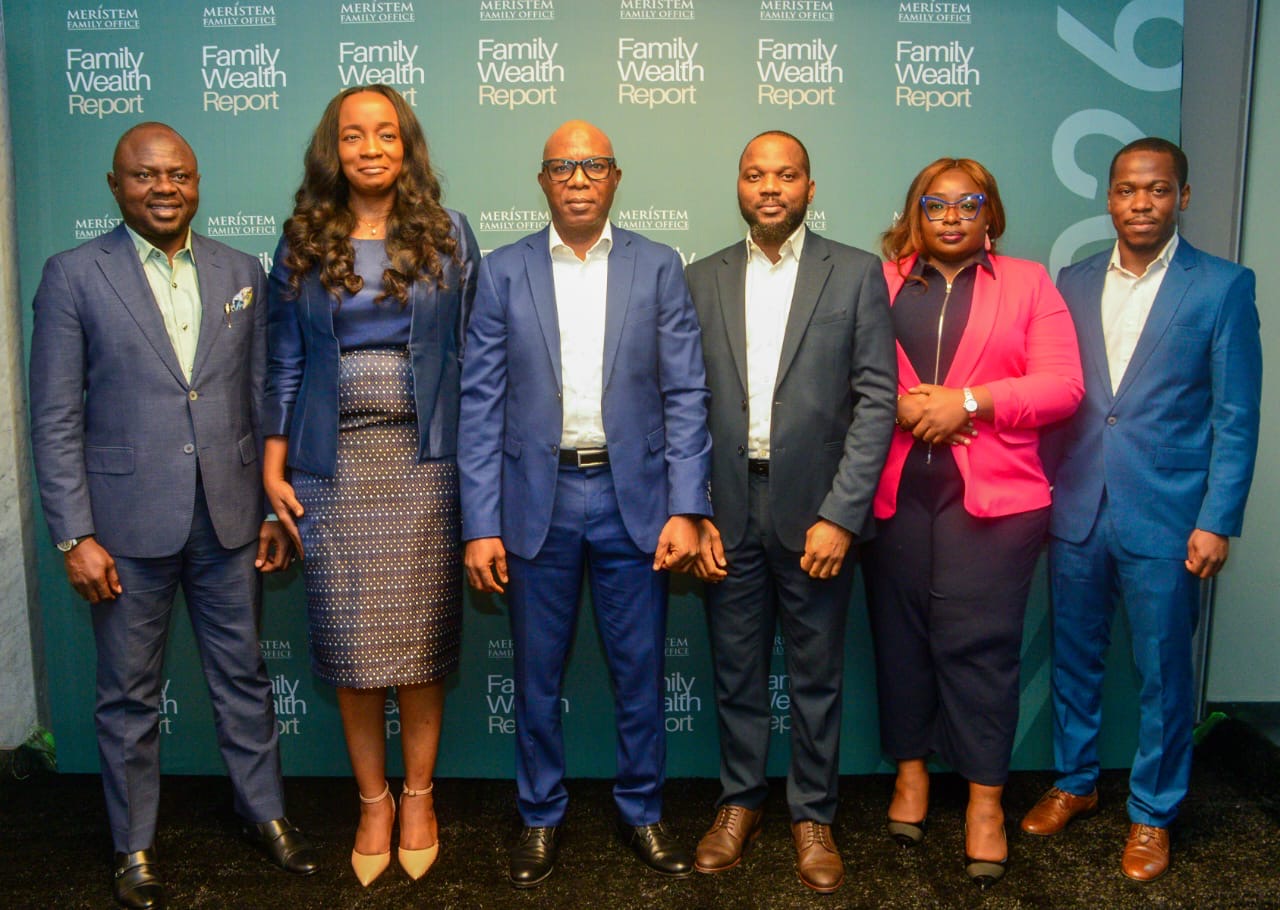
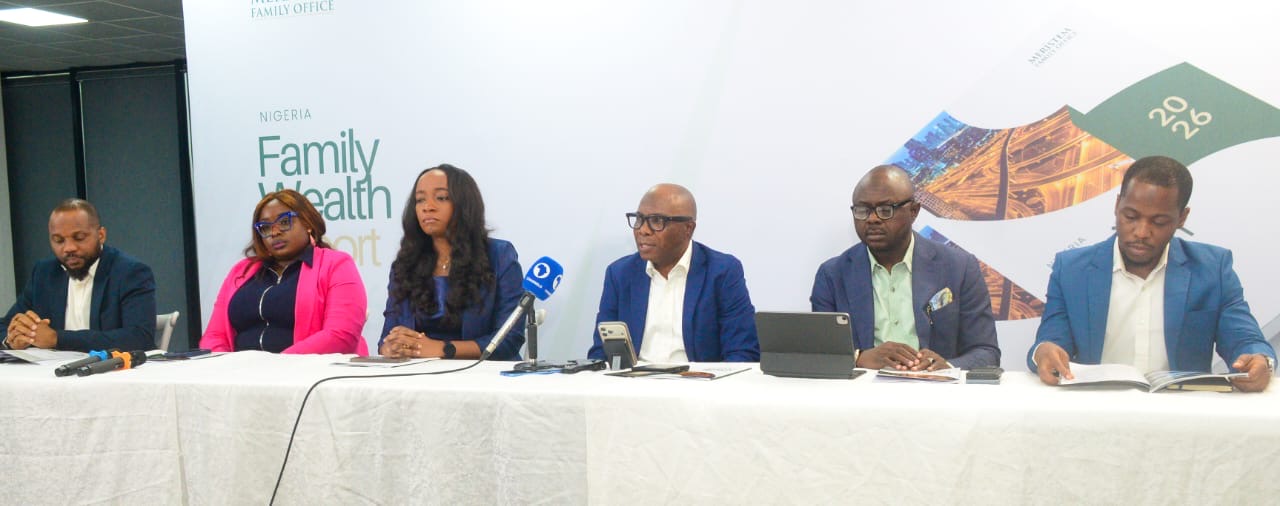
This is one of the key messages in the Nigeria Family Wealth Report 2026, released by Meristem Family Office, a subsidiary of Meristem Securities Limited.
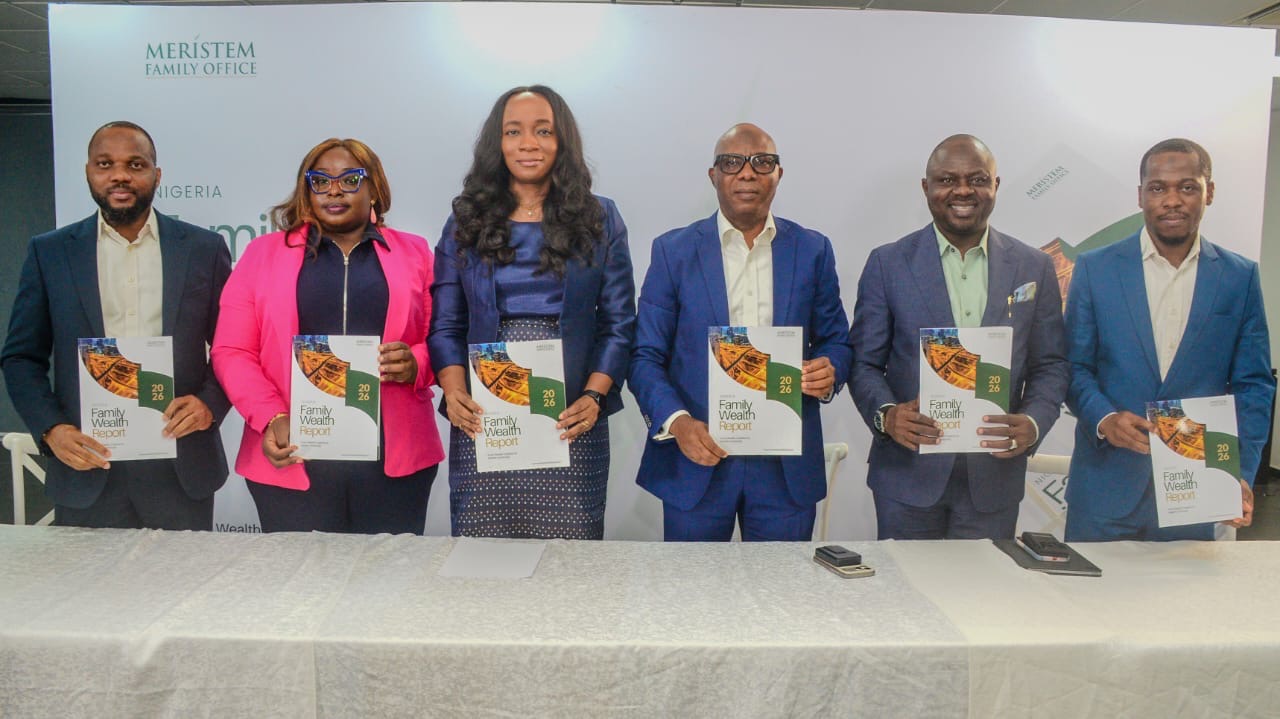
The report examines what must happen for wealth built by one generation to remain useful, productive and stable for the next. It focuses on family businesses, real estate, private investments and other assets that have been built over decades, often carrying jobs, supplier relationships, family aspirations and a founder’s legacy.
According to the Nigeria Family Wealth Report 2026 , operating businesses and real estate each featured among the top two asset holdings for 80% of surveyed families. The report notes that these assets require more than ownership. They require active management, clear ownership, reliable records and a practical plan for leadership and ownership transition.
“Many families have built substantial value over time. The more important question now is whether that value has been organised to continue when leadership changes or the founder is no longer at the centre of every major decision,” the report stated.
The report identifies founder dependence as one of the leading risks to long-term continuity. Forty per cent of respondents cited too much dependence on the founder as a major concern, while only 20% reported having a clear written succession plan.
For many family businesses, the founder remains the holder of key relationships, commercial knowledge, decision-making authority and institutional memory. These strengths can drive growth, but they may also create vulnerability where knowledge, ownership and responsibility have not been transferred into stronger systems.
The report notes that succession should not be reduced to the question of who takes over. It also involves deciding whether a business should continue, transform, professionalise, partially exit or be sold. It requires clarity around ownership, leadership, decision-making, family expectations and the preparation of those who may eventually carry responsibility.
According to Meristem Family Office, the report is intended to encourage families to begin these conversations before transition, disagreement or external pressure makes them urgent.
The report also highlights the importance of governance in helping families manage complexity. Governance, it notes, does not have to mean a complicated set of boards or legal documents. At its simplest, it creates clarity around ownership, decision-making, information-sharing, roles and the handling of disagreement.
This is particularly relevant where families own businesses, property portfolios or other shared assets. A business may have strong revenues but still depend heavily on one person. A property portfolio may be valuable but lack the documentation or ownership clarity needed for an easy transfer. A family may expect the business to continue but have no agreed process for deciding who leads, who owns or how differing views will be managed.
The Nigeria Family Wealth Report 2026 also introduces a broader view of wealth through its Complete Wealth lens. It argues that financial capital alone does not guarantee continuity. Families also need capable people, transferable knowledge, lived values, disciplined financial management and a clear sense of what the family wants its wealth to represent over time.
This has important implications for the next generation.
The report found that 40% of respondents described the next generation as mostly focused on its own path. It also identifiesbusiness exposure and mentorship as leading ways to strengthen next-generation readiness.
Many younger family members are globally educated, internationally exposed and pursuing careers that may differ from those of their parents. The report notes that this should not automatically be seen as disinterest. It calls instead for more deliberate pathways through which younger family members can gain exposure, build judgment and contribute meaningfully to the future of the family’s enterprise or capital.
Beyond family dynamics, the report considers the external forces reshaping family wealth. Currency movements, tax and regulatory developments, technology, talent shortages, global mobility and opportunities beyond Nigeria are changing how families preserve and deploy capital.
According to the report, wealth can remain vulnerable where it is concentrated in one business, sector, currency, geography, decision-maker or business model. It therefore encourages families to look beyond immediate performance and assess whether their structures, assets and people are positioned for future change.
The report positions wealth continuity as more than a private family concern. Family enterprises that remain stable through transition can preserve employment, supplier relationships, institutional memory and productive capital. Poorly managed transitions, on the other hand, can weaken businesses, fragment assets and erode value built over decades.
The central message of the report is clear: wealth creation is a major achievement, but wealth continuity requires deliberate preparation.
The Nigeria Family Wealth Report 2026 calls for earlier action around governance, succession, next-generation readiness, asset organisation and long-term family purpose.
It invites founders, family business leaders, next-generation members, advisers and institutions to consider one defining question:
What must be put in place now for today’s success to remain useful tomorrow?
Nigeria Family Wealth Report 2026
From Wealth Creation to Wealth Continuity
Published by Meristem Family Office, a subsidiary of Meristem Securities Limited

Join BusinessDay whatsapp Channel, to stay up to date
Open In Whatsapp