The United States and Iran have reported encouraging progress in their latest round of negotiations aimed at reaching a final agreement to end months of conflict, even as tensions remain high over fighting in Lebanon and sharp exchanges between Washington and Tehran.
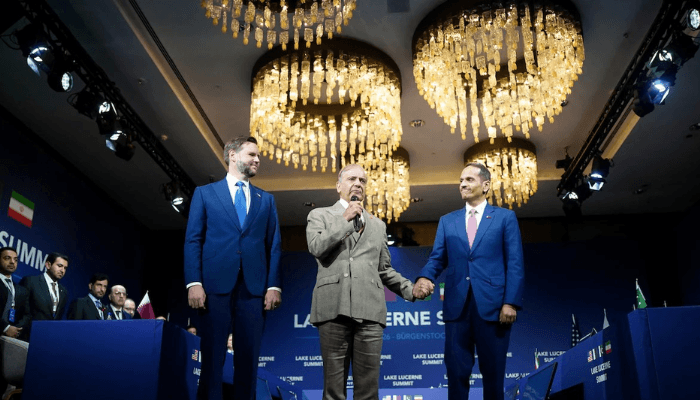
Talks held on Sunday in the Swiss city of Lucerne concluded with what mediators Qatar and Pakistan described as significant steps towards a lasting settlement. In a joint statement released early Monday, both countries said a high-level committee had agreed on a roadmap to secure a final agreement within 60 days.
Read also: World Cup: Iran hold Belgium to go top of Group G
Seyed Abbas Araghchi, Iran’s foreign minister described the discussions as having delivered “major progress” towards ending the conflict, particularly the crisis in Lebanon.
The negotiations follow the memorandum of understanding signed last week between the United States and Iran, which committed both sides to ending hostilities on all fronts, reopening the Strait of Hormuz and working towards a comprehensive peace agreement.
As part of the latest discussions, mediators announced the creation of a direct communication line designed to prevent misunderstandings and guarantee the safe movement of commercial vessels through the strategic waterway, through which a significant portion of the world’s oil and natural gas passes.
Read also: Stanbic IBTC Pension Managers boosts retirement readiness across five cities
A separate deconfliction mechanism involving the United States, Iran, and Lebanon will also be established to reduce military tensions and help bring an end to operations in southern Lebanon.
Despite the diplomatic breakthrough, violence has continued on the ground. Since the agreement was signed, clashes between Hezbollah fighters and Israeli forces have intensified in southern Lebanon, with Lebanese authorities reporting dozens of civilian deaths from Israeli air strikes.
The escalation prompted the United States to broker a new ceasefire between Israel and Hezbollah on Friday. Although Iran later announced it had closed the Strait of Hormuz, maritime tracking data showed commercial vessels continued to move through the passage.
The fragile diplomatic process was further tested by a fresh exchange of threats between US President Donald Trump and Iran’s lead negotiator Mohammad Bagher Ghalibaf.
Before the talks began, Trump demanded that Iran immediately stop its “highly paid proxies” in Lebanon and warned that the United States would “hit Iran very hard again” if attacks continued.
Ghalibaf rejected the warning, saying: “Don’t they think that if their threats had any effect, they wouldn’t be in this desperate situation today? No matter how much they talk, it is we who take action.”
Speaking ahead of the negotiations at the Swiss resort of Bürgenstock, US Vice President JD Vance said President Trump was seeking a new chapter in relations with Iran.
“If Iran’s leadership is willing to give up being a driver of regional instability and its nuclear weapons ambitions for the longer term, then the United States is willing to fundamentally transform our relationship with that country,” Vance said.
Iran has repeatedly maintained that its nuclear programme is intended for peaceful purposes.
The talks also highlighted the central challenge that remains unresolved: the future of Iran’s nuclear programme. The issue was one of the main reasons behind the conflict and remains a key demand for Washington.
The initial agreement included plans for the United States to end all sanctions on Iran and support a $300 billion reconstruction package, while Iran committed to restoring normal shipping through the Strait of Hormuz.
However, the continued fighting in Lebanon threatens to undermine the fragile diplomatic gains. Israeli Prime Minister Benjamin Netanyahu has insisted that Israeli troops will remain in southern Lebanon for as long as necessary to protect communities in northern Israel.
Naim Qassem, Hezbollah leader has rejected any continued Israeli presence in Lebanese territory, saying the group would continue to defend itself.
With technical negotiations set to continue throughout the week, diplomats now face the difficult task of transforming a temporary truce into a lasting agreement capable of addressing regional security concerns and the long standing dispute over Iran’s nuclear programme.

Join BusinessDay whatsapp Channel, to stay up to date
Open In Whatsapp