…As NITDA shows the way
Groups led by the Niger Delta Development Commission (NDDC) and Renaissance Energy Africa which seem to be deeply concerned about development of the oil region have moved to push technology to achieve this. This seems to give birth to the Port Harcourt Technology Exposition simply known as PHTechExpo which is now in its third year.
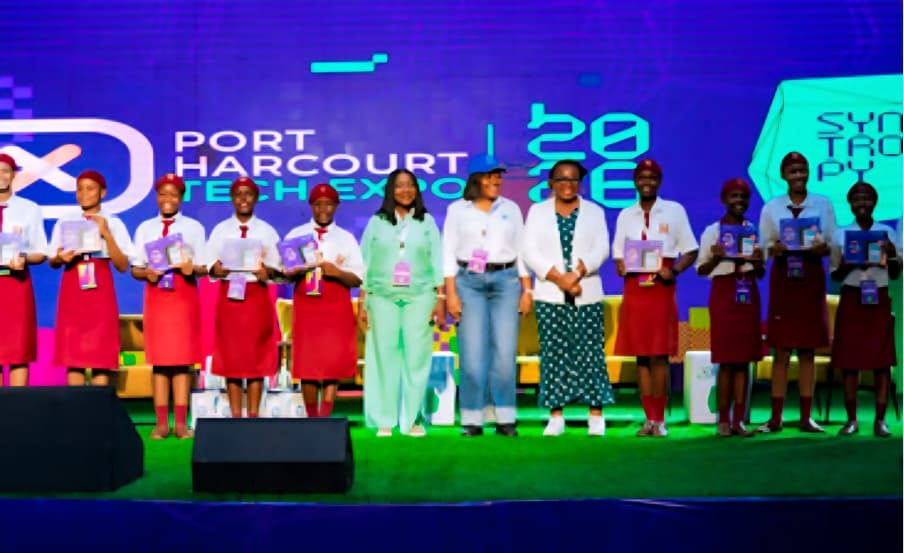
In 2026, the topnotch event took place for two days this June where the National Information Technology Development Agency (NITDA) appeared to lead the pathway.
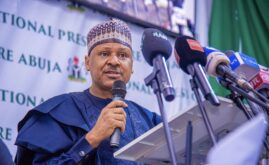
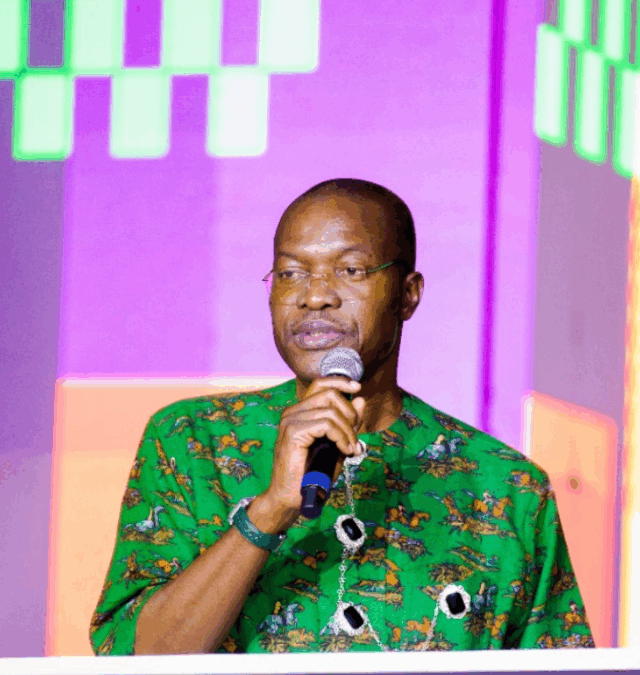
NITDA represented by Aristotle Onumo, the director of corporate planning and strategy, mentioned Nigeria’s tech milestones and updates while Samuel Ogbuku, NDDC’s CEO, showed where the Commission showed the strategic plan for the transition from oil/gas to tech era, while Igo Weli, Vice President, Renaissance, showed the company’s belief and plan to develop the people (in tech) that would develop the region.
NITDA points the tech way:
NITDA’s Onumo said there is digital revolution going on right now in the world and drew a long map of Nigeria’s tech way. He made it clear that history will remember this generation for one thing: “Whether we merely witnessed the digital revolution or whether we helped shape it. I believe Nigeria will shape it. I believe the Niger Delta will contribute significantly to it. And I believe that the conversations, partnerships, innovations, and opportunities created at this Expo will help accelerate that future. The future is not something we inherit. The future is something we build. Let us build it together. Let us build it boldly. Let us build it now.”
Harping on the theme: ‘Syntropy’, the NITDA top official galvanized the huge audience with the revelation of a startup tech that has just been acquired by a big tech company because of their app that translates videos to Nigerian local languages. He said the theme captures the story of Nigeria’s digital transformation. “For decades, economies were built around physical assets. The wealth of nations was measured by oil wells, factories, mines, and infrastructure. Today, the world’s most valuable assets are increasingly invisible.”
He identified them as ideas, innovation, data, algorithms, they are talent. “The new economy is not driven by what lies beneath the ground but by what resides within the minds of people. And this is why I believe the future of Nigeria will not be determined by the resources we extract, but by the knowledge we create.”
Pointing at the global economy, the NITDA official, quoting the World Bank, said the digital economy has become one of the most powerful drivers of global prosperity with digital technologies now influencing more than 15% of global GDP, while Artificial Intelligence alone is projected to contribute approximately $15.7 trillion to the global economy by 2030. He relied on McKinsey to estimate that Generative AI could add between $2.6 trillion and $4.4 trillion annually to global productivity.
He wondered whether Africa would be a consumer or contributor to the new drive.
On Niger Delta, he said the region had driven Nigeria through energy source but can also be positioned to lead in energy tech. “It can become an innovation hub. It can become a talent hub. It can become a technology hub. And it can become Africa’s leading centre for energy technology, artificial intelligence, fintech, cybersecurity, climate technology, digital trade, and advanced manufacturing.”
He supported the organisers for describing a vision of building a ‘Silicon Creek’—a technology ecosystem that harnesses the immense talent and entrepreneurial spirit of this region. “This vision aligns strongly with NITDA’s commitment to ensuring that digital opportunities are distributed equitably across all geopolitical zones of Nigeria.”
He said talent is the new oil, and that Nigeria’s greatest resource is not petroleum. It is people.
“Over 70% of Africa’s population is under the age of 30. Nigeria possesses one of the largest youth populations in the world. This demographic advantage represents an unprecedented opportunity. If equipped with the right skills, these young people will become innovators, entrepreneurs, software engineers, cybersecurity experts, AI developers, and global technology leaders.”
He revealed a plan by NITDA to make digital literacy and digital skills development a national priority. He called it Strategic Roadmap and Action Plan (SRAP 2.0). “This is because every digitally empowered citizen is a contributor to national prosperity.”
He disclosed the strategy, saying: “Through the programme DL4ALL we are reaching out to the 30 million Nigerians in the informal sector through our partnership with NYSC (National Youth Service Corp). We are parenting the Ministry of Education to incorporate digital literacy in the national education curriculum as well as office of the head of service to ensure the all the civil servants become digitally literate for effective service deliver
“The agency is also focused in realizing the National AI strategic vision of making Nigeria a global leader in harnessing transformative power of AI through responsive, ethical, and inclusive innovation.”
He talked of making Nigeria go from startup to scaleup. “Across Nigeria today, startups are building transformative solutions in Agriculture; Healthcare; Financial services; Education; Logistics; Cybersecurity; Artificial Intelligence; and Climate technology.
“Nigeria continues to lead Africa’s startup ecosystem, attracting significant venture capital investment and producing globally recognised technology companies. But our ambition must go beyond creating startups. We must create scaleups.”
He believes that AI is Africa’s chance to level up in technology. “AI is helping farmers predict crop yields. It is helping doctors detect diseases earlier. It is improving financial inclusion. It is enhancing cybersecurity. Etc”.
He said our goal is clear: “To ensure that Nigeria is not merely consuming AI but actively developing AI solutions that reflect our realities, languages, cultures, and aspirations.”
His call to action was a challenge to all Nigerians: To our young innovators: Dream bigger than your environment. To investors:
Back ideas that solve African problems. To academia: Produce knowledge that drives innovation. To industry: Invest in research, talent, and technology. To government:
Continue creating enabling policies that unlock innovation and growth.”
NDDC wants shift from oil/gas to tech revolution:
Ogbuku, the NDDC CEO, outlined what the interventionist agency has been doing to respond to the need for transformation to tech from oil and gas. He said this informed their decision to back ‘PHTechExpo’ for past three years.
“PH Tech Expo series promotes technology and ICT in the Niger Delta. The theme for 2026 is apt because we all need that collaboration and synergy. Nigeria needs it. Nigeria has not done very well in digital technology as expected, being the largest population in Africa. If Nigeria had moved fast, it would be at par with India, China, and some others. Nigeria ought to be hub of Digital technology in Africa.”
He joined NIRDA to say tech is a leveler; neither for the rich nor poor.
He said Niger Delta must move from oil to tech because that is the new wealth of the world. “We want to see the Niger Delta people join that class. For this to happen, we need collaboration between the public and private sectors. Government should funding of clearly identified talents and developers. This way, government would be helping to create jobs for the youths.”
Ogbuku noted that tech can lead Nigeria to youth agric revolution. “In the past when there were few university graduates, jobs were looking for people. Now, people look for jobs.”
He explained why the NDDC is behind the tech project, saying it is to open job and wealth opportunities. “This is the real job area. AI has come to disrupt and even take away some jobs. You are either ahead of AI or it shuts you out. Its impact is in phases; You were to graduate in the university before seeking a job. Now, you can sit at home and work and make wealth.”
He gave an exciting revelation, saying the new orphan is the lazy person, not a person without parents. “You do not need a father or mother to succeed. Many are not practicing what they studied in the University. Some change to other professions after studying high sounding courses.”
He urged youths to strive to be better than the present leaders by taking advantage of things such as the tech expo. “You should come up with Apps. That is your own oil well. That is where government comes in. Challenge government with creativity and initiatives to support you.”
He admitted that everything is not going well. “We train people but they come back for help. They are becoming dependent; they expect government to feed them. If five trainees out of 100 can develop from there, we will count it as success.”
He narrated how NDDC tra500 youths on CNG conversion and equipped them with startup packs, but some of them want the Commission to open workshops for them. “They even want to protest, but we say, go and develop yourself.
“We are investing heavily in education. Just yesterday, we sent forth 200 on foreign scholarship hoping they would come back to help develop Nigeria.
“The good news is that the number of those who graduate with first class is doubling every year. If the youths do not make use of opportunities made available to them by the governments and the NDDC, they should not blame anybody.
“Grow at your own pace. Use the training as fertilizer in your career. Always challenge your might.”
Electric Vehicle: Renaissance proud of their engineers:
Renaissance, which is believed to be one of the enthusiastic supporters of PHTechExpo, revealed that Electric vehicle (EV) charging system has been built at Renaissance Energy Africa facilities in Nigeria by its workers.
This represents one of the major breakthroughs unveiled at the just-concluded two-day Port Harcourt Tech Expo.
This was announced by Igo Weli, Renaissance Energy Africa Vice President, who said the company just commissioned the new tech, saying the company is proud of the breakthrough especially as it was initiated and driven by the workers on their own.
Weli is known over the years in SPDC (bought over by Renaissance) for driving youths of the oil region to stand on their own instead of adopting violence as negotiation tool. He always urged the youths to maximize advantage by partnering the oil companies instead of the violent approach that ended up driving the IOCs far and away.
He used the EV charging breakthrough to justify the call for local initiatives and for youths to maximize investments in them by corporations.
Now, he said: “The idea did not come from the executive team. It came from a group of employees—our Future Energy Leaders Network. No mandate. No initial budget. Just conviction.
“They asked a simple question: If we are serious about reducing our carbon footprint… shouldn’t that start with how we move? From that idea, they worked across teams, navigated constraints, and delivered something real.”
“Today, that facility: Supports multiple electric vehicles at a time; was designed and built in-house by our engineers; is actively enabling greener commuting choices for our people. And every single charge represents a small but meaningful step toward a lower-carbon future.
“More importantly, it proves something: At Renaissance, innovation is not a slogan.
It is something our people are empowered to build. That is the mind-set we are investing in.
Because ultimately: The most important infrastructure we are building is not pipelines; it is people.”
Speaking on Tech and Community Impact, the Renaissance Vice President said most businesses rely on fuel and diesel that are very expensive and unreliable sources of energy. “Now, imagine that same business powered by reliable electricity. It will be lower costs, stable business, productivity will increase, expansion becomes possible, and employment grows. That is what energy transition looks like in real life. Not just megawatts.”
Weli said that is why local innovation matters. “Because the challenges we face require solutions designed here. We are already seeing Nigerian-built energy tech; local engineering solutions; indigenous partnerships solving real problems.”
He said platforms like PH TechExpo are critical because they connect ideas to opportunity. The Niger Delta is not just resource-rich, it is idea-rich.
Placing a call to action, Weli pegged it on three thoughts, calling on Nigerians not to choose between oil and renewables but to build bridges by developing both; between oil and renewables; between tech and infrastructure.
He also urged the people to think beyond applications but think systems. “Energy is the foundation of everything you are building.”
Calling for collaboration, the energy sector top manager warned that no single player can solve this challenge alone.
He made it clear that the future of energy in Nigeria will not be imported. “It will not be outsourced. It will be built—by people like you. And the transition is not coming. It is already here. The only question is: What role will you play in it?”
He said two energy realities exist in the city: “One powers industries, drives exports, and sustains national revenue; the other plays out much closer to home—businesses, homes, and communities still searching for reliable, affordable electricity.”
He said the economy requires energy that is stable, accessible, and scalable. He said its not about oil/gas or renewables, saying the future is not about choosing one. “It is about building both—intelligently, deliberately, and inclusively – because each pathway solves a different problem. Centralised energy systems (oil and gas) deliver scale. They power industries, manufacturing, and economic growth.
“Decentralised electricity (mini-grids, solar, embedded systems) delivers access. They reach communities faster and create resilience at the local level. At Renaissance Africa Energy Company, this dual pathway is not theoretical. It is how we operate.”
He said it’s first through digital transformation, and then through gas-t-power enablement. With emphasis, Weli said: “Gas is one of Nigeria’s greatest strategic advantages. And its real value is unlocked when it moves beyond production into power.
“At Renaissance, we are focused on enabling that connection: from gas resources to electricity generation, and ultimately to industrial use. This is because when power becomes more reliable: factories run longer, SMEs reduce diesel dependence, production costs drop, and jobs are created.”
He went on: “Success is not measured by how much we produce but by how consistently people can depend on energy in their daily lives. At Renaissance, the transition is not theoretical.
It is being engineered, deployed, and scaled.”
Looking into the future, Weli said: “It is not a straight line from fossil fuels to renewables. It is an integrated system where gas provides stability and scale; renewables expand reach and sustainability; and digital technology optimises everything.”
He insisted that in simple terms, molecules and electrons must work together. “Gas is the bridge, but innovation is what determines how strong that bridge becomes. And that is where you all come in.”
Conclusion:
Sources close to the organisers and consultants that managed the PHTechExpo say 2026 was a success, going by the quality of pitching on display and some breakthroughs.
The sponsors seem to believe that it was money well spent because it helped to galvanise youths of the oil region into self-discovery and not dependency syndrome. Most IOCs and interventionist organisations have over the years indicated interest to help youths who help themselves. TechExpo seems to be the platform to achieve this.

Join BusinessDay whatsapp Channel, to stay up to date
Open In Whatsapp