Nigerian broadcasting reached a historic milestone on Wednesday, 17 June, as the nation finally began its long-delayed switchover to digital broadcasting – a transition originally scheduled for 2015.
The Digital Switchover (DSO) is so transformative that it will forever divide Nigerian broadcasting history into two eras: Before DSO and After DSO.
Broadcasting in Nigeria has evolved through distinct epochs, each defined by major shifts in technology, ownership, reach, and societal impact. My lecture notes for the History of Nigerian Media course at the School of Media and Communication, Pan-Atlantic University, are titled *Rediffusion to Digitisation: A History of Broadcasting in Nigeria*. They trace the medium’s evolution from colonial origins to the digital age, framing broadcasting as beginning with citizen initiative (much like print media) but quickly becoming a tool of government. It remained under exclusive state control until deregulation in 1992, with the shift towards digitisation gaining momentum from 2015.
Eleven key landmarks chart this journey from colonial rediffusion to the digital era. These milestones mark not only technical and policy advances but also broader political, cultural, and economic transformations across Nigeria. The introduction of community broadcasting is also a landmark, though it has yet to have a seismic impact.
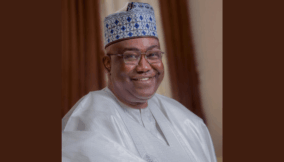
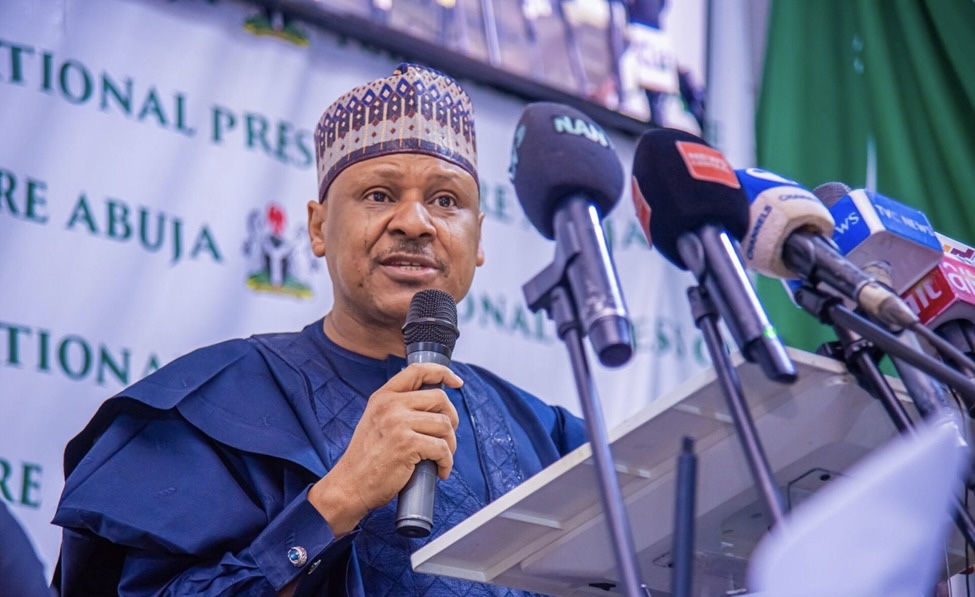
Several key players will earn lasting acclaim for guiding this transition: the Minister of Information and National Orientation, Muhammed Idris; the Director-General of the National Broadcasting Commission, Dr Charles Ebuebu; and the Director-General and CEO of the Nigerian Communications Satellite Limited (NIGCOMSAT), Jane Egerton-Idehen.
The Ten Landmarks
1. Introduction of Rediffusion Relays (1935)
Broadcasting began modestly with rediffusion – a wired relay system of BBC Empire Service programmes – commissioned on 1 December 1935 in Lagos. Initiated by Posts & Telegraph engineers due to the high cost of radio sets, the system used central receivers and loudspeakers to broadcast a single BBC news and programming channel. This cost-effective innovation extended to Ibadan (1939), Kano (1944), and other centres by the 1950s, serving the colonial administration’s goals and supporting wartime mobilisation. It laid the foundation for broadcasting in Nigeria.
2. Establishment of the Nigerian Broadcasting Service (NBS, 1951)
On 1 April 1951, the colonial government established the Department of Broadcasting under Tom Chalmers, seconded from the BBC. Full broadcasting began in Lagos, Kaduna, and Enugu. Modeled on the BBC’s public service ethos, the NBS combined international content with emerging local programmes in music, drama, news, education, and religion. This marked Nigeria’s entry into indigenous broadcasting and helped train local talent.
3. Transition to Nigerian Broadcasting Corporation (NBC, 1957)
The NBS evolved into the Nigerian Broadcasting Corporation in 1957, formalising its structure ahead of independence. This corporate status enhanced autonomy and operational capacity while preserving the public service mandate.
4. Introduction of Regional Radio (1959–1962)
Regional governments expanded broadcasting: the Western Region launched in 1959, followed by the Eastern Region (1960) and the Northern Region (1962). This decentralised approach catered to diverse linguistic and cultural audiences, boosting both the popularity and relevance of radio.
5. Pioneering Television in Africa – Western Nigeria (1959)
In October 1959, the Western Region introduced television, becoming the first in Africa to do so. This landmark elevated Nigeria’s profile in global broadcasting and demonstrated regional initiative in adopting visual media.
6. Federal Government Television Service (1962)
The federal government followed with the Nigerian Television Service in 1962, expanding national reach and complementing regional efforts. This solidified television as a tool for unity and information dissemination.
7. Centralisation under Military Rule – Creation of NTA (1976)
The Federal Military Government centralised broadcasting by creating the Nigerian Television Authority (NTA) and taking over 20 stations. This reflected post-Civil War efforts to consolidate federal control over media for national integration.
8. Restructuring of Radio – Establishment of FRCN (1978)
On 1 April 1978, the military government dissolved the NBC, created the Federal Radio Corporation of Nigeria (FRCN), handed stations to the states (retaining key stations in Lagos, Ibadan, Kaduna and Enugu), and merged northern assets. The four retained stations became national FRCN outlets, balancing federal and regional interests.
9. Deregulation and Liberalisation (1992)
Decree 38 of 1992, under General Ibrahim Babangida, established the National Broadcasting Commission (NBC) to license private radio and television stations. This ended decades of government monopoly, giving rise to a vibrant private sector in radio and television – despite the regime’s perceived anti-media stance. It transformed broadcasting into a competitive industry.
10. Migration to Digitisation (2015 Onward)
Nigeria’s preparation for digital broadcasting from 2015 onward represents the latest paradigm shift. This transition promises expanded channels, higher quality, and greater efficiency, enabling more players and converging media in the digital era.
These ten landmarks chart broadcasting’s journey from a colonial wired relay system to a dynamic, multi-platform ecosystem. Each step responded to technological possibilities, political contexts (colonial rule, regionalism, military centralisation, democratisation), and societal needs for information, education, and entertainment. As Nigeria continues this evolution, the broadcasting sector remains vital to national development, cultural preservation, and public discourse – echoing the NBS’s early mandate to inform, educate, and entertain.

Join BusinessDay whatsapp Channel, to stay up to date
Open In Whatsapp