…Says it provides statistical evidence of educational policy planning, resource allocation
Education stakeholders in Kogi have pledged full support for the 2025/2026 Annual School Census (ASC) as state’s Education Ministry officially launched the exercise on the Federal Government’s Digital Nigeria Education Management Information System (DNEMIS) portal.
Stakeholders were sensitised during a sensitisation meeting at the Government House, Lokoja ahead of the census commencement on June 24.
Education agencies, Media, NGOs, former commissioners, religious leaders, and Nigeria’s Security and Civil Defense Corps (NSCDC) attended the meeting which focused on preparations for statewide data capture and the migration from manual to digital reporting.
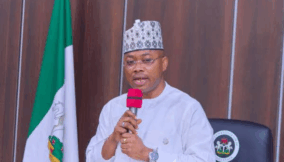
Wemi Jones, commissioner for Education, said the census provides statistical evidence for education policy, planning, and resource allocation.
He said, “Under DNEMIS, every school will receive a 10-digit ID while each learner will be assigned a Learner Identification Number (LIN), linked to WAEC/NECO records, stressing that every child must have a LIN to access government education incentives.
Read also: AI-driven digital services, intelligent networks to power global mobile industry growth
He also expressed gratitude to Gov. Ahmed Ododo for prioritising education in the state with 30 percent annual budget allocation, adding that Kogi is spending so much annually on school renovation, payment of examination fees, construction, payment of teachers.
He insisted that the 30 percent allocation to education should never go down, saying “that is why we are taking this annual school census programme very seriously.”
Jones cautioned that failure to upload data would cause under-reporting for the state.
In goodwill messages, stakeholders commended the government’s push for accurate data.
Rosemary Osikoya, former commissioner for Education, warned that “there will be no system if the structures are not there”.
She noted that private schools often withhold full data to evade tax, and many educational managers, including non-formal and skills centres, do not keep proper records despite Nigeria’s data and record-keeping laws.
She said, “If we really want money allocated to education, it has to be substantiated by data. When education data is accurate, planning becomes effective.”
Osikoya urged all schools to check Kogi Education EMIS and ensure their records are updated.
Idris Muraina of Kogi NGO Network (KONGONET), said, “data is the lifeline of any development.”
Ekigwe Raymond from NSCDC urged collaboration with school heads to ensure safety through community-based committees and security agencies.
Representatives of the National Association of Proprietors of Private Schools (NAPPS), and All Nigeria Confederation of Principals of Secondary Schools (ANCOPSS), praised the ministry for carrying private schools along in policy decisions.
The Permanent Secretary, Albert Alabi, reinforced the need for qualitative and accurate data.
Animoku, Ahman Elizabeth, director, Educational Planning, Research and Statistics (PRS), said the ASC was valuable but faces challenges with incomplete data, stakeholder resistance over taxation fears, and low participation.
She clarified that ASC was for planning, research, and policy, not taxation, noting that awareness campaigns would show schools how accurate data improves teaching and resource allocation, adding that the ministry would train school data officers, starting with Lokoja LGA, before zonal advocacy meetings.

Join BusinessDay whatsapp Channel, to stay up to date
Open In Whatsapp