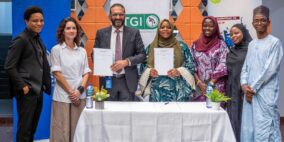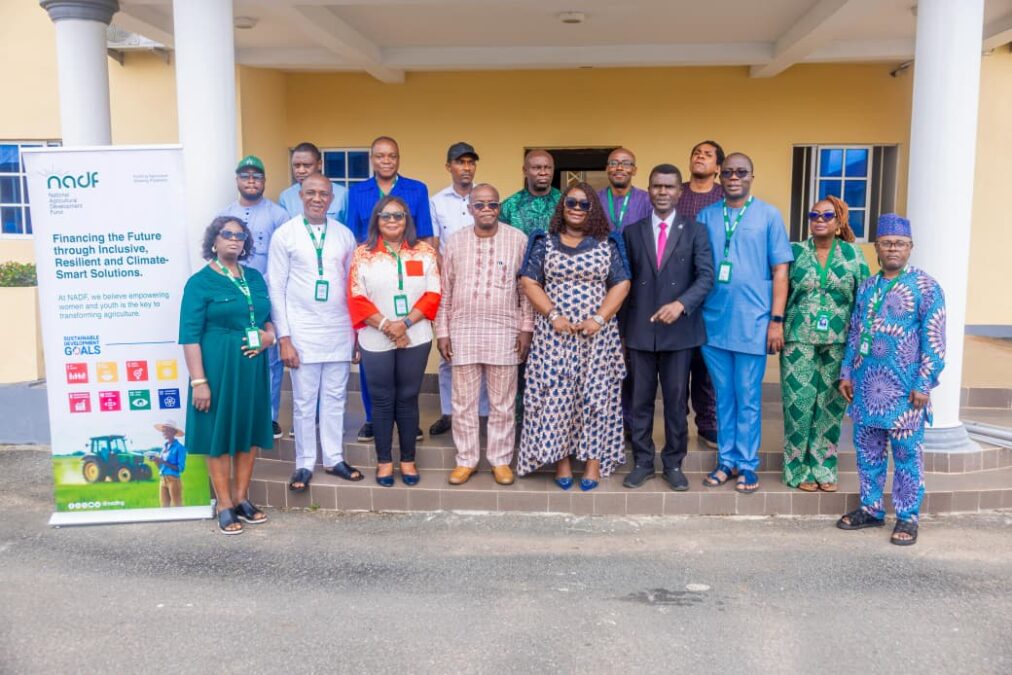
The National Agricultural Development Fund (NADF) and the National Root Crops Research Institute (NRCRI), Umudike, have launched the Ginger Value Chain Recovery and Sustainability Program (GVCRSP), a major intervention aimed at restoring Nigeria’s ginger industry following the devastating ginger blight epidemic that crippled production across key growing areas.
The Ginger Value Chain Recovery and Sustainability Program, which was unveiled at the headquarters of NRCRI in Umudike, Abia State, is an integral part of the NADF Ginger roadmap, developed after the Ginger blight epidemic.
Speaking at the program launch, Ernest Ihedigbo, General Manager, Technical Services, NADF, who represented Mohammed Ibrahim, Executive Secretary of NADF, described the initiative as a landmark demonstration of the Federal Government’s commitment to repositioning agriculture as a driver of economic diversification, food security, industrial development and export competitiveness.
According to him, the unveiling of the program and the formalisation of the partnership with NRCRI reaffirmed the mandate of NADF, as the Federal Government’s catalytic financing institution dedicated to translating agricultural policies into sustainable investments that strengthen research, innovation and national food sovereignty.
He said, “Agricultural transformation cannot be achieved without strong research institutions, modern technologies and strategic investments that connect scientific discoveries with production and markets.”
Ihedigbo disclosed that NADF is implementing two flagship interventions to support the sector. “The first focuses on strengthening selected agricultural research institutes as Centres of Excellence through investments in modern laboratories, biotechnology facilities, renewable energy systems, irrigation infrastructure, digital platforms and innovation hubs.
“The intervention is expected to strengthen research infrastructure, improve the capacity of scientists and researchers, promote demand-driven research, deepen linkages between research institutions and farmers, facilitate the commercialisation of agricultural technologies and foster partnerships with leading international research organisations.
“The second intervention, the Ginger Value Chain Recovery and Sustainability Programme, is specifically designed to rebuild the ginger industry after the 2023 ginger blight epidemic, which severely disrupted production, affected thousands of farmers, reduced export earnings and exposed structural weaknesses within the value chain.”
Under the program, NADF will provide six metric tonnes of ginger rhizomes alongside infrastructure for germplasm conservation, disease-free seed multiplication, tissue culture propagation, adaptive field preservation and sustainable seed system development.
“Moving beyond social impact interventions, the Ginger Value Chain Recovery and Sustainability Programme is designed to drive recovery, resilience and long-term transformation of the ginger sub-sector,” he said.
Also speaking, Ijeoma Adamma Agoha, Permanent Secretary, Abia State ministry for Agriculture and Natural Resources described the partnership between NADF and NRCRI as evidence of the power of strategic collaboration in addressing challenges within Nigeria’s agricultural value chains.
She commended NADF for selecting NRCRI as a beneficiary of the intervention, noting that the decision recognised the institute’s research capacity and Abia State’s growing role as a centre for agricultural innovation in the South-East.
Agoha noted that the ginger blight epidemic had disrupted the livelihoods of thousands of farmers, reduced the availability of quality planting materials and exposed vulnerabilities within the sector.
“The response we are launching today goes beyond recovery. It is about rebuilding stronger systems, restoring farmers’ confidence, and ensuring long-term sustainability through science, technology and innovation,” she said.
Similarly, Ikechukwu Dallas Chima, representing the National President of the National Ginger Association of Nigeria (NGAN), hailed the program as a significant national assignment with far-reaching economic implications.
He noted that the global ginger market is projected to surpass three billion dollars in the coming years and warned that Nigeria could not afford to lose its competitive position in the international market.
For Adeyemi Olojede, Director of Root Crops Research, NRCRI, the program as a timely intervention capable of addressing critical challenges confronting Nigeria’s ginger industry. He stressed that stakeholders must work together to develop practical solutions that will restore production and strengthen resilience within the value chain, regardless of the uncertainties surrounding the causes of the disease outbreak.
Olojede added that the collaboration would provide the financial and institutional support required to convert scientific ideas into practical solutions that directly benefit farmers and the wider economy.

Join BusinessDay whatsapp Channel, to stay up to date
Open In Whatsapp