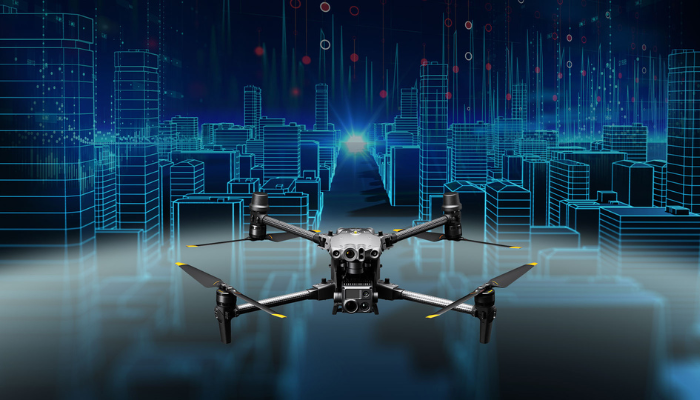
The convergence of indigenous knowledge systems and emerging technologies continues to redefine the boundaries of human creativity, spirituality, and innovation. Among the Yoruba, the Ifa corpus represents not only a repository of divinatory wisdom but also a living, dynamic archive of sound, rhythm, and symbolic communication. Drumming, within this corpus, is not merely aesthetic; it is a language—encoded, tonal, and deeply spiritual. In the digital age, the concept of “drumming drones” invites us to rethink how autonomous technologies can embody, preserve, and extend this sonic intelligence.
This article explores the conceptual framework of drumming drones as an extension of Ifa divination practices, particularly in relation to the computerisation of the 256 Odu Ifa. It builds upon earlier reflections on drones as carriers of encoded knowledge, advancing the idea that drones can become intelligent percussive agents capable of mapping, interpreting, and expressing the rhythmic signatures embedded within the Odus corpus.
The Ifa System as a Sonic Architecture
Ifa is traditionally understood through its verses (Ese Ifa), binary divination patterns, and oral transmission. However, beneath these layers lies a profound sonic dimension. Yoruba drumming, especially the talking drum (dundun), functions as a linguistic instrument capable of mimicking speech tones. Each rhythm corresponds not only to praise poetry but also to coded messages aligned with cosmological and spiritual meanings.
Within this framework, the 256 Odu can be reinterpreted as rhythmic matrices—patterned sequences that can be translated into sonic expressions. Just as binary code underlies modern computing, the Odu serve as a binary system of knowledge organisation. This parallel offers a unique entry point for computational modelling: each Odu can be mapped to a distinct drumming pattern, frequency modulation, or rhythm cluster.
Drumming as a Drone: Conceptual Clarification
The notion of a “drumming drone” operates on two interrelated levels. First, it refers to drones (unmanned aerial systems) equipped with percussive capabilities or sound-generation modules that can reproduce traditional drumming patterns. Second, it suggests a continuous, resonant sonic presence—a “drone” in musical terms—that sustains spiritual atmosphere and rhythmic continuity.
Bringing these meanings together, a drumming drone becomes both a physical device and a symbolic extension of ancestral sound. It is a mobile, intelligent, rhythm-producing entity capable of interacting with human environments while maintaining fidelity to traditional patterns.
Computerising the Odus: From Binary Divination to Algorithmic Rhythm
The feasibility of drumming drones depends largely on how effectively the Odu Ifa can be digitised. The binary structure of Ifa divination—comprising open and closed marks—lends itself naturally to computational representation. Each Odu can be encoded as a sequence of binary values, which can then be translated into rhythmic instructions.
For instance, a simple mapping could assign specific drum strokes (high, low, muted) to binary states. More advanced models could incorporate tempo, syncopation, and tonal variation, creating rich rhythmic profiles for each Odu. Machine learning algorithms could then analyse existing drumming traditions, learning patterns from master drummers and refining the accuracy of reproduction.
Drone platforms can be equipped with onboard processors capable of storing these encoded patterns. Through sensors and real-time data processing, drones can respond to environmental cues—such as movement, sound, or ritual context—triggering appropriate drumming sequences aligned with specific Odu.
Technological Architecture of Drumming Drones
The implementation of drumming drones requires an interdisciplinary synthesis of robotics, artificial intelligence, acoustics, and ethnomusicology, forming a single coherent performance system. It depends on sound‑generation mechanisms capable of producing culturally authentic percussive timbres through lightweight actuators or compact digital audio modules, alongside stabilised motion‑control systems that allow the drone to maintain precise rhythmic execution in flight.
Integrated AI models translate Odus‑based mappings into adaptive drumming sequences, while sensor networks interpret environmental and ritual cues to ensure that each performance remains contextually aligned with ceremonial expectations. Advances in payload efficiency, flight stability, and autonomous navigation have made these integrations increasingly practical, and the miniaturisation of high‑fidelity audio technologies now enables drones to project resonant sound without compromising manoeuvrability. These developments position drumming drones as an emerging frontier within ritual robotics and AI‑augmented performance systems.
Cultural and Spiritual Implications
While the technological feasibility of drumming drones is promising, their cultural significance must be carefully considered. Drumming in Yoruba tradition is not merely a technical skill; it is a sacred practice embedded in lineage, initiation, and spiritual discipline. The transition from human drummers to autonomous systems raises important questions about authenticity, authority, and transmission.
Rather than replacing human practitioners, drumming drones should be viewed as complementary tools—extensions of human creativity that enhance accessibility and preservation. They can serve educational purposes, enabling younger generations to engage with Ifa rhythms in interactive and immersive ways. They can also support diaspora communities, providing a portable means of maintaining cultural connection.
In ritual contexts, strict guidelines would be necessary to ensure that technological interventions respect established traditions. Collaboration with traditional authorities— Babalawos, drummers, and cultural custodians—would be essential in shaping ethical frameworks for deployment.
Applications in the Digital Age
The potential applications of drumming drones extend beyond ritual use. In performance art, they can create dynamic, multi-layered soundscapes that blend tradition with innovation. In education, they can function as teaching aids, demonstrating complex rhythms and their associated Odu. In research, they can provide data-driven insights into the structure and evolution of Yoruba drumming.
Furthermore, drumming drones can be integrated into smart environments—cultural festivals, museums, and digital heritage platforms—where they respond to audience interaction. By linking Odu patterns to augmented reality systems, users could visualise the relationship between divination signs and rhythmic expressions.
Achievability and Future Directions
The realisation of drumming drones is not a distant ideal but an achievable innovation within the current technological landscape. Existing drone platforms already support audio playback, while experimental robotic percussion systems demonstrate the feasibility of automated drumming. The key challenge lies in the accurate translation of Ifa knowledge into computational models—a task that requires deep cultural understanding alongside technical expertise.
Future research should focus on developing comprehensive databases of Odu-associated rhythms, leveraging machine learning to refine pattern recognition, and designing prototypes that integrate sound generation with autonomous flight. Partnerships between technologists, cultural institutions, and spiritual leaders will be crucial in ensuring that development remains both innovative and respectful.
Conclusion
The concept of drumming drones represents a powerful intersection of tradition and technology. By computerising the 256 Odu Ifa and translating them into rhythmic expressions, we open new pathways for preserving and expanding Yoruba cultural heritage. These autonomous systems, when thoughtfully designed, can serve as bridges between ancestral wisdom and contemporary innovation.
In the digital age, the future of drumming is not confined to the hands of the drummer alone; it extends into the skies, carried by intelligent machines that echo the rhythms of the past while shaping the soundscape of the future. The challenge, and the opportunity, lies in ensuring that this transformation honours the spirit of Ifa while embracing the possibilities of technological evolution.
. Ademola, first African Professor of Cybersecurity and Information Technology Management, Global Education Advocate, Chartered Manager, UK Digital Journalist, Strategic Advisor & Prophetic Mobiliser for National Transformation, public intellectual, and African governance thinker and General Evangelist of CAC Nigeria and Overseas

Join BusinessDay whatsapp Channel, to stay up to date
Open In Whatsapp