…As regulators push to end years of market dominance
As Nigerian regulators move to liberalise the country’s lucrative airtime credit lending market after years of dominance by a single operator, attention is increasingly turning to the billionaire entrepreneur whose company built one of the most profitable digital lending businesses across emerging markets.
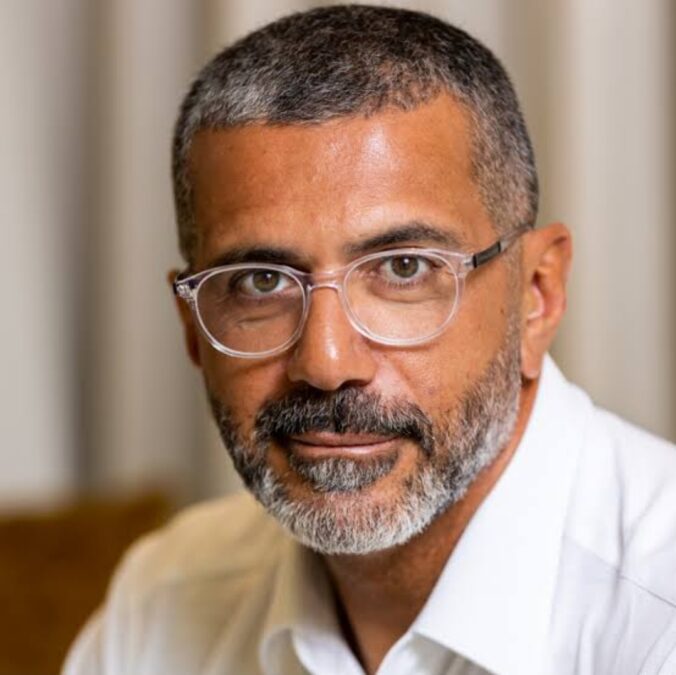
At the centre of the debate is Bassim Haidar, the Nigerian-born Lebanese businessman who founded Channel VAS, the telecommunications value-added services company that later evolved into fintech giant Optasia.
Over the years, Optasia emerged as one of the most influential players in Nigeria’s airtime credit and mobile lending ecosystem, partnering with mobile network operators to provide airtime and data advances to millions of subscribers. The model proved highly successful, helping the company expand across Africa, Asia, the Middle East and Latin America while generating substantial revenues from one of Africa’s largest telecom markets.
Read also: Banks swoop-in on telcos’ N400bn airtime lending business
Today, Haidar’s personal fortune is estimated by industry publications to be approaching £1 billion, placing him among Africa’s wealthiest technology entrepreneurs.
The businessman recently attracted international attention after reportedly acquiring a full-floor luxury apartment in the ultra-exclusive One Hyde Park development in London’s Knightsbridge district for approximately £42 million. The 9,000-square-foot residence is located in what is widely regarded as one of the most expensive residential developments in the world.
The purchase adds to an already extensive luxury property portfolio reportedly valued at tens of millions of pounds across central London. International property reports indicate that Haidar has invested heavily in some of Britain’s most exclusive real estate locations as part of a broader wealth preservation strategy.
His lifestyle reflects the scale of the fortune generated through decades of investments in telecommunications and digital financial services.
Industry reports link him to a fleet of luxury assets, including the Codecasa-built superyacht “Bash”, multiple vessels bearing the same name, and a Gulfstream G550 private jet widely used for long-haul intercontinental travel. International publications have also previously linked him to ownership of a luxury yacht associated with Princess Diana’s final Mediterranean holiday.
Yet as Haidar’s wealth continues to grow, Nigerian regulators are seeking to fundamentally reshape the market that helped build part of that fortune.
Industry sources familiar with ongoing regulatory reviews say authorities are pushing to open Nigeria’s airtime credit lending ecosystem to greater competition, ending what critics describe as years of market concentration.
The move forms part of broader efforts to deepen local participation in Nigeria’s rapidly expanding digital economy and ensure indigenous fintech firms gain access to opportunities within a sector estimated to generate hundreds of billions of naira annually.
Stakeholders backing the reforms argue that greater competition could unlock innovation, create jobs and allow more value generated within Nigeria’s digital ecosystem to remain within the country.
According to industry insiders, concerns have grown in recent years over the extent to which revenues generated from Nigerian consumers were repatriated abroad rather than reinvested locally.
The debate comes at a time when Nigeria is seeking to strengthen digital sovereignty, attract investment into indigenous technology companies and reduce capital flight amid ongoing economic pressures.
For many policymakers, the issue extends beyond competition.
They argue that opening the market could help ensure that future growth in airtime lending, digital credit and mobile financial services contributes more directly to domestic economic development.
Supporters of the planned reforms contend that a more diversified market structure would enable local fintech firms to compete, retain a larger share of profits within Nigeria and stimulate broader ecosystem growth.
The contrast has become increasingly visible.
While Nigeria grapples with unemployment, foreign exchange pressures and rising living costs, the founder of the company that dominated a significant segment of the country’s airtime lending business now ranks among the world’s wealthiest technology entrepreneurs, with luxury properties, private aircraft and multimillion-pound assets spread across some of the globe’s most exclusive destinations.
As regulators advance plans to open the sector, the spotlight is no longer focused solely on one billionaire’s remarkable rise. Instead, it has shifted to a broader question: who should ultimately benefit from the wealth generated by Nigeria’s fast-growing digital economy?
The answer may help shape the next chapter of the country’s fintech industry and determine whether future digital fortunes are built primarily abroad or increasingly retained at home.


Join BusinessDay whatsapp Channel, to stay up to date
Open In Whatsapp