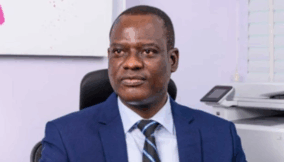
Diezani Alison-Madueke, once one of Africa’s most powerful energy officials, walked out of Southwark Crown Court on Wednesday a free woman after a London jury acquitted her of all six bribery charges that had shadowed her for more than a decade.
The verdict, delivered after more than 46 hours of deliberation across a five-month trial, concluded one of the most high-profile corruption cases to emerge from Africa’s biggest oil producer.
Alison-Madueke, 65, was found not guilty on five counts of accepting bribes and a sixth count of conspiracy to commit bribery — charges that alleged she received financial advantages in exchange for steering lucrative contracts toward favored energy firms during her tenure as Nigeria’s petroleum minister from 2010 to 2015.
The case, investigated by the UK’s National Crime Agency over nearly a decade, centered on claims that Alison-Madueke accepted what prosecutors described as “a life of luxury” from businessmen linked to Atlantic Energy and SPOG Petrochemical — two firms that secured contracts with the Nigerian National Petroleum Corporation while she ran the sector.
Read also: Beyond Dangote: Meet the billionaires driving Africa’s industrial transformation
Among the alleged benefits: £100,000 in cash, private jet flights, chauffeur-driven cars, refurbishment work on London properties, school fees for her son, and luxury goods from Harrods and Louis Vuitton. Prosecutors said spending at Harrods alone exceeded £2 million.
Lead prosecutor Alexandra Healy told the court that Alison-Madueke should not have accepted benefits from those doing “extremely lucrative business” with government-owned entities. The jury was not persuaded.
Defence counsel Jonathan Laidlaw spent the trial systematically dismantling the NCA’s case. He pointed to the agency’s absence when Nigerian authorities searched Alison-Madueke’s Abuja residence in October 2015, arguing that none of the recovered items were photographed in place and that the NCA no longer held the original materials.
Key documents that might have corroborated her account of reimbursements and official travel had gone missing. Laidlaw also challenged the prosecution’s selective reliance on evidence from Nigeria’s Economic and Financial Crimes Commission, questioning the integrity and reliability of materials it had supplied. Accept it or don’t, he argued — you cannot pick and choose which parts of the EFCC’s record to believe.
Testifying in her own defence, Alison-Madueke denied every count, telling the court she had acted with integrity in the award of contracts and at no point solicited or received improper payments.
Read also: Why Nigeria is looking beyond Eurobonds for foreign financing
She described herself as a reform-minded minister and argued that gift-giving and logistical support were common practice within Nigeria’s political and social culture, maintaining that such assistance was either reimbursed by the NNPC or constituted private arrangements beyond her responsibility.
On the London apartments allegedly paid for by oilman Kolawole Aluko, she countered that the arrangement was more economical than hotel stays at establishments such as the Savoy and Dorchester, which she said could cost as much as £2,000 per night.
The acquittal does not fully close the legal chapter on Alison-Madueke. In Nigeria, courts seized properties belonging to her worth several million dollars in 2017, while the EFCC still carries pending cases against her.
In January 2025, the Nigerian government and the United States signed an asset return agreement for $52.88 million recovered from assets linked to the former minister — funds that US prosecutors alleged were used to acquire luxury real estate in California and New York, as well as the Galactica Star, a 65-metre superyacht.
Alison-Madueke also served as president of the Organisation of Petroleum Exporting Countries from 2014 to 2015 — a rare distinction for a woman in the oil world’s most exclusive club. She has been on bail since her arrest in London in October 2015 and was formally charged in 2023. The eight years between arrest and verdict stand as a measure of how difficult these transnational corruption cases are to prosecute, and how many can unravel before a jury.

Join BusinessDay whatsapp Channel, to stay up to date
Open In Whatsapp